A Natural Solution for California's Herds: African Catfish Peptides

California's cattle producers and agricultural communities are all too familiar with the rising challenge of antibiotic resistance, making common bacterial infections harder to treat in livestock. But imagine a future where we could tackle these infections with a natural, powerful alternative. Our research points to just that: antimicrobial peptides (AMPs) found in African catfish.

We're really excited about these peptides because African catfish thrive in pathogen-rich freshwater, naturally producing these robust immune compounds in their skin mucus as a defense. This natural origin makes them highly appealing alternatives to synthetic drugs.

Predicted Safety and Potent Action

One of the most compelling aspects of these AMPs is their predicted safety for mammals. Our initial computer analyses suggest that various catfish AMPs are generally recognized as safe (GRAS). We predict they'll be absorbed in the human intestine without causing liver, brain, or heart toxicity. Furthermore, lab tests on a promising peptide, NACAP-II, confirmed it was non-hemolytic, meaning it didn't damage rabbit red blood cells—a strong indicator of its potential safety for mammalian cells.

Beyond safety, these peptides demonstrate effectiveness against problematic bacteria. One study revealed NACAP-II's strong activity against Extended-Spectrum Beta-Lactamase (ESBL)-producing Escherichia coli—a critical concern for both animal and human health due to its resistance to many common antibiotics. Another peptide, ACAP-IV, also showed antibacterial activity against E. coli and Staphylococcus aureus. We believe these AMPs work by directly disrupting bacterial cell membranes, a mechanism that makes it harder for bacteria to develop resistance compared to how they resist traditional antibiotics.
Primary Image
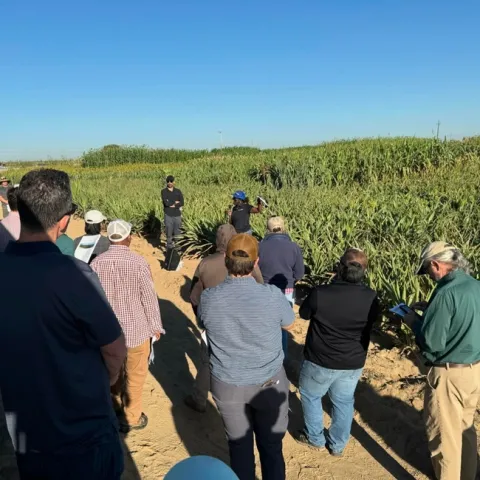
Jackie Atim discussing sorghum trials
Kearney news updates: Article

2024 Kearney Field Crops, Alfalfa and Forage Field Day

September 17, 2024
By Ryan D Puckett
Friday, September 13 brought growers, students and researchers to the Kearney Ag Center to obtain CEU's and learn about forage related research projects at the station as well as off the station in adjacent counties.
View Article
Primary Image
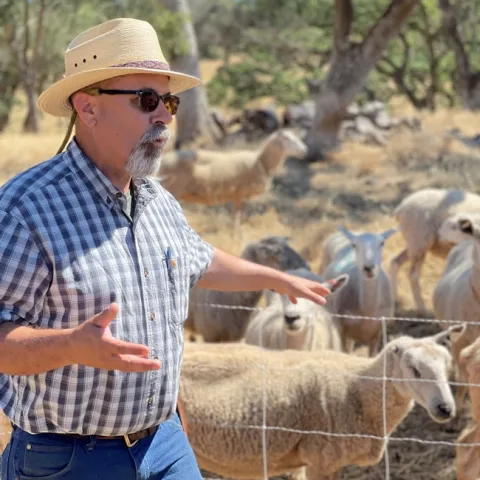
Dan Macon standing in front of a flock of sheep.
Ranching in the Sierra Foothills: Article

Headed South on Highway 49

September 17, 2024
By Daniel K Macon
Writing my last blog post as the Livestock and Natural Resources Advisor for Placer, Nevada, Sutter, and Yuba Counties is bittersweet. When I became the advisor in 2017 (filling Roger Ingram's enormous shoes), I assumed I would stay in this job until I retired. Life had other plans for me.
View Article
Primary Image
Oedema on tomato. photos by Carolle Juliano
The Savvy Sage: Article

More Tomato Trauma

September 17, 2024
I've often thought how hard it must be to exist as a garden plant. There you are, stuck in the ground, unable to move, subject to the whims of the wind, rain, sun, and general environment, and worse of all, the fickle, precarious treatment of your gardener parent.
View Article
Primary Image
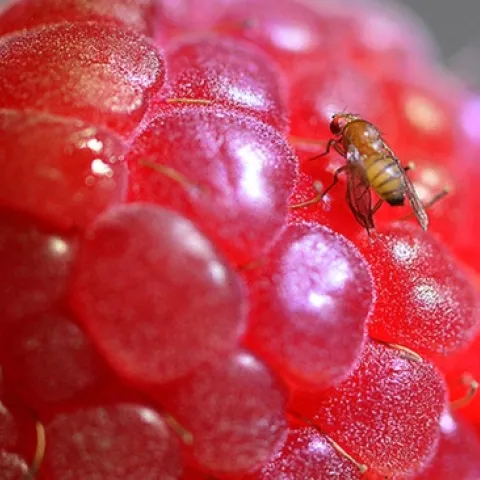
Spotted-wing drosophila (SWD), Drosophila suzuki, on a raspberry. (Photo by Kathy Keatley Garvey)
Bug Squad: Article

Tiny Bug, Big Trouble, Great Science

September 16, 2024
By Kathy Keatley Garvey
You may have never seen this tiny bug that's causing big trouble. But agriculturists and scientists have. The spotted-wing drosophila (SWD), Drosophila suzukii, is an agricultural pest that is super tiny. It's approximately 2 to 4 millimeters in length with a wingspan of 5 to 6.5 millimeters.
View Article
Primary Image
photos by Cindy Yee

Butchart Gardens

September 16, 2024
My first visittoButchart Gardens in Victoria, B.C. was more than 40 years ago, on a day trip from Vancouver. I loved it so much, especially the beautiful begonias. It does feel strange not to have been back until now. I am so glad, however, that we finally vacationed in Victoria recently.
View Article