A Natural Solution for California's Herds: African Catfish Peptides

California's cattle producers and agricultural communities are all too familiar with the rising challenge of antibiotic resistance, making common bacterial infections harder to treat in livestock. But imagine a future where we could tackle these infections with a natural, powerful alternative. Our research points to just that: antimicrobial peptides (AMPs) found in African catfish.

We're really excited about these peptides because African catfish thrive in pathogen-rich freshwater, naturally producing these robust immune compounds in their skin mucus as a defense. This natural origin makes them highly appealing alternatives to synthetic drugs.

Predicted Safety and Potent Action

One of the most compelling aspects of these AMPs is their predicted safety for mammals. Our initial computer analyses suggest that various catfish AMPs are generally recognized as safe (GRAS). We predict they'll be absorbed in the human intestine without causing liver, brain, or heart toxicity. Furthermore, lab tests on a promising peptide, NACAP-II, confirmed it was non-hemolytic, meaning it didn't damage rabbit red blood cells—a strong indicator of its potential safety for mammalian cells.

Beyond safety, these peptides demonstrate effectiveness against problematic bacteria. One study revealed NACAP-II's strong activity against Extended-Spectrum Beta-Lactamase (ESBL)-producing Escherichia coli—a critical concern for both animal and human health due to its resistance to many common antibiotics. Another peptide, ACAP-IV, also showed antibacterial activity against E. coli and Staphylococcus aureus. We believe these AMPs work by directly disrupting bacterial cell membranes, a mechanism that makes it harder for bacteria to develop resistance compared to how they resist traditional antibiotics.
Primary Image
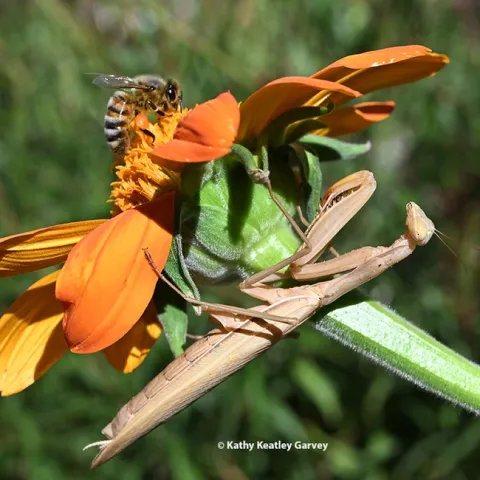
A honey bee forages on a Mexican sunflower, Tithonia rotundifola, as a female praying mantis, Mantis religiosa, perches below. (Photo by Kathy Keatley Garvey)
Bug Squad: Article

The Bee and the Mantis

September 3, 2024
By Kathy Keatley Garvey
So here's this praying mantis, a female Mantis religiosa, tucked beneath a Mexican sunflower, Tithonia rotundifola, in a Vacaville garden. She's as still as a stone, and you know how still stones are. Along comes a honey bee, Apis mellifera. She's packing a load of orange pollen.
View Article
UC Cooperative Extension Imperial County: Article

September 2024

September 3, 2024
NITROGEN UPTAKE VARIATIONS IN DESERT LETTUCE: RECENT RESEARCH FINDINGS PRE-PLANT BENEFITS OF SUMMER COVER CROPS IN LOW DESERT VEGETABLE PRODUCTION DRY SANITATION IN FRESH PRODUCE: COMMERICAL APPLICATIONS AND CHEMICAL OPTIONS FOR ONIONS SOILBORNE DISEASES IN GOLDEN DEW MELONS 'FOREVER CHEMICALS' IN S...
View Article
UC Weed Science (weed control, management, ecology, and minutia): Article

Be Wary of Relying on Chat GPT for Agricultural Questions

September 3, 2024
By Sarah Marsh Janish
Globally, approximately 570 million small and medium-sized farms need training in various agricultural fields. However, the delivery of agriculture training faces significant challenges.
View Article
Primary Image
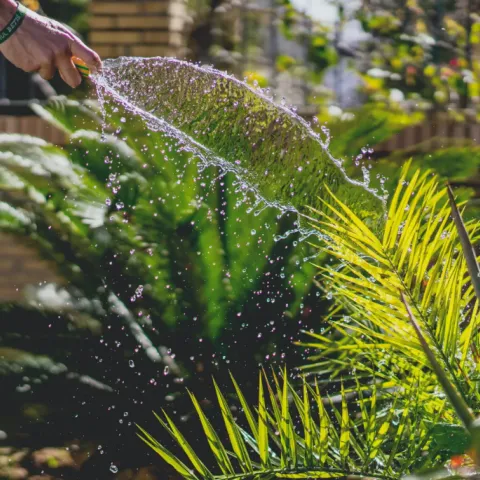
hose watering
UC Marin Master Gardeners: Article

Gardener's checklist for fall

September 3, 2024
It's a dry year, no doubt about it, but there are still apples to harvest, bulbs and cover crops to plant, and tools to clean. Here's a a month-by-month to-do list to keep your garden in tip top shape in the fall.
View Article
Primary Image
hose watering
UC Marin Master Gardeners: Article

Gardener's checklist for fall

September 3, 2024
It's a dry year, no doubt about it, but there are still apples to harvest, bulbs and cover crops to plant, and tools to clean. Here's a a month-by-month to-do list to keep your garden in tip top shape in the fall.
View Article
UC Master Gardeners of Placer County: Article

Fall 2024 Curious Gardener Newsletter

September 3, 2024
In this issue: Fertilizing Your Trees, Unusual Edible: Chocolate Vine, Cover Cropping in Foothill Gardens, Hotline FAQs: Soil for Raised Vegetable Beds, All-Star: Marina Madrone, Water-Wise Gardening, Nevada County Demonstration Garden News, 2025 Gardening Guide and Calendar, Insect Bytes, BotLat: Red Flag…
View Article
Primary Image
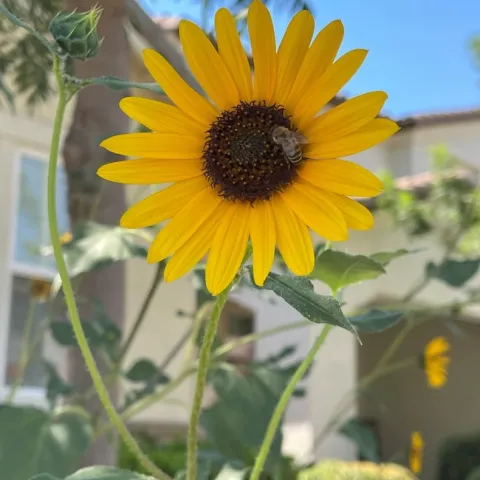
A honeybee rests on a bright yellow petaled sunflower plant.
The Stanislaus Sprout: Article

What plants bloom during the hot summer?

September 3, 2024
By Anne E Schellman
July and August are traditionally the hottest months of the year, and this year is breaking heat records everywhere. Many plants do not do well in the heat, but plants native to the Central Valley have evolved over time and are adapted to our hot summer weather.
View Article