A Natural Solution for California's Herds: African Catfish Peptides

California's cattle producers and agricultural communities are all too familiar with the rising challenge of antibiotic resistance, making common bacterial infections harder to treat in livestock. But imagine a future where we could tackle these infections with a natural, powerful alternative. Our research points to just that: antimicrobial peptides (AMPs) found in African catfish.

We're really excited about these peptides because African catfish thrive in pathogen-rich freshwater, naturally producing these robust immune compounds in their skin mucus as a defense. This natural origin makes them highly appealing alternatives to synthetic drugs.

Predicted Safety and Potent Action

One of the most compelling aspects of these AMPs is their predicted safety for mammals. Our initial computer analyses suggest that various catfish AMPs are generally recognized as safe (GRAS). We predict they'll be absorbed in the human intestine without causing liver, brain, or heart toxicity. Furthermore, lab tests on a promising peptide, NACAP-II, confirmed it was non-hemolytic, meaning it didn't damage rabbit red blood cells—a strong indicator of its potential safety for mammalian cells.

Beyond safety, these peptides demonstrate effectiveness against problematic bacteria. One study revealed NACAP-II's strong activity against Extended-Spectrum Beta-Lactamase (ESBL)-producing Escherichia coli—a critical concern for both animal and human health due to its resistance to many common antibiotics. Another peptide, ACAP-IV, also showed antibacterial activity against E. coli and Staphylococcus aureus. We believe these AMPs work by directly disrupting bacterial cell membranes, a mechanism that makes it harder for bacteria to develop resistance compared to how they resist traditional antibiotics.
San Benito County: Article

Fair clothing - Pre-order Now

September 5, 2024
Dear 4-H families, It that time of year again. The 4-H team is selling San Benito fair t-shirts and sweatshirts. We are taking pre-orders now. The funds support your 4-H program. See the attached flyer and order form. We look forward to seeing you at fair with your new shirt and sweatshirt.
View Article
Primary Image
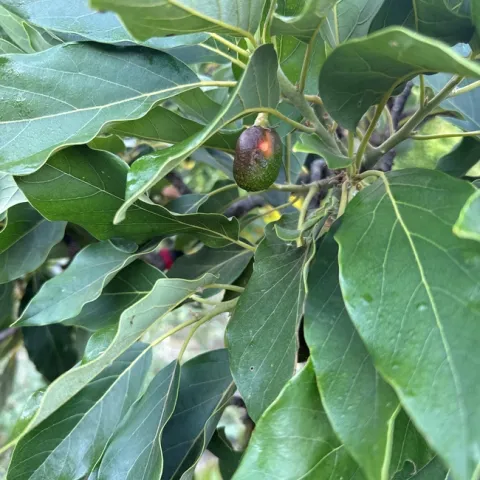
sunblotch
Topics in Subtropics: Article

Avocado Sunblotch Workshop - Oxnard, Sept 20

September 5, 2024
By Ben A Faber
Avocado Sunblotch Viroid (ASBVd) Unlock the Secrets to Healthy Avocados: Learn about Avocado Sunblotch Viroid Presentations: Andrew Geering: Prevention, surveillance and control of avocado sunblotch in Australia Fatemeh Khodadadi: Understanding ASBVd: from discovery to diagnostic hurdles Peggy Mauk:...
View Article
Primary Image
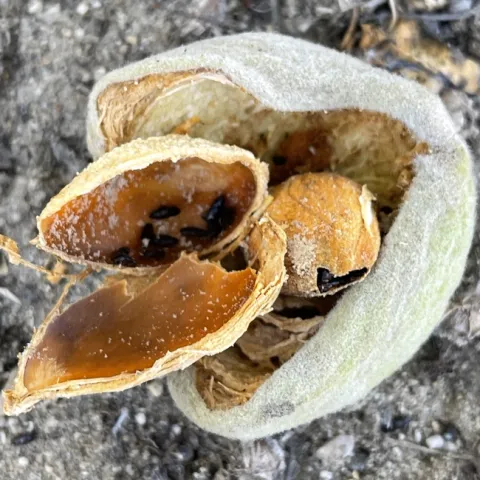
Carpophilus beetles in hullsplit almond
Food Blog: Article

Visual ID guide from UC aids in managing new almond pest

September 5, 2024
By Michael Hsu
Since the first reports of a new almond pest the carpophilus beetle (Carpophilus truncatus) came in during fall 2023, it has become clear that the beetle is widely dispersed across the San Joaquin Valley.
View Article
Strawberries and Caneberries: Article

Some Thoughts on Intellectual Honesty

September 5, 2024
By Mark P Bolda
I'm a sucker for buying books at the airport, I think it's because so much free time beckons not only at the airport while waiting to board but then also in the airplane itself.
View Article
Smart Water Living: Urban Water Use Efficiency in SoCal: Article

Smart Water Living: Urban Water Efficiency in SoCal Blog

September 4, 2024
By Esther N Lofton
Welcome to Smart Water Living Blog– your local guide to urban water efficiency and conservation in Southern California. From drought-tolerant landscaping to smart irrigation and water-wise policies, we share practical tips, expert insights, and real stories to help you save water without sacrificing comfort…
View Article
Primary Image
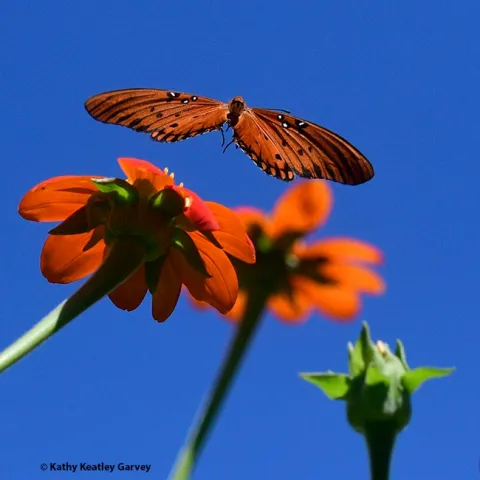
A Gulf Fritillary, Agraulis vanillae, fluttering over a Mexican sunflower, Tithonia rotundifola. (Photo by Kathy Keatley Garvey)
Bug Squad: Article

Gulf Frit and Tithonia: Showstoppers

September 4, 2024
By Kathy Keatley Garvey
The Gulf Fritillary, Agraulis vanillae, and the Mexican sunflower, Tithonia rotundifola, seem made for one another. Both are a showy orange. Both are show-stoppers. And both attract a photographer's eye. Especially when a Gulf Frit flutters over a Tithonia on a warm sunny day in a Vacaville garden.
View Article