A Natural Solution for California's Herds: African Catfish Peptides

California's cattle producers and agricultural communities are all too familiar with the rising challenge of antibiotic resistance, making common bacterial infections harder to treat in livestock. But imagine a future where we could tackle these infections with a natural, powerful alternative. Our research points to just that: antimicrobial peptides (AMPs) found in African catfish.

We're really excited about these peptides because African catfish thrive in pathogen-rich freshwater, naturally producing these robust immune compounds in their skin mucus as a defense. This natural origin makes them highly appealing alternatives to synthetic drugs.

Predicted Safety and Potent Action

One of the most compelling aspects of these AMPs is their predicted safety for mammals. Our initial computer analyses suggest that various catfish AMPs are generally recognized as safe (GRAS). We predict they'll be absorbed in the human intestine without causing liver, brain, or heart toxicity. Furthermore, lab tests on a promising peptide, NACAP-II, confirmed it was non-hemolytic, meaning it didn't damage rabbit red blood cells—a strong indicator of its potential safety for mammalian cells.

Beyond safety, these peptides demonstrate effectiveness against problematic bacteria. One study revealed NACAP-II's strong activity against Extended-Spectrum Beta-Lactamase (ESBL)-producing Escherichia coli—a critical concern for both animal and human health due to its resistance to many common antibiotics. Another peptide, ACAP-IV, also showed antibacterial activity against E. coli and Staphylococcus aureus. We believe these AMPs work by directly disrupting bacterial cell membranes, a mechanism that makes it harder for bacteria to develop resistance compared to how they resist traditional antibiotics.
UC Cooperative Extension San Diego County : Article

Issue 008

July 3, 2024
Summer, July 2024, Issue 008...
View Article
Primary Image
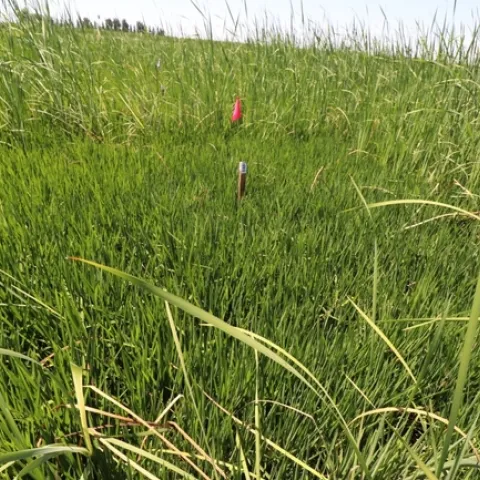
Cattail control with Loyant® CA at 1.33 pint - A treated plot at 14 days after herbicide application in 2023

New Product Bulletin :: Loyant® CA

July 3, 2024
By Kassim Al-Khatib
A recommendation bulletin has been released for florpyrauxifen-benzyl (Loyant CA, Corteva Agriscience LLC, Indianapolis, IN, USA) to control cattail plants in California rice fields and permitted under FIFRA Section 2(ee). Cattail (Typha latifolia L.
View Article
Primary Image
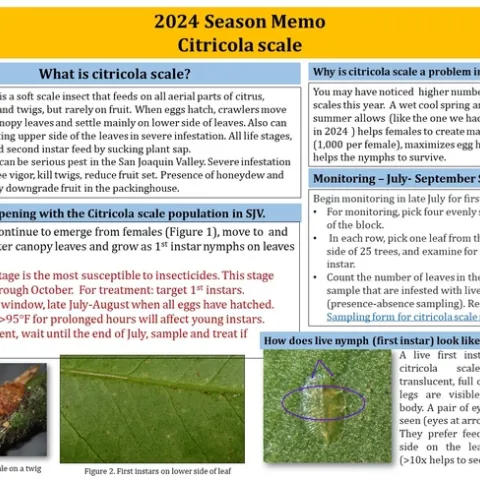
citricola scale blog
Topics in Subtropics: Article

Citricola Scale in the Big Valley

July 3, 2024
By Ben A Faber
Sandipa Gautam, Area Citrus IPM Advisor serving Kern, Tulare, Fresno, and Madera counties has been maintaining a web page on the Lindcove Website Citrus IPM - Lindcove Research and Extension Center (ucanr.edu).
View Article
Stanislaus County: Article

Carpophilus Extension Event

July 3, 2024
The carpophilus beetle California workgroup is organizing a Zoom webinar on July 9, 3-6 pm to inform Californias nut crop growers and industries about the newly invasive pest.
View Article
Strawberries and Caneberries: Article

Sunscald on Blackberry

July 3, 2024
By Mark P Bolda
I made a visit to a beautiful blackberry field a few days ago and was shown this example of sunscald, in this case on mature Ouachita blackberry. Notice these are not tunneled, and also one observes immediately that only the part of the fruit facing the sun is affected.
View Article
Primary Image
Pest prevention tips for July.
Pests in the Urban Landscape: Article

July Pest Prevention Tips

July 3, 2024
By Lauren Fordyce
Follow these tips for the month of July to prevent pests in the garden and landscape. To see more tips specific to your region, visit the Seasonal Landscape IPM Checklist on the UC IPM website. Clean up fallen fruit or nuts to avoid attracting or harboring pests.
View Article
The Stanislaus Sprout: Article

Bring on the Tomatoes! 5 Common Tomato Problems and Solutions

July 3, 2024
By Anne E Schellman
Almost any home gardener will tell you that one of the most versatile and rewarding plants to grow in a summer edible garden is a tomato. In fact, a 2023 study by the National Gardening Association revealed that 86 percent of gardeners grow tomatoes.
View Article
Primary Image
Slide1
Citrus IPM News: Article

Citricola scale population is higher this season

July 3, 2024
By Sandipa Gautam
In 2024, there has been an increasing report of significant numbers of citricola scale in the San Joaquin Valley. Damage thresholds are low for citricola scale, 1 adult scale/twig or 0.5 1st instar/leaf.
View Article