A Natural Solution for California's Herds: African Catfish Peptides

California's cattle producers and agricultural communities are all too familiar with the rising challenge of antibiotic resistance, making common bacterial infections harder to treat in livestock. But imagine a future where we could tackle these infections with a natural, powerful alternative. Our research points to just that: antimicrobial peptides (AMPs) found in African catfish.

We're really excited about these peptides because African catfish thrive in pathogen-rich freshwater, naturally producing these robust immune compounds in their skin mucus as a defense. This natural origin makes them highly appealing alternatives to synthetic drugs.

Predicted Safety and Potent Action

One of the most compelling aspects of these AMPs is their predicted safety for mammals. Our initial computer analyses suggest that various catfish AMPs are generally recognized as safe (GRAS). We predict they'll be absorbed in the human intestine without causing liver, brain, or heart toxicity. Furthermore, lab tests on a promising peptide, NACAP-II, confirmed it was non-hemolytic, meaning it didn't damage rabbit red blood cells—a strong indicator of its potential safety for mammalian cells.

Beyond safety, these peptides demonstrate effectiveness against problematic bacteria. One study revealed NACAP-II's strong activity against Extended-Spectrum Beta-Lactamase (ESBL)-producing Escherichia coli—a critical concern for both animal and human health due to its resistance to many common antibiotics. Another peptide, ACAP-IV, also showed antibacterial activity against E. coli and Staphylococcus aureus. We believe these AMPs work by directly disrupting bacterial cell membranes, a mechanism that makes it harder for bacteria to develop resistance compared to how they resist traditional antibiotics.

Primary Image
topics in sub masthead
Topics in Subtropics: Article

A New Topics in Subtropics Newsletter!!!

July 10, 2024
By Ben A Faber
Hot off the internet, a new edition of Topics in Subtropics, articles from UC subtropical horticulture folks Jul 9, 2024 Fatemeh Khodadadi, Editor Topics in this issue: Effectiveness of Asian citrus psyllid management in huanglongbing treatment zones in residential Southern California Managed honeyb...
View Article
UC Rice Blog: Article

Pendimethalin Use in California Rice: Clarifications and Updates

July 10, 2024
By Taiyu Guan, Consuelo B Baez Vega
At our last meeting, we had some questions about the approved uses of pendimethalin in California rice. There are several products labeled for use on rice with pendimethalin as the active ingredient. As of June 2024, pendimethalin registered products (on rice) include Prowl H2O, Prowl 3.
View Article
Primary Image
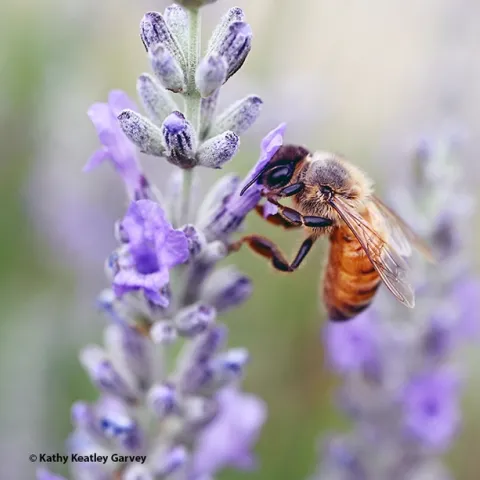
A honey bee nectars on lavender in a Vacaville garden. The soft pastel colors almost resemble a painting. (Photo by Kathy Keatley Garvey)
Bug Squad: Article

Our Buddies in the Garden

July 9, 2024
By Kathy Keatley Garvey
When you venture into your pollinator garden, look for the beauty, color, diversity and the intensity that surrounds you. You will be astounded. A honey bee nectaring on lavender in a soft-pastel scenario. A katydid nymph crawling (backlit) on a blanketflower, Gaillardia.
View Article
Primary Image
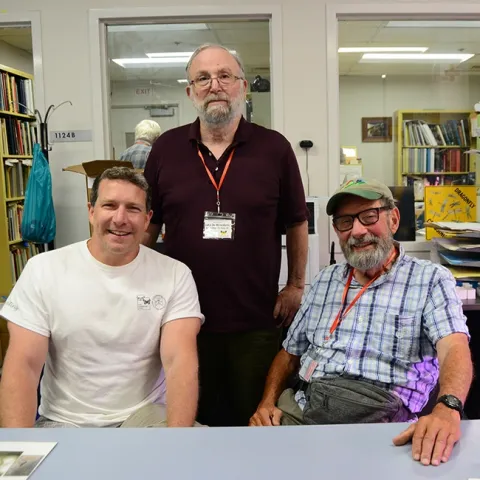
These three entomologists were trained directly or indirectly by Jerry Powell (1933-2023) of UC Berkeley. From left are Dan Rubinoff, John De Benedictus and Paul Opler (1938-2023) at a gathering of lepidopterists in 2019 at the Bohart Museum of Entomology. Powell and Paul Opler (1938-2023) co-authored Moths of Western America, published in 2009. (Photo by Kathy Keatley Garvey)
Bug Squad: Article

Meet 'The Moth Man' at Bohart Museum's Moth Night

July 9, 2024
By Kathy Keatley Garvey
Meet "The Moth Man." If you attend the Bohart Museum of Entomology's annual Moth Night celebration, affiliated with National Moth Week, you'll meet John De Benedictis, better known as The Moth Man. The indoor-outdoor event, free and open to the public, is set from 7 to 11 p.m.
View Article
Monterey County: Article

4-H Leader's Council Meeting July 16, 2024

July 9, 2024
Dear members of the Monterey County 4-H Leaders Council, On Tuesday, July 16th, the 4-H Leaders Council will hold its monthly meeting at 7pm. The location will be at the large Conference room, 1432 Abbott Street.
View Article
Page

ANR Privacy Statement

The University of California, Division of Agriculture and Natural Resources (ANR) is committed to promoting and protecting the privacy rights of individuals, as enumerated in Article 1 of the California Constitution, the Information Practices Act of 1977, and other state and federal laws.It is the policy of…
View Page
Page

Contact Us

We’d love to hear from youHave a question, need help, or just want to get in touch? Here are the best ways to reach the right people:  Seeking advice from a gardening expert, or trying to reach a Master Gardener program? Reach out to the Master Gardeners nearest you  Questions about programs and…
View Page
Page

Accessibility Statement

Accessibility for all UC Agriculture and Natural Resources is committed to making its websites accessible to all users and we have included several features designed to improve accessibility for users with disabilities.To improve the accessibility of our website we test any major redesign with several…
View Page