A Natural Solution for California's Herds: African Catfish Peptides

California's cattle producers and agricultural communities are all too familiar with the rising challenge of antibiotic resistance, making common bacterial infections harder to treat in livestock. But imagine a future where we could tackle these infections with a natural, powerful alternative. Our research points to just that: antimicrobial peptides (AMPs) found in African catfish.

We're really excited about these peptides because African catfish thrive in pathogen-rich freshwater, naturally producing these robust immune compounds in their skin mucus as a defense. This natural origin makes them highly appealing alternatives to synthetic drugs.

Predicted Safety and Potent Action

One of the most compelling aspects of these AMPs is their predicted safety for mammals. Our initial computer analyses suggest that various catfish AMPs are generally recognized as safe (GRAS). We predict they'll be absorbed in the human intestine without causing liver, brain, or heart toxicity. Furthermore, lab tests on a promising peptide, NACAP-II, confirmed it was non-hemolytic, meaning it didn't damage rabbit red blood cells—a strong indicator of its potential safety for mammalian cells.

Beyond safety, these peptides demonstrate effectiveness against problematic bacteria. One study revealed NACAP-II's strong activity against Extended-Spectrum Beta-Lactamase (ESBL)-producing Escherichia coli—a critical concern for both animal and human health due to its resistance to many common antibiotics. Another peptide, ACAP-IV, also showed antibacterial activity against E. coli and Staphylococcus aureus. We believe these AMPs work by directly disrupting bacterial cell membranes, a mechanism that makes it harder for bacteria to develop resistance compared to how they resist traditional antibiotics.

Primary Image
Figure C
UC Weed Science (weed control, management, ecology, and minutia): Article

Nutrient Strategies to Combat Branched Broomrape

June 6, 2024
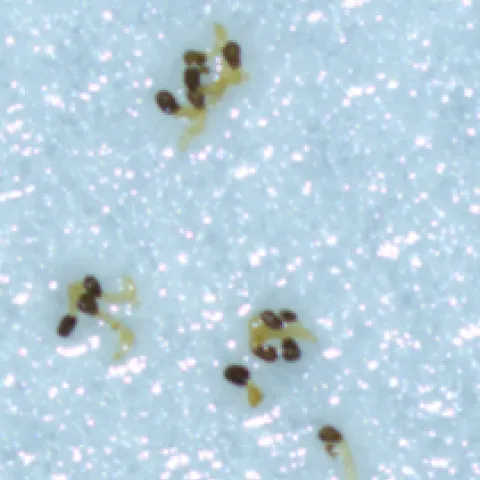
Broomrapes (Orobanche and Phelipanche spp.) are obligate plant parasites with a broad range of agricultural crop hosts. In non-parasitic plant species, seeds generally initiate germination when exposed to favorable conditions of temperature, humidity, oxygen, and, occasionally, light.
View Article
UC Cooperative Extension Imperial County: Article

June 2024

June 6, 2024
UPDATES ON FSMA FINAL RULE ON PRE-HARVEST AGRICULTURAL WATER VIRUSES IN SUGAR BEETS 2024 CALIF. DATE PALM WORKSHOP AGRONOMIC CROPS & IRRIGATION WATER MANAGEMENT WORKSHOP GOT LIVESTOCK PEST I.V.
View Article
UCCE Siskiyou: Article

June 2024

June 6, 2024
Upcoming Events YQCA State Field Day Results State Leadership Conference New!! 4-H Achievement Record Books and Forms Shasta Valley Livestock Schooling Days...
View Article
Primary Image
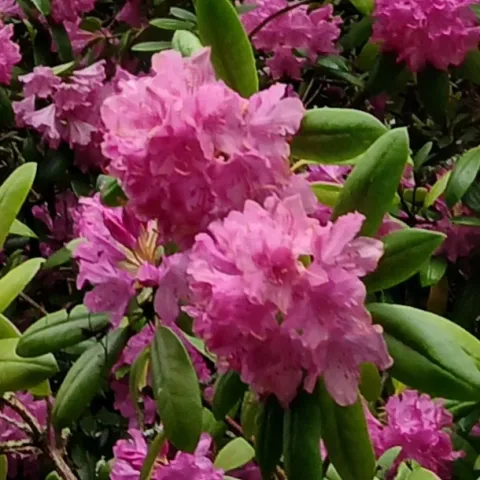
photos by Lanie and Jenny Keystone
Under the Solano Sun: Article

Chasing Springtime

June 6, 2024
Driving North on I-5 in mid-May is akin to chasing springtime. Especially when one begins in Solano County, where most of the beautiful spring blooms have already been spent or wind-blown from the trees--making way for their bright green spring leaves.
View Article
Primary Image
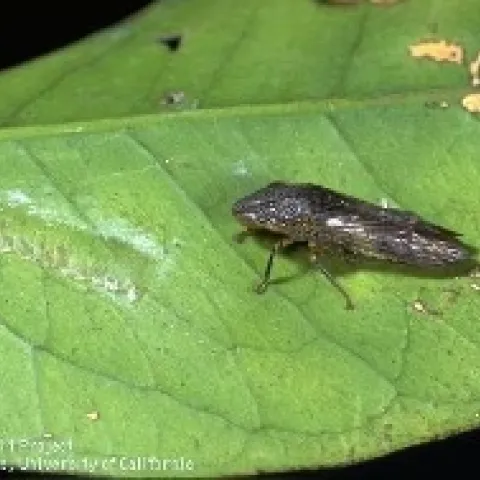
A brown insect on a green leaf.

Invasive Pest Spotlight: Glassy-winged Sharpshooter

June 6, 2024
By Lauren Fordyce
The glassy-winged sharpshooter is a large leafhopper that can transmit several important, often fatal, plant diseases in California. This includes Pierce's disease of grape, alfalfa dwarf, almond leaf scorch, and mulberry leaf scorch.
View Article
Primary Image
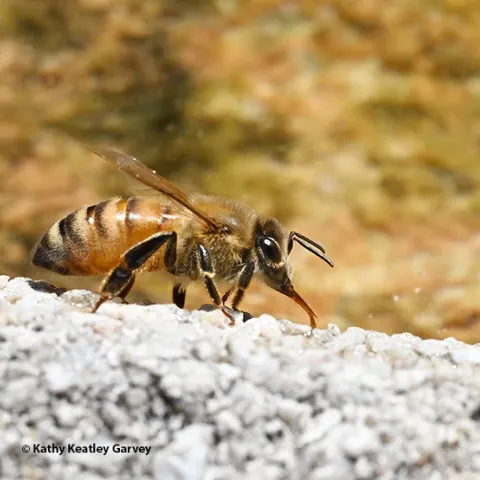
A honey bee, its proboscis extended, collects water from the edges of a birdbath. (Photo by Kathy Keatley Garvey)
Bug Squad: Article

The Water Girls

June 6, 2024
By Kathy Keatley Garvey
If you're struggling with triple-digit temperatures, think about the honey bees. They need to collect water for their colony to cool the hive so their brood can develop. And for other purposes. Just call them "The Water Girls." Lately the bees have taken a liking to our birdbath.
View Article
Primary Image
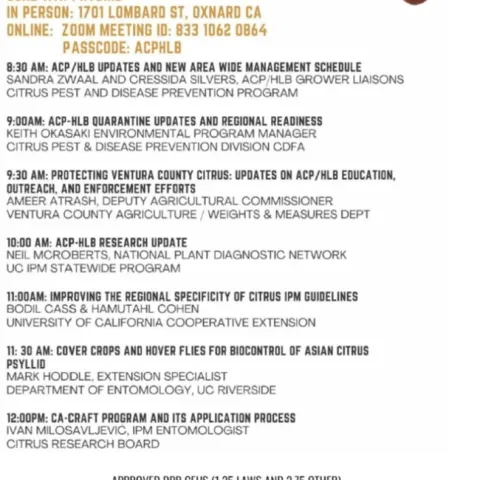
ACP grower meeting june 2024
Topics in Subtropics: Article

ACP News

June 6, 2024
By Ben A Faber
HLB Update - Ventura County Detections There have been no new confirmed positive HLB detections in Ventura since early February, and no recent expansions to the 5-mile HLB quarantine in place in the Santa Paula area.
View Article