A Natural Solution for California's Herds: African Catfish Peptides

California's cattle producers and agricultural communities are all too familiar with the rising challenge of antibiotic resistance, making common bacterial infections harder to treat in livestock. But imagine a future where we could tackle these infections with a natural, powerful alternative. Our research points to just that: antimicrobial peptides (AMPs) found in African catfish.

We're really excited about these peptides because African catfish thrive in pathogen-rich freshwater, naturally producing these robust immune compounds in their skin mucus as a defense. This natural origin makes them highly appealing alternatives to synthetic drugs.

Predicted Safety and Potent Action

One of the most compelling aspects of these AMPs is their predicted safety for mammals. Our initial computer analyses suggest that various catfish AMPs are generally recognized as safe (GRAS). We predict they'll be absorbed in the human intestine without causing liver, brain, or heart toxicity. Furthermore, lab tests on a promising peptide, NACAP-II, confirmed it was non-hemolytic, meaning it didn't damage rabbit red blood cells—a strong indicator of its potential safety for mammalian cells.

Beyond safety, these peptides demonstrate effectiveness against problematic bacteria. One study revealed NACAP-II's strong activity against Extended-Spectrum Beta-Lactamase (ESBL)-producing Escherichia coli—a critical concern for both animal and human health due to its resistance to many common antibiotics. Another peptide, ACAP-IV, also showed antibacterial activity against E. coli and Staphylococcus aureus. We believe these AMPs work by directly disrupting bacterial cell membranes, a mechanism that makes it harder for bacteria to develop resistance compared to how they resist traditional antibiotics.
Primary Image
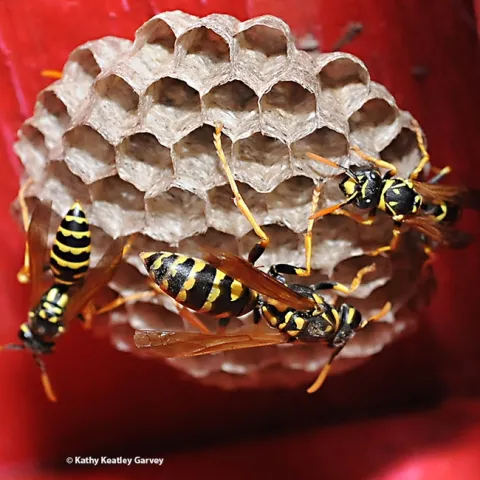
The makings of a European paper wasp nest in Davis. (Photo by Kathy Keatley Garvey)
Bug Squad: Article

Bohart Museum: How to Make a Paper Wasp Nest

January 18, 2024
By Kathy Keatley Garvey
When the Bohart Museum of Entomology hosts an open house on "Social Wasps" from 1 to 4 p.m., Saturday, Jan. 20, the traditional family art-and-crafts activity will be something special.
View Article
Coordinator News: Article

UC IPM Update: 2024 Survey, Webinars

January 18, 2024
By Karey Windbiel-Rojas, Lauren Fordyce
UC IPM is looking for feedback from UC Master Gardener programs to help us determine education and outreach needs on pest management issues. The short 7-question survey will help us focus our efforts and help you better serve your communities. Access the survey at https://surveys.ucanr.edu/survey.
View Article
Tehama County: Article

2024 North Sacramento Valley Prune Day!

January 18, 2024
North Sacramento Valley Prune Day is coming right up! Please join us Thursday, February 1st 2024 at Red Bluff Elks Lodge from 7:30AM to 1:00PM Last day for registration is NEXT Tuesday, January 23rd 2024! To register please visit our website at http://cetehama.ucanr.
View Article
Primary Image
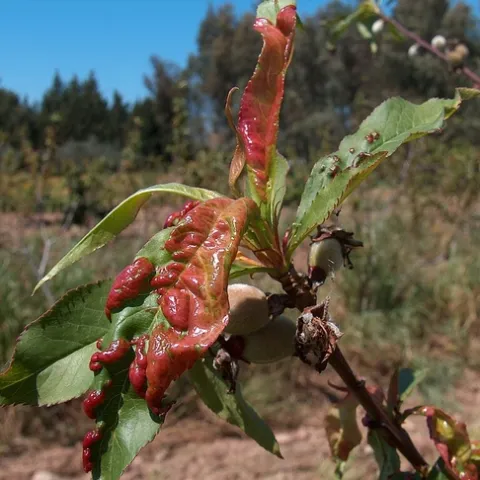
Spray peach and nectarine trees with an organic copper-based material before bud swell and bud break to prevent the later development of peach leaf curl, shown above. The product is available at nurseries and home stores. (Photo: Wikimedia Commons)
Fresno Gardening Green: Article

This week in the garden: Jan. 19 - 25

January 18, 2024
Spring planting season begins next month. Work on your garden plans and be ready to start in February. Tasks Peruse seed catalogs looking for disease-resistant strains. Shop now for bare root grape and berry vines. Deeply water trees and native plants if rainfall has been light.
View Article
Lake County: Article

2024 JOINT PEAR GROWER RESEARCH WEBINAR

January 18, 2024
2024 JOINT PEAR GROWER RESEARCH WEBINAR Thursday, February 1st, 2024 Sponsored by: UC Cooperative Extension, Lake County Department of Agriculture, California Pear Advisory Board, Pear Pest Management Research Fund 1.0 hour Laws & Regs and 1.5 hours Other DPR CEUs Requested 2.5 hours IPM and 0.
View Article
Primary Image
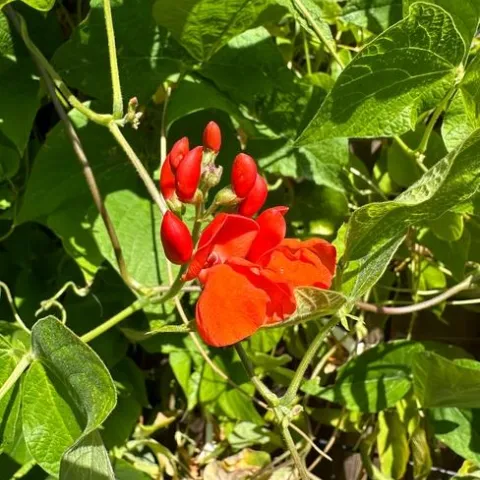
photos by Erin Mahaney
Under the Solano Sun: Article

Scarlet Runner Bean

January 18, 2024
One of my favorite, easy-to-grow, flowering vines is the scarlet runner bean (Phaseolus coccineus). This fast-growing vine is both colorful and useful. Its bright scarlet red flowers attract hummingbirds while parts of the plant are also edible. The plant is easily propagated by saving seeds.
View Article