A Natural Solution for California's Herds: African Catfish Peptides

California's cattle producers and agricultural communities are all too familiar with the rising challenge of antibiotic resistance, making common bacterial infections harder to treat in livestock. But imagine a future where we could tackle these infections with a natural, powerful alternative. Our research points to just that: antimicrobial peptides (AMPs) found in African catfish.

We're really excited about these peptides because African catfish thrive in pathogen-rich freshwater, naturally producing these robust immune compounds in their skin mucus as a defense. This natural origin makes them highly appealing alternatives to synthetic drugs.

Predicted Safety and Potent Action

One of the most compelling aspects of these AMPs is their predicted safety for mammals. Our initial computer analyses suggest that various catfish AMPs are generally recognized as safe (GRAS). We predict they'll be absorbed in the human intestine without causing liver, brain, or heart toxicity. Furthermore, lab tests on a promising peptide, NACAP-II, confirmed it was non-hemolytic, meaning it didn't damage rabbit red blood cells—a strong indicator of its potential safety for mammalian cells.

Beyond safety, these peptides demonstrate effectiveness against problematic bacteria. One study revealed NACAP-II's strong activity against Extended-Spectrum Beta-Lactamase (ESBL)-producing Escherichia coli—a critical concern for both animal and human health due to its resistance to many common antibiotics. Another peptide, ACAP-IV, also showed antibacterial activity against E. coli and Staphylococcus aureus. We believe these AMPs work by directly disrupting bacterial cell membranes, a mechanism that makes it harder for bacteria to develop resistance compared to how they resist traditional antibiotics.

Ranching in the Sierra Foothills: Article

Things We Don't Like to Talk About

November 7, 2023
By Daniel K Macon
Some of you probably know what my family has experienced over the last 10 months. I won't rehash it all here - if you're interested, I invite you to check out my personal blog at www.flyingmule.blogspot.com. Needless to say, 2023 has been quite a year.
View Article
Primary Image
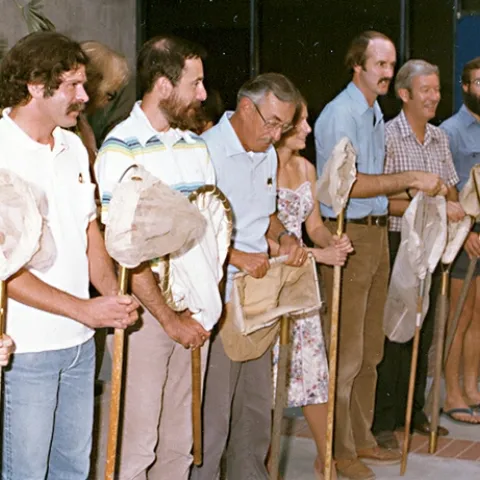
An image from the Entomological Society of America's website.
Bug Squad: Article

'Entomology 2023' Underway: Insects and Influence!

November 7, 2023
By Kathy Keatley Garvey
"Entomology 2023" is underway! The annual meeting, hosted by the Entomological Society of America (ESA), is taking place Nov. 5-8 at the Gaylord National Resort and Convention Center in National Harbor, Md. The theme: "Insects and Influence: Advancing Entomology's Impact on People and Policy.
View Article
Primary Image
IMG 20231019 115930759 HDR
Sacramento Food Systems: Article

UCCE visits UC Davis food processing facilities

November 7, 2023
By Olivia M Henry
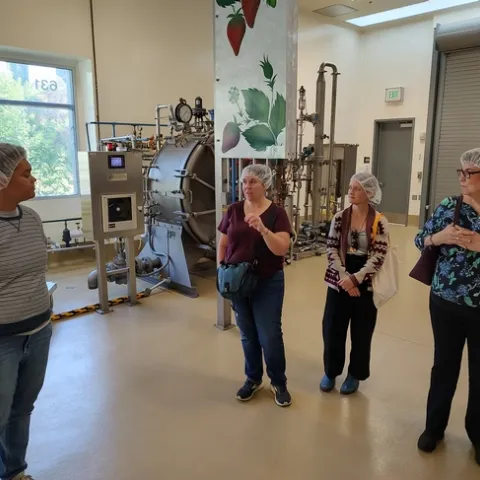
Pilot Plant manager Amy Fletcher talks with UCCE staff in front of a rotary steritort which Fletcher likened to an Instant Pot but faster that quickly brings canned, jarred or bottled food up to the lethal temperature for pathogens then rapidly cools the food down with cold water.
View Article
Primary Image
Evolutionary biologist Scott Carroll and entomologist Jenella Loye, associates of the UC Davis Department of Entomology and Nematology, are participating in the Entomological Society of America meeting in Maryland.
Entomology & Nematology News: Article

ESA Meeting Underway in Maryland

November 7, 2023
By Kathy Keatley Garvey
Dozens of UC Davis Department of Entomology andNematology faculty, alumni and graduate students are participating in "Entomology 2023," hosted by the Entomological Society of America (ESA). Theme of annual ESA meeting, taking place Nov.
View Article
Primary Image
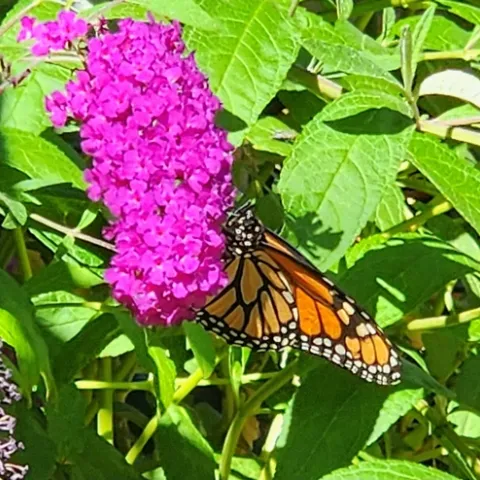
Monarch on Butterfly Bush - Al Alvarado
Under the Solano Sun: Article

Monarch Butterfly or Vicery Butterfly? Yes, it's a Monarch!

November 7, 2023
I recently wrote an article about a Viceroy butterfly visiting our garden. When I first spotted that beauty on our Butterfly Bush Buddleja, I originally thought it was a Monarch butterfly. After doing some research, I discovered that it was the look-alike Viceroy.
View Article