A Natural Solution for California's Herds: African Catfish Peptides

California's cattle producers and agricultural communities are all too familiar with the rising challenge of antibiotic resistance, making common bacterial infections harder to treat in livestock. But imagine a future where we could tackle these infections with a natural, powerful alternative. Our research points to just that: antimicrobial peptides (AMPs) found in African catfish.

We're really excited about these peptides because African catfish thrive in pathogen-rich freshwater, naturally producing these robust immune compounds in their skin mucus as a defense. This natural origin makes them highly appealing alternatives to synthetic drugs.

Predicted Safety and Potent Action

One of the most compelling aspects of these AMPs is their predicted safety for mammals. Our initial computer analyses suggest that various catfish AMPs are generally recognized as safe (GRAS). We predict they'll be absorbed in the human intestine without causing liver, brain, or heart toxicity. Furthermore, lab tests on a promising peptide, NACAP-II, confirmed it was non-hemolytic, meaning it didn't damage rabbit red blood cells—a strong indicator of its potential safety for mammalian cells.

Beyond safety, these peptides demonstrate effectiveness against problematic bacteria. One study revealed NACAP-II's strong activity against Extended-Spectrum Beta-Lactamase (ESBL)-producing Escherichia coli—a critical concern for both animal and human health due to its resistance to many common antibiotics. Another peptide, ACAP-IV, also showed antibacterial activity against E. coli and Staphylococcus aureus. We believe these AMPs work by directly disrupting bacterial cell membranes, a mechanism that makes it harder for bacteria to develop resistance compared to how they resist traditional antibiotics.

Primary Image
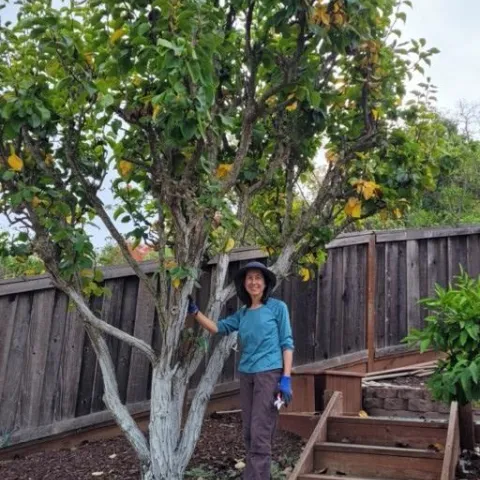
Dish garden. photos by Karen Metz
Under the Solano Sun: Article

Moving Objects

August 21, 2023
A few years ago, I bought a few bags of glow- in- the- dark stones. My friend was making fairy gardens with her granddaughter and I thought they would enjoy the novelty of the stones. I kept a bag for myself. I don't remember being very impressed with the glow- in- the- dark capability.
View Article
Primary Image
hands-970191 1280 Pixbay

California native plants and the lives of the first inhabitants.

August 20, 2023
Recently a fellow Master Gardener recommended I read Inherited Silence by Louise Dunlap. The book is described as an insightful look at the historical damages early colonizers of America caused and how their descendants may recognize and heal the harm done to the earth and the native peoples.
View Article
Primary Image
A honey bee foraging in a Mexican sunflower, Tithonia rotundifola. (Photo by Kathy Keatley Garvey)

Here's to Celebrating National Honey Bee Day

August 18, 2023
By Kathy Keatley Garvey
Hear that buzz? National Honey Bee Day is Saturday, Aug. 19 and you're invited to join this oh-so-sweet celebration! Launched in 2009, National Honey Bee Day takes place on the third Saturday of August. The event originated when a small group of beekeepers petitioned the U.S.
View Article
Primary Image
Achemon spinx moth
The Backyard Gardener: Article

The Grapevine Sphinx Moth: A Guest, Not a Pest!

August 18, 2023
The cooler weather lately had me performing overdue maintenance in my garden. Cutting back some flowers on a perennial arugula plant the other night, I came across this stunning moth.
View Article
Primary Image
Tree With Eyes - Al Alavarado
Under the Solano Sun: Article

The Tree That Watches Over the Family Cabin

August 18, 2023
We love to visit an extraordinary spot in the Sierra Nevada mountains and hike among the majestic Sequoia sempervirens (redwood) trees, located in the Calaveras Big Trees State Park.
View Article
Cooperative Extension San Joaquin County: Article

Delta Rice Workshop

August 17, 2023
We invite you to attend a Delta Rice Workshop on Wednesday, August 23rd from 10:00am to noon on Staten Island (23319 N. Staten Island Rd., Thornton).
View Article
Primary Image
A stilt bug descending an evening primrose. (Photo by Kathy Keatley Garvey)

The Stilt Walkers

August 17, 2023
By Kathy Keatley Garvey
They look as if they belong in a circus or in a cartoon. Long dangly legs, elongated body, and long, four-segmented antennae topped with a small club. But there they were, stilt bugs, foraging on evening primrose at dawn in our "living laboratory"--a pollinator garden in Vacaville, Calif.
View Article