A Natural Solution for California's Herds: African Catfish Peptides

California's cattle producers and agricultural communities are all too familiar with the rising challenge of antibiotic resistance, making common bacterial infections harder to treat in livestock. But imagine a future where we could tackle these infections with a natural, powerful alternative. Our research points to just that: antimicrobial peptides (AMPs) found in African catfish.

We're really excited about these peptides because African catfish thrive in pathogen-rich freshwater, naturally producing these robust immune compounds in their skin mucus as a defense. This natural origin makes them highly appealing alternatives to synthetic drugs.

Predicted Safety and Potent Action

One of the most compelling aspects of these AMPs is their predicted safety for mammals. Our initial computer analyses suggest that various catfish AMPs are generally recognized as safe (GRAS). We predict they'll be absorbed in the human intestine without causing liver, brain, or heart toxicity. Furthermore, lab tests on a promising peptide, NACAP-II, confirmed it was non-hemolytic, meaning it didn't damage rabbit red blood cells—a strong indicator of its potential safety for mammalian cells.

Beyond safety, these peptides demonstrate effectiveness against problematic bacteria. One study revealed NACAP-II's strong activity against Extended-Spectrum Beta-Lactamase (ESBL)-producing Escherichia coli—a critical concern for both animal and human health due to its resistance to many common antibiotics. Another peptide, ACAP-IV, also showed antibacterial activity against E. coli and Staphylococcus aureus. We believe these AMPs work by directly disrupting bacterial cell membranes, a mechanism that makes it harder for bacteria to develop resistance compared to how they resist traditional antibiotics.

Primary Image
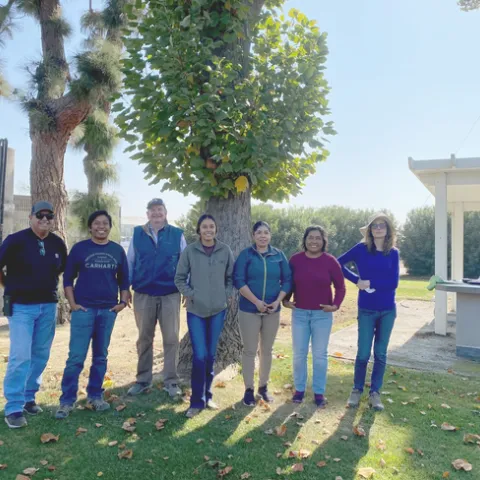
Danny is wearing a jacket sporting the UC Master Gardener logo.
ANR Employee News: Article

Become a UC ANR brand ambassador

August 22, 2023
By Pamela S Kan-Rice
UC ANR has launched the Brand Ambassador Certification Program, which is designed to encourage employees to actively steward effective branding for the University of California Agriculture and Natural Resources.
View Article
Primary Image
Heidi
The Stanislaus Sprout: Article

Seed Saving Webinar August 29, 2023 at 6 p.m.

August 22, 2023
By Anne E Schellman
As summer winds to a close, it's the perfect time to save seeds from your garden for next year. Although the actual process of saving seeds is easy, there are a few important things to know in order to be successful.
View Article
Primary Image
Photo by Jacqueline Shubitowski
UC Master Gardeners- Diggin' it in SLO: Article

Transform Your Lawn

August 22, 2023
Transform Your Lawn By Tami Reece UCCE Master Gardener Where did lawns come from? Have they always been a part of the American landscape? Lawn's first appeared around the 1600's in Europe, which makes sense since the mild and damp climate of Europe kept the grass lush and green.
View Article
Primary Image
Photo by Megan Edwards
UC Master Gardeners- Diggin' it in SLO: Article

String of Hearts

August 22, 2023
String of Hearts By UCCE Master Gardener Megan Edwards Ceropogia woodii Planting areas: USDA Zone 9-10 Size: 2 tall with 4-9 ft vines Bloom season: spring and summer Exposure: 3-4 hrs indirect sunlight Pruning needs: minimal Water needs: minimal Sweet Hearts Among the many varieties of succulent-lik...
View Article
IGIS: Article

IGIS Fall 2023 Workshop Schedule

August 22, 2023
By Sean D Hogan, Shane T Feirer, Andy Lyons
The IGIS Team is pleased to share our workshop schedule for Fall 2023. See the dates and descriptions below. If you're not available to attend one that really interests you keep an eye open for the recordings on our YouTube Channel.
View Article
Primary Image
Photo by Jacqueline Shubitowski
UC Master Gardeners- Diggin' it in SLO: Article

Pomegranate

August 22, 2023
Pomegranate By Tami Reece UCCE Master Gardener Common name of plant: Pomegranate Scientific name: Punica granatum Planting area: Sunset zone 7-10 Size: 12 to 20 feet height and 12 to 15 feet width Bloom Season: flowers bloom late May to June; fruit ripens September to October.
View Article
Primary Image
Photo by Ardis Neilsen
UC Master Gardeners- Diggin' it in SLO: Article

Aeonium

August 22, 2023
Aeonium By Ardis Neilsen UCCE Master Gardener Aeonium haworthii Kiwi' - an award- winning succulent Common Names: Aeonium kiwi, pinwheel, tree houseleek, Irish rose Scientific Name: Aeonium haworthii Kiwi' Planting Area: USDA 9-11 Size: width 2-3 feet, height 2-3 feet Growing Season: perennial, year...
View Article
Primary Image
Photo by Polly Nelson
UC Master Gardeners- Diggin' it in SLO: Article

Rain Catchment

August 22, 2023
Capturing Rainwater By Polly Nelson UCCE Master Gardener When the rains came earlier this year, did you watch water run off your landscaping to the street (aka urban drool), or did it soak into your soil? What changes did you think about making during that time?
View Article
Primary Image
Woman wearing an orange print blouse speaks into a handheld mic.
ANR Employee News: Article

World Ag Expo accepts seminar proposals

August 22, 2023
By Pamela S Kan-Rice
Entering its 57th year, World Ag Expo is the largest annual outdoor agricultural tradeshow in the world. The World Ag Expo, held in Tulare each February, showcases the latest in agricultural innovation and education.
View Article
Primary Image
Safely harvesting blackberries. Photos by Tina Saravia
Under the Solano Sun: Article

More Summer Harvest

August 22, 2023
The summer fruit harvesting continues. We've had some hot days. I'm still waiting for the passion fruit to ripen. The grapes in the side yard are starting to ripen. But not quite as sweet as they could be. I know, because I've been eating them off the vine. The blackberries are ripening also.
View Article