A Natural Solution for California's Herds: African Catfish Peptides

California's cattle producers and agricultural communities are all too familiar with the rising challenge of antibiotic resistance, making common bacterial infections harder to treat in livestock. But imagine a future where we could tackle these infections with a natural, powerful alternative. Our research points to just that: antimicrobial peptides (AMPs) found in African catfish.

We're really excited about these peptides because African catfish thrive in pathogen-rich freshwater, naturally producing these robust immune compounds in their skin mucus as a defense. This natural origin makes them highly appealing alternatives to synthetic drugs.

Predicted Safety and Potent Action

One of the most compelling aspects of these AMPs is their predicted safety for mammals. Our initial computer analyses suggest that various catfish AMPs are generally recognized as safe (GRAS). We predict they'll be absorbed in the human intestine without causing liver, brain, or heart toxicity. Furthermore, lab tests on a promising peptide, NACAP-II, confirmed it was non-hemolytic, meaning it didn't damage rabbit red blood cells—a strong indicator of its potential safety for mammalian cells.

Beyond safety, these peptides demonstrate effectiveness against problematic bacteria. One study revealed NACAP-II's strong activity against Extended-Spectrum Beta-Lactamase (ESBL)-producing Escherichia coli—a critical concern for both animal and human health due to its resistance to many common antibiotics. Another peptide, ACAP-IV, also showed antibacterial activity against E. coli and Staphylococcus aureus. We believe these AMPs work by directly disrupting bacterial cell membranes, a mechanism that makes it harder for bacteria to develop resistance compared to how they resist traditional antibiotics.
Primary Image
A praying mantis, Stagmomantis limbata, strikes a pose. (Photo by Kathy Keatley Garvey)

Bohart Museum to Host Open House on Praying Mantises

August 21, 2023
By Kathy Keatley Garvey
How much do you know about praying mantises? The Bohart Museum of Entomology is hosting an open house, themed "Praying Mantises," on Sunday, Aug. 27 in Room 1124 of the Academic Surge Building, 455 Crocker Lane, UC Davis campus. It is free and family friendly.
View Article
ANR Employee News: Article

American Agri-Women to meet Nov. 1-5 in Sacramento

August 21, 2023
By Pamela S Kan-Rice
California Women for Agriculture will host the American Agri-Women's 48th annual meeting in Sacramento on Nov. 1-5. The event will be held at the Embassy Suites in Old Town Sacramento. Tours for attendees and guests will explore the diverse agriculture of Northern California.
View Article
Thriving Forward: Article

Welcome to Thriving Forward

August 21, 2023
By Matthew R Rodriguez
Welcome to "Thriving Forward," which is a blog dedicated to "promoting healthy people and communities.
View Article
Primary Image
A green bottle fly (Lucilia sericata) forages on milkweed, Asclepias curassavica, on Aug. 20 in a Vacaville pollinator garden. (Photo by Kathy Keatley Garvey)
Bug Squad: Article

What's on the Menu for a Mantis?

August 21, 2023
By Kathy Keatley Garvey
A green bottle fly lands on a tropical milkweed, Asclepias curassavica, in a Vacaville pollinator garden.
View Article
Primary Image
Figure 1. Italian ryegrass characteristics: purple coloration at the base (a), seed heads (b), collar (c), and spikelets (d). Photo by Clebson Gonçalves.
UC Weed Science (weed control, management, ecology, and minutia): Article

Italian ryegrass update: latest research and management strategy

August 21, 2023
By Clebson G Goncalves
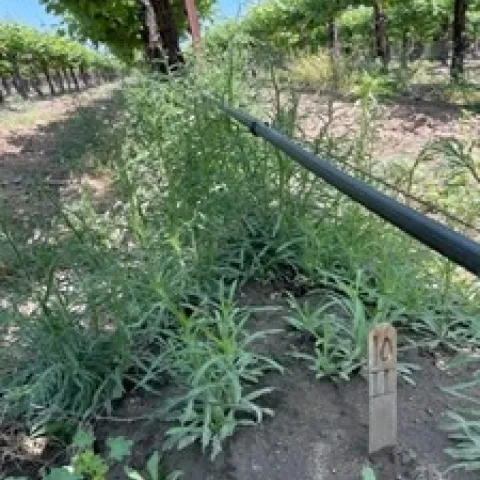
In California, Italian ryegrass [Lolium perenne L. spp. multiflorum (Lam.) Husnot] has been around for a long time and is a major weed in orchards, vineyards, field crops, fallow fields, and so on. It grows vigorously in winter and early spring.
View Article
Primary Image
MORE CEO Susie Davies; Mariana Garcia and Cailin McLaughlin of CalFresh Healthy Living, UCCE; Luanne McGowan of MORE; Carmela Padilla of CFHL, UCCE; and Andra Nicoli, CFHL, UC state office
Healthy Communities Blog: Article

Adults with disabilities learn nutrition, grow gardening and cooking skills

August 21, 2023
By Michael Hsu
A nonprofit serving adults with intellectual and developmental disabilities in El Dorado County, MORE has found kindred spirits in helping their clients live fuller and healthier lives the staff and volunteers of University of California Master Gardeners and CalFresh Healthy Living, UC.
View Article
Primary Image
hover fly avocado flower
Topics in Subtropics: Article

Watching Hoverflies Surf da Orchard

August 21, 2023
By Ben A Faber
Oblique streaktail hoverflies zip from bloom to bloom wearing a wasp costume to avoid getting eaten. But it's all for show they don't even have stingers! Their fierce maggots, on the other hand, devour hundreds of insect pests. As they gorge, they help keep orange trees safe from disease.
View Article
Primary Image
Hoverfly
Spill the Beans: Article

Plant Pollination: Beyond Bees

August 21, 2023
There are around 350,000 pollinator species in the world. Though they are the most recognizable, bees are not the only plant pollinator team in town. Other insects that help to carry this responsibility are. butterflies, flies, moths and beetles.
View Article