A Natural Solution for California's Herds: African Catfish Peptides

California's cattle producers and agricultural communities are all too familiar with the rising challenge of antibiotic resistance, making common bacterial infections harder to treat in livestock. But imagine a future where we could tackle these infections with a natural, powerful alternative. Our research points to just that: antimicrobial peptides (AMPs) found in African catfish.

We're really excited about these peptides because African catfish thrive in pathogen-rich freshwater, naturally producing these robust immune compounds in their skin mucus as a defense. This natural origin makes them highly appealing alternatives to synthetic drugs.

Predicted Safety and Potent Action

One of the most compelling aspects of these AMPs is their predicted safety for mammals. Our initial computer analyses suggest that various catfish AMPs are generally recognized as safe (GRAS). We predict they'll be absorbed in the human intestine without causing liver, brain, or heart toxicity. Furthermore, lab tests on a promising peptide, NACAP-II, confirmed it was non-hemolytic, meaning it didn't damage rabbit red blood cells—a strong indicator of its potential safety for mammalian cells.

Beyond safety, these peptides demonstrate effectiveness against problematic bacteria. One study revealed NACAP-II's strong activity against Extended-Spectrum Beta-Lactamase (ESBL)-producing Escherichia coli—a critical concern for both animal and human health due to its resistance to many common antibiotics. Another peptide, ACAP-IV, also showed antibacterial activity against E. coli and Staphylococcus aureus. We believe these AMPs work by directly disrupting bacterial cell membranes, a mechanism that makes it harder for bacteria to develop resistance compared to how they resist traditional antibiotics.
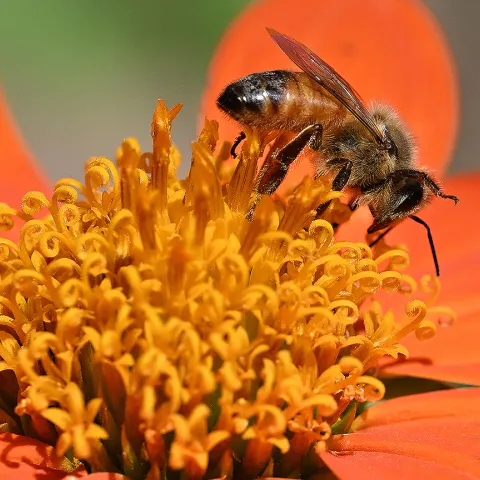
Primary Image
Honey bee on Mexican sunlower (Tithonia rotundifola) in the UC Davis Bee Haven. (Photo by Kathy Keatley Garvey)

A Visit to the UC Davis Bee Haven

September 26, 2025
By Kathy Keatley Garvey
 What do you prefer to do on a day off?For me, it's a "mini-vacation" to the UC Davis Bee Haven, the half-acre bee demonstration garden maintained by the UC Davis Department of Entomology and Nematology (ENT). Installed in the fall of 2009, it's located next to the Harry H. Laidlaw Jr Honey Bee Research…
View Article
The Stanislaus Sprout: Article

Apples of my Eye

September 26, 2025
By Anne E Schellman
 Nothing says fall like biting into a fresh, crisp apple. While a few varieties are available in stores, growing your own apples can be a rewarding experience, providing you with varieties unavailable at the supermarket. This article includes information to assist home gardeners in selecting the right…
View Article
The Stanislaus Sprout: Article

For Summer Shade, Plant a Tree Today

September 26, 2025
By Anne E Schellman
 Many beautiful varieties of shade trees are well-suited to our Central Valley climate. Fall is the perfect time to plant a tree that will provide shade for your landscape for years to come! Small Trees – to 30 feet tallChaste Tree (Vitex agnus-castus)This gorgeous deciduous tree has a round or…
View Article
The Stanislaus Sprout: Article

MOSQUITOES: The True Vampires

September 26, 2025
By Anne E Schellman
 Vampires are mythic undead humans who sleep during the day and hunt for blood at night.  However, we have our own very real and very much alive bloodsucking vampires - mosquitoes! Unlike vampires, some mosquitoes are active during the daytime and may be out with the ghosts, goblins and witches…
View Article
Placer / Nevada Counties: Page

Publications and Resources

TreesPlanting Landscape TreesFertilizing Landscape TreesFruit and Nut Tree Pruning Guidelines for ArboristsUC ANR Landscaping Publications - FreeFire-Smart Landscaping in the Sierra FoothillsPrinciples for Landscape Water Conservation Sustainable Landscaping in CaliforniaEfficient Urban Water Management…
View Page