A Natural Solution for California's Herds: African Catfish Peptides

California's cattle producers and agricultural communities are all too familiar with the rising challenge of antibiotic resistance, making common bacterial infections harder to treat in livestock. But imagine a future where we could tackle these infections with a natural, powerful alternative. Our research points to just that: antimicrobial peptides (AMPs) found in African catfish.

We're really excited about these peptides because African catfish thrive in pathogen-rich freshwater, naturally producing these robust immune compounds in their skin mucus as a defense. This natural origin makes them highly appealing alternatives to synthetic drugs.

Predicted Safety and Potent Action

One of the most compelling aspects of these AMPs is their predicted safety for mammals. Our initial computer analyses suggest that various catfish AMPs are generally recognized as safe (GRAS). We predict they'll be absorbed in the human intestine without causing liver, brain, or heart toxicity. Furthermore, lab tests on a promising peptide, NACAP-II, confirmed it was non-hemolytic, meaning it didn't damage rabbit red blood cells—a strong indicator of its potential safety for mammalian cells.

Beyond safety, these peptides demonstrate effectiveness against problematic bacteria. One study revealed NACAP-II's strong activity against Extended-Spectrum Beta-Lactamase (ESBL)-producing Escherichia coli—a critical concern for both animal and human health due to its resistance to many common antibiotics. Another peptide, ACAP-IV, also showed antibacterial activity against E. coli and Staphylococcus aureus. We believe these AMPs work by directly disrupting bacterial cell membranes, a mechanism that makes it harder for bacteria to develop resistance compared to how they resist traditional antibiotics.

Primary Image
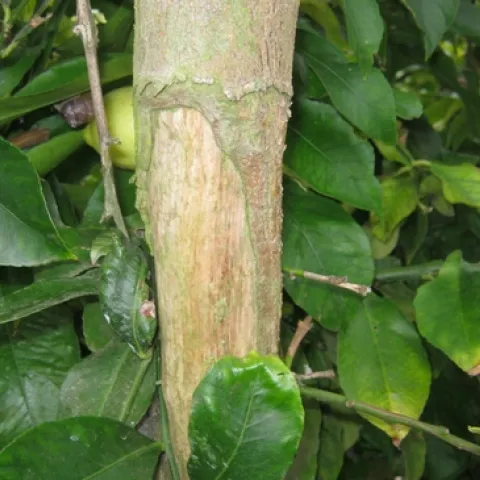
Ecologist Rick Karban with sagebrush.
Bug Squad: Article

Pardon Me, But You're Eating My Relative!

September 23, 2014
By Kathy Keatley Garvey
If you're a sagebrush and a predator (such as a grasshopper) is eating your nearby kin, another sagebrush, it's good to be closely related. Through volatile (chemical) cues, your kin will inform you of the danger so you can adjust your defenses. Yes, plants can communicate.
View Article
UC Weed Science (weed control, management, ecology, and minutia): Article

POST efficacy with Venue (pyraflufen) as a tankmix partner in orchard crops

September 23, 2014
By Brad Hanson
Sharing the results of two recent field trials conducted to evaluate several POST herbicides with and without the addition of pyraflufen (Venue). Please note that glufosinate is not a registered treatment for prunes - this site was not harvested.
View Article
Primary Image
Lynn Kimsey, director of the Bohart Museum of Entomology, and millipede enthusiast Evan White, both of UC Davis,
Bug Squad: Article

Like Bugs?

September 22, 2014
By Kathy Keatley Garvey
Like bugs? Thinking about becoming an entomologist or just want some hands-on experience? Mark your calendar. The Bohart Museum of Entomology on the UC Davis campus is planning an open house on "How to Be an Entomologist" from 1 to 4 p.m., Saturday, Sept. 27.
View Article
Primary Image
A very hungry Gulf Fritillary caterpillar working over the Passiflora. (Photo by Kathy Keatley Garvey)
Bug Squad: Article

No Butterflies Without Caterpillars

September 19, 2014
By Kathy Keatley Garvey
How can you hate a caterpillar and love a butterfly? You can't. Some gardeners so love their passionflower vine (Passiflora) that they squirm at the thought of a caterpillar munching it down to nothing. But that's what caterpillars do.
View Article
Primary Image
image 24861
IGIS: Article

How Scotland voted

September 19, 2014
By Maggi Kelly
Reds are Yes, blues are NoHere is a map of voting results from yesterday's historic independence vote in Scotland. Overall the Nos carried the day - 55% - 45%. Interestingly, Motherwell and Hamilton, two towns in my family's life, were split. Motherwell voted Och Aye and Hamilton voted the Noo.
View Article
IGIS: Article

King fire update

September 19, 2014
By Maggi Kelly
Blodgett looks like it is going to be OK, but the King fire is burning through the SNAMP Eldorado study area. This is where the SNAMP owl reasearchers are doing their work. We are getting a response from them to post on the SNAMP website.
View Article
Primary Image
A honey bee sipping nectar from a hole drilled by a carpenter bee on a foxglove. (Photo by Kathy Keatley Garvey)
Bug Squad: Article

Short Cut

September 18, 2014
By Kathy Keatley Garvey
We all take shortcuts. We look for the shortest line at the supermarket, we use keyboard shortcuts, and we text how r u? So, why shouldn't honey bees use shortcuts? They do.
View Article
Primary Image
Backlit, the monarch resembles a stained glass window as it touches down on a Mexican sunflower (Tithonia). (Photo by Kathy Keatley Garvey)
Bug Squad: Article

Bring Back the Monarchs!

September 17, 2014
By Kathy Keatley Garvey
When a monarch butterfly comes fluttering through your yard, grab your camera. Marvel at it beauty, celebrate its presence, and keep it in your memory. It may be become an endangered species the way things are going.
View Article
IGIS: Article

King fire near Blodgett Forest Research Station

September 17, 2014
By Maggi Kelly
From UC Center for Forestry. 9/16 16:30 - The King Fire started the evening of September 13 east of Pollock Pines. On 9/15, it grew to 3,900 acres. By the morning of 9/16, it was over 11,000 acres and 5% contained.
View Article