A Natural Solution for California's Herds: African Catfish Peptides

California's cattle producers and agricultural communities are all too familiar with the rising challenge of antibiotic resistance, making common bacterial infections harder to treat in livestock. But imagine a future where we could tackle these infections with a natural, powerful alternative. Our research points to just that: antimicrobial peptides (AMPs) found in African catfish.

We're really excited about these peptides because African catfish thrive in pathogen-rich freshwater, naturally producing these robust immune compounds in their skin mucus as a defense. This natural origin makes them highly appealing alternatives to synthetic drugs.

Predicted Safety and Potent Action

One of the most compelling aspects of these AMPs is their predicted safety for mammals. Our initial computer analyses suggest that various catfish AMPs are generally recognized as safe (GRAS). We predict they'll be absorbed in the human intestine without causing liver, brain, or heart toxicity. Furthermore, lab tests on a promising peptide, NACAP-II, confirmed it was non-hemolytic, meaning it didn't damage rabbit red blood cells—a strong indicator of its potential safety for mammalian cells.

Beyond safety, these peptides demonstrate effectiveness against problematic bacteria. One study revealed NACAP-II's strong activity against Extended-Spectrum Beta-Lactamase (ESBL)-producing Escherichia coli—a critical concern for both animal and human health due to its resistance to many common antibiotics. Another peptide, ACAP-IV, also showed antibacterial activity against E. coli and Staphylococcus aureus. We believe these AMPs work by directly disrupting bacterial cell membranes, a mechanism that makes it harder for bacteria to develop resistance compared to how they resist traditional antibiotics.
UC Weed Science (weed control, management, ecology, and minutia): Article

Our Great Outdoors

June 17, 2014
By Gale Perez
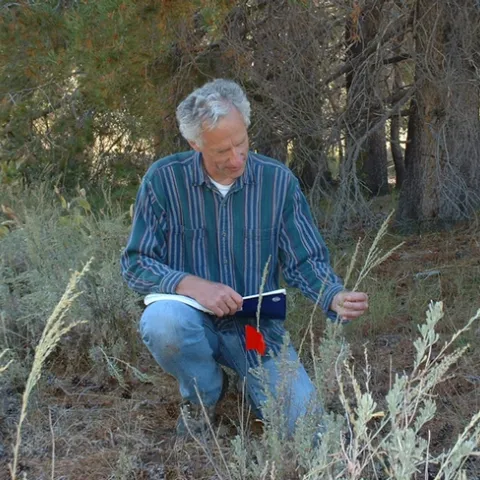
Don't miss Clyde Elmore's photo exhibit Our Great Outdoors. If you attend Weed Day 2014 (July 10, 2014) you'll get a chance to see the exhibit. Our Great Outdoors July 7-Aug. 31, 2014 Buehler Alumni Center, UC Davis There will be a reception from 5-7 PM on July 11, 2014.
View Article
Primary Image
These males are longhorned digger bees, Melissodes agilis, sleeping on a lavender stem. (Photo by Kathy Keatley Garvey)
Bug Squad: Article

Boys' Night Out

June 16, 2014
By Kathy Keatley Garvey
By day, they fly around our yard looking for the girls. At night, it's "Boys' Night Out." These males, longhorned digger bees, Melissodes agilis (as identified by native pollinator specialist Robbin Thorp, emeritus professor of entomology at UC Davis), are absolutely spectacular.
View Article
UC Weed Science (weed control, management, ecology, and minutia): Article

Managing junglerice in corn

June 13, 2014
By Brad Hanson, Carol A Frate, Steven D Wright
From the May 2014 Tulare County UC Cooperative Extension "Field Crop Notes" newsletter http://cetulare.ucanr.edu/newletters_898819/Field_Crop_Notes_692/?newsitem=51665 Managing Junglerice in Corn by Steve Wright and Carol Frate Introduction.
View Article
Primary Image
Red flame skimmer or firecracker skimmer (Libellula saturata). (Photo by Kathy Keatley Garvey)
Bug Squad: Article

Don't You Just Love Those Dragonflies?

June 12, 2014
By Kathy Keatley Garvey
Don't you just love those dragonflies? We watch them circle our fish pond, grab flying insects in mid-air, and then touch down on a bamboo stake in our yard to eat them. Some dragonflies stay for hours; others for what seems like half a second. Some let you walk up to them and touch them.
View Article
UC Weed Science (weed control, management, ecology, and minutia): Article

PREE herbicides in wildlands?

June 12, 2014
By Gale Perez
From the Invasive Plants in Southern California blog :: June 11, 2014 Preemergence herbicides for wildland weed control Kill weeds before they ever see the light of day; sounds great, doesn't it? That is what preemergence herbicides are for.
View Article
Primary Image
The plume moth is tiny. It's shown here on the finger of native pollinator specialist Robbin Thorp, emeritus professor of entomology at UC Davis. (Photo by Kathy Keatley Garvey)
Bug Squad: Article

Plume Moth Fit to a 'T'

June 11, 2014
By Kathy Keatley Garvey
In some respects, the pterophorid plume moth is fit to a 'T.' "The T-square shape is classic," says butterfly expert Art Shapiro, distinguished professor of evolution and ecology at the University of California, Davis.
View Article
Primary Image
A honey bee lands on a ginkgo tree. (Photo by Kathy Keatley Garvey)
Bug Squad: Article

The Bee and the Ginkgo Tree

June 10, 2014
By Kathy Keatley Garvey
I've always liked the ginkgo tree, despite the fact that honey bees don't like it. It's a non-flowering plant so there's no reward for the bees. In other words, a bee has no reason to visit it. No reason at all.
View Article
Primary Image
A drone fly, Eristalis tenax, on a Shasta daisy at the Luther Burbank Home and Gardens. (Photo by Kathy Keatley Garvey)
Bug Squad: Article

Rats!

June 9, 2014
By Kathy Keatley Garvey
Rats! How many times have you encountered a "honey bee" on the Internet, in a book, magazine, newspaper or other publication, and found a syrphid fly misidentified as a honey bee? It's truly amazing how often syrphid flies are mistaken for honey bees.
View Article