A Natural Solution for California's Herds: African Catfish Peptides

California's cattle producers and agricultural communities are all too familiar with the rising challenge of antibiotic resistance, making common bacterial infections harder to treat in livestock. But imagine a future where we could tackle these infections with a natural, powerful alternative. Our research points to just that: antimicrobial peptides (AMPs) found in African catfish.

We're really excited about these peptides because African catfish thrive in pathogen-rich freshwater, naturally producing these robust immune compounds in their skin mucus as a defense. This natural origin makes them highly appealing alternatives to synthetic drugs.

Predicted Safety and Potent Action

One of the most compelling aspects of these AMPs is their predicted safety for mammals. Our initial computer analyses suggest that various catfish AMPs are generally recognized as safe (GRAS). We predict they'll be absorbed in the human intestine without causing liver, brain, or heart toxicity. Furthermore, lab tests on a promising peptide, NACAP-II, confirmed it was non-hemolytic, meaning it didn't damage rabbit red blood cells—a strong indicator of its potential safety for mammalian cells.

Beyond safety, these peptides demonstrate effectiveness against problematic bacteria. One study revealed NACAP-II's strong activity against Extended-Spectrum Beta-Lactamase (ESBL)-producing Escherichia coli—a critical concern for both animal and human health due to its resistance to many common antibiotics. Another peptide, ACAP-IV, also showed antibacterial activity against E. coli and Staphylococcus aureus. We believe these AMPs work by directly disrupting bacterial cell membranes, a mechanism that makes it harder for bacteria to develop resistance compared to how they resist traditional antibiotics.
Primary Image
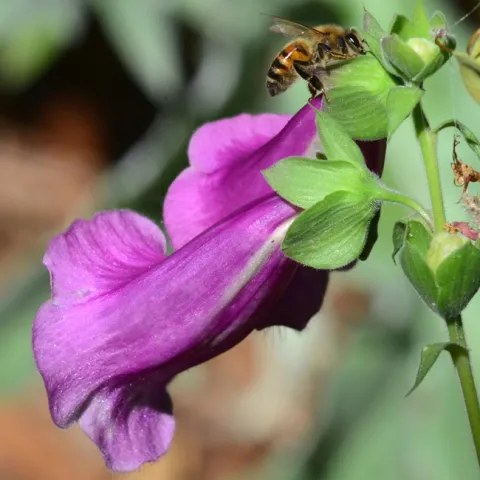
Honey bee foraging on safflower. (Photo by Kathy Keatley Garvey)
Bug Squad: Article

Bees Really Connect with Safflowers!

June 5, 2014
By Kathy Keatley Garvey
Honey bees love safflowers, says Extension apiculturist Eric Mussen of the UC Davis Department of Entomology and Nematology. That they do. Safflower fields literally buzz with bees foraging on the blossoms. Sometimes the pollen load is so heavy it's a wonder they can fly back to their colonies.
View Article
UC Weed Science (weed control, management, ecology, and minutia): Article

JOB OPENING :: 2 Weed Scientist positions in the Philippines

June 5, 2014
By Gale Perez
Here are two (2) weed science positions announced at the International Rice Research Institute (IRRI): Scientist - Weed Scientist (South Asia) (14-RP10310) Scientist - Weed Scientist (Southeast Asia) (14-RP10311)...
View Article
Primary Image
Emmet Brady, shown here with May Berenbaum, talks about the meaning of the Insect News Network t-shirt. (Photo by Kathy Keatley Garvey)
Bug Squad: Article

Dying by Inches

June 4, 2014
By Kathy Keatley Garvey
"Did he really say that?" entomologist May Berenbaum asked. "He did," said cultural entomologist Emmet Brady, host of the Insect News Network. The occasion: a UC Davis dinner honoring Berenbaum, professor and head of the Department of Entomology, University of Illinois at Urbana-Champaign.
View Article
UC Weed Science (weed control, management, ecology, and minutia): Article

JOB OPENING :: Associate Director for Urban and Community IPM and Area IPM Advisor

June 4, 2014
By Gale Perez
The University of California, Division of Agriculture and Natural Resources has just listed a new open position: Associate Director for Urban and Community IPM and Area IPM Advisor. Please help spread the announcement in order to maximize our outreach to interested candidates.
View Article
Primary Image
A monarch butterfly on a butterfly bush. (Photo by Kathy Keatley Garvey)
Bug Squad: Article

Make Way for the Monarchs

June 3, 2014
By Kathy Keatley Garvey
It's good to see so many scientists and citizen scientists taking an avid interest in monarchs. The monarch butterfly (Danaus plexippus), probably the most recognizable of all the butterflies, is known for its long migratory route from Canada to Mexico.
View Article
Primary Image
Avocado quality manual
Topics in Subtropics: Article

Avocado Quality Handbook

June 3, 2014
By Ben A Faber
25% Discount on International Avocado Quality Manuals and Booklets (English and Spanish) Description: This comprehensive avocado quality resource is printed on heavy weight gloss paper and comprises 70 pages (8.
View Article
UC Weed Science (weed control, management, ecology, and minutia): Article

Herbicide carry over in compost?

June 3, 2014
By Richard F Smith
Each of the past several years, we have received samples of tomato plants from small growers and homeowners that have severe leaf deformity.
View Article
Primary Image
Squash bee, Peponapis pruinosa, on a squash blossom. (Photo by Kathy Keatley Garvey)
Bug Squad: Article

Why the Squash Bee Is Important

June 2, 2014
By Kathy Keatley Garvey
Peponapis pruinosa isn't your common household word. But among the people who study pollinators, it is. Also known as a squash bee, it is an important pollinator of cultivated crops of squash, pumpkins, and others members of the genus Cucurbita.
View Article