A Natural Solution for California's Herds: African Catfish Peptides

California's cattle producers and agricultural communities are all too familiar with the rising challenge of antibiotic resistance, making common bacterial infections harder to treat in livestock. But imagine a future where we could tackle these infections with a natural, powerful alternative. Our research points to just that: antimicrobial peptides (AMPs) found in African catfish.

We're really excited about these peptides because African catfish thrive in pathogen-rich freshwater, naturally producing these robust immune compounds in their skin mucus as a defense. This natural origin makes them highly appealing alternatives to synthetic drugs.

Predicted Safety and Potent Action

One of the most compelling aspects of these AMPs is their predicted safety for mammals. Our initial computer analyses suggest that various catfish AMPs are generally recognized as safe (GRAS). We predict they'll be absorbed in the human intestine without causing liver, brain, or heart toxicity. Furthermore, lab tests on a promising peptide, NACAP-II, confirmed it was non-hemolytic, meaning it didn't damage rabbit red blood cells—a strong indicator of its potential safety for mammalian cells.

Beyond safety, these peptides demonstrate effectiveness against problematic bacteria. One study revealed NACAP-II's strong activity against Extended-Spectrum Beta-Lactamase (ESBL)-producing Escherichia coli—a critical concern for both animal and human health due to its resistance to many common antibiotics. Another peptide, ACAP-IV, also showed antibacterial activity against E. coli and Staphylococcus aureus. We believe these AMPs work by directly disrupting bacterial cell membranes, a mechanism that makes it harder for bacteria to develop resistance compared to how they resist traditional antibiotics.
Primary Image
Lady beetle, aka ladybug, devouring an aphid. (Photo by Kathy Keatley Garvey)

What's for Lunch?

January 17, 2014
By Kathy Keatley Garvey
What's for lunch? If you're a lady beetle (aka ladybug), a good bet is you'll have one of those yummy, plant-sucking aphids. In fact, you'll eat your fill. Please do.
View Article
Primary Image
Get parasitized! The sign at the Bohart Museum says it all. (Photo by Kathy Keatley Garvey)

Mighty Mites

January 16, 2014
By Kathy Keatley Garvey
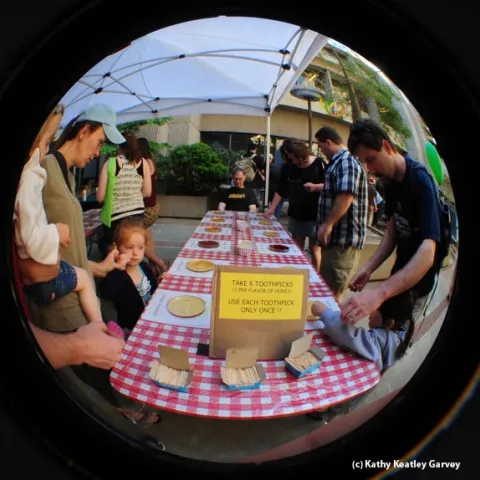
The creative folks at the Bohart Museum of Entomology, UC Davis, have done it again. Among the many activities at their recent "Snuggle Bugs" open house was a "mite/art station.
View Article
IGIS: Article

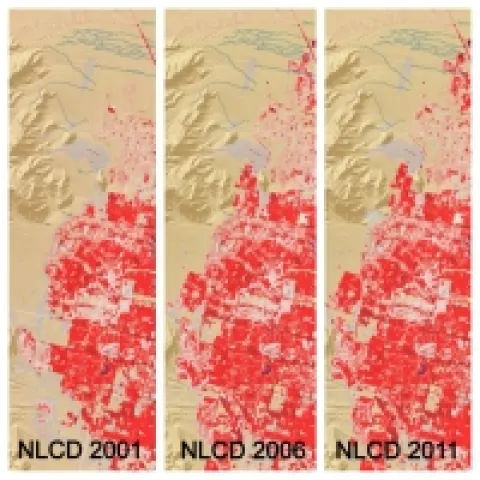
Spring 2013 GIF workshop schedule

January 16, 2014
By Maggi Kelly
UC Berkeley's Geospatial Innovation Facility (GIF) is offering 10 training workshops this semester that use a hands-on approach to help you get started using spatial analysis to enhance your research.
View Article
Primary Image
Bagrada bug-Bryan Jones-SFO 1
E-Journal of Entomology and Biologicals: Article

Current distribution of Bagrada bug in California

January 16, 2014
Bagrada bug adults on grass (Photos by Bryan Jones, San Francisco) Invasive Bagrada bug continues to spread to various counties in California. Compared to previous years, reports of Bagrada bug infestations came in quite late in 2013. They also seemed to survive cold winters.
View Article
UC Weed Science (weed control, management, ecology, and minutia): Article

More on new Farm Advisor in Colusa-Sutte-Yuba

January 16, 2014
By Mark E Lundy
Here's more on Mark Lundy... A new year and a new farm advisor in Colusa-Sutter-Yuba Hello, Im Mark Lundy, a new Agronomy Advisor in Colusa-Sutter-Yuba, based out of the Colusa office.
View Article
Primary Image
The three queen bumble bees (Bombus melanopygus). (Photo by Kathy Keatley Garvey)

The Lovely Ladies at the Laidlaw

January 15, 2014
By Kathy Keatley Garvey
So far, so good. The three queen bumble bees (Bombus melanopygus) we found buzzing around our porch light the night of Jan. 9 are still very much alive.
View Article
Primary Image
winter yellows
Topics in Subtropics: Article

Winter Yellows

January 15, 2014
By Ben A Faber
Several calls have come in from growers lately about yellow avocado and citrus trees. the yellowing is most common on the late summer flush leaves or can affect the whole canopy on young trees. In severe cases leaves fall.
View Article