A Natural Solution for California's Herds: African Catfish Peptides

California's cattle producers and agricultural communities are all too familiar with the rising challenge of antibiotic resistance, making common bacterial infections harder to treat in livestock. But imagine a future where we could tackle these infections with a natural, powerful alternative. Our research points to just that: antimicrobial peptides (AMPs) found in African catfish.

We're really excited about these peptides because African catfish thrive in pathogen-rich freshwater, naturally producing these robust immune compounds in their skin mucus as a defense. This natural origin makes them highly appealing alternatives to synthetic drugs.

Predicted Safety and Potent Action

One of the most compelling aspects of these AMPs is their predicted safety for mammals. Our initial computer analyses suggest that various catfish AMPs are generally recognized as safe (GRAS). We predict they'll be absorbed in the human intestine without causing liver, brain, or heart toxicity. Furthermore, lab tests on a promising peptide, NACAP-II, confirmed it was non-hemolytic, meaning it didn't damage rabbit red blood cells—a strong indicator of its potential safety for mammalian cells.

Beyond safety, these peptides demonstrate effectiveness against problematic bacteria. One study revealed NACAP-II's strong activity against Extended-Spectrum Beta-Lactamase (ESBL)-producing Escherichia coli—a critical concern for both animal and human health due to its resistance to many common antibiotics. Another peptide, ACAP-IV, also showed antibacterial activity against E. coli and Staphylococcus aureus. We believe these AMPs work by directly disrupting bacterial cell membranes, a mechanism that makes it harder for bacteria to develop resistance compared to how they resist traditional antibiotics.
Primary Image
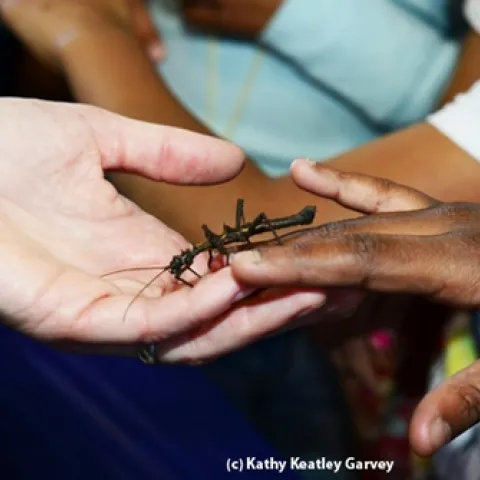
From one hand to another: a walking stick finds a place to walk. (Photo by Kathy Keatley Garvey)
Bug Squad: Article

Bugs R Us

March 25, 2014
By Kathy Keatley Garvey
Who wouldn't want to get up close and personal with bugs? And maybe give them a hug? Or two? Or three?
View Article
Primary Image
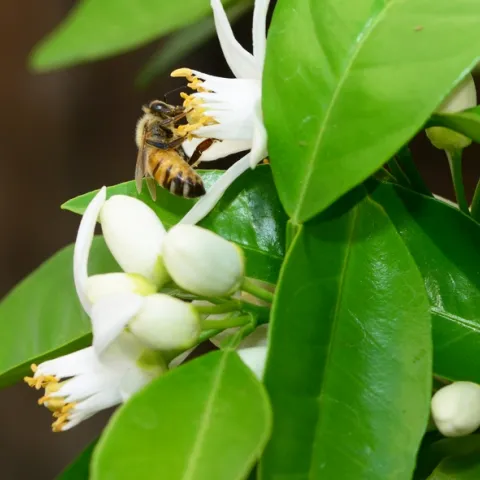
A honey bee pollinating an orange blossom. (Photo by Kathy Keatley Garvey)
Bug Squad: Article

Orange Blossom Special

March 24, 2014
By Kathy Keatley Garvey
If you like oranges, you can thank a honey bee. Oranges are 90 percent dependent on honey bees for pollination. Remember that week of freezing temperatures back in December? Yes, it affected California's $2 billion citrus industry.
View Article
UC Weed Science (weed control, management, ecology, and minutia): Article

When Natives Plants are not Welcome

March 24, 2014
By Cheryl A Wilen
I led a team to develop a weed identification wheel for use by people who don't have a lot of background in weed management.
View Article
Primary Image
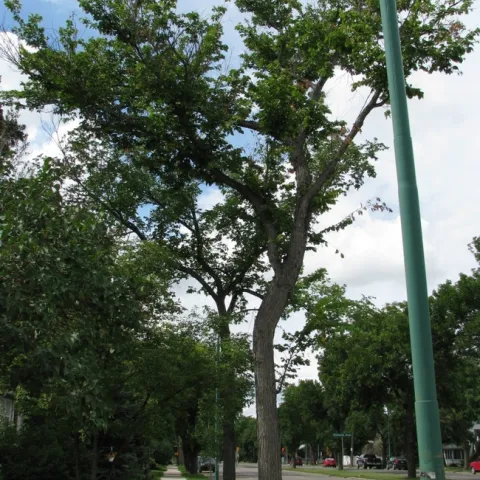
blight ash
Topics in Subtropics: Article

Dothiorella Leaf Blight Goes to More than just Avocado

March 24, 2014
By Ben A Faber
Dothiorella leaf blight which is really a whole range of fungi that cause leaf diseases, along with cankers and wilts goes to many different host plants from citrus to Brazlian pepper to ash to redwood to palm to pittosporum to eucalyptus to pine.
View Article
Primary Image
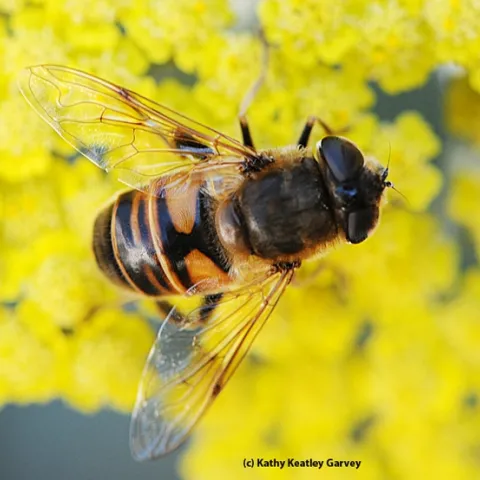
The drone fly, Eristalis tenax, is often mistaken for a bee. The fly has the letter "H" on its abdomen. (Photo by Kathy Keatley Garvey)

Honey Bee Impostor

March 21, 2014
By Kathy Keatley Garvey
It's often mistaken for a honey bee. Indeed, to the untrained eye, the drone fly (Eristalis tenax) appears to be a bee. It's not; it's a fly. Native pollinator specialist Robbin Thorp, emeritus professor of entomology at UC Davis, calls the drone fly "The H Bee.
View Article
Primary Image
cherimoya
Topics in Subtropics: Article

Annual Cherimoya Meeting

March 21, 2014
By Ben A Faber
California Cherimoya Association Annual Meeting 10 AM, Sunday, April 13, 2014 The Annual Meeting will be held at Hanson Agricultural Center (formerly Faulkner Farms) on the corner of Briggs Rd. and Telephone Rd. in Santa Paula. (14292 W. Telegraph Rd., Santa Paula.
View Article
Primary Image
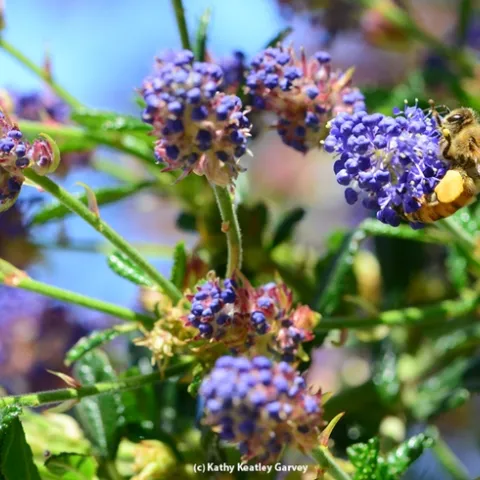
A honey bee foraging on ceanothus in the UC Davis Arboretum Teaching Nursery. (Photo by Kathy Keatley Garvey)

Ah, Spring!

March 20, 2014
By Kathy Keatley Garvey
It's a glorious day, the first day of spring, and what better time to mark the occasion by visiting the UC Davis Arboretum Teaching Nursery on Garrod Drive?
View Article
UC Weed Science (weed control, management, ecology, and minutia): Article

First Day of Spring Fun

March 20, 2014
Greetings all. I'll get back to some serious posts, soon. However, I thought I would celebrate the turning of the seasons with song. Nerdy songs. Songs only a scientist could love. FYI, some of these come with annoying commercials that you need to skip...Enjoy.
View Article