A Natural Solution for California's Herds: African Catfish Peptides

California's cattle producers and agricultural communities are all too familiar with the rising challenge of antibiotic resistance, making common bacterial infections harder to treat in livestock. But imagine a future where we could tackle these infections with a natural, powerful alternative. Our research points to just that: antimicrobial peptides (AMPs) found in African catfish.

We're really excited about these peptides because African catfish thrive in pathogen-rich freshwater, naturally producing these robust immune compounds in their skin mucus as a defense. This natural origin makes them highly appealing alternatives to synthetic drugs.

Predicted Safety and Potent Action

One of the most compelling aspects of these AMPs is their predicted safety for mammals. Our initial computer analyses suggest that various catfish AMPs are generally recognized as safe (GRAS). We predict they'll be absorbed in the human intestine without causing liver, brain, or heart toxicity. Furthermore, lab tests on a promising peptide, NACAP-II, confirmed it was non-hemolytic, meaning it didn't damage rabbit red blood cells—a strong indicator of its potential safety for mammalian cells.

Beyond safety, these peptides demonstrate effectiveness against problematic bacteria. One study revealed NACAP-II's strong activity against Extended-Spectrum Beta-Lactamase (ESBL)-producing Escherichia coli—a critical concern for both animal and human health due to its resistance to many common antibiotics. Another peptide, ACAP-IV, also showed antibacterial activity against E. coli and Staphylococcus aureus. We believe these AMPs work by directly disrupting bacterial cell membranes, a mechanism that makes it harder for bacteria to develop resistance compared to how they resist traditional antibiotics.
Primary Image
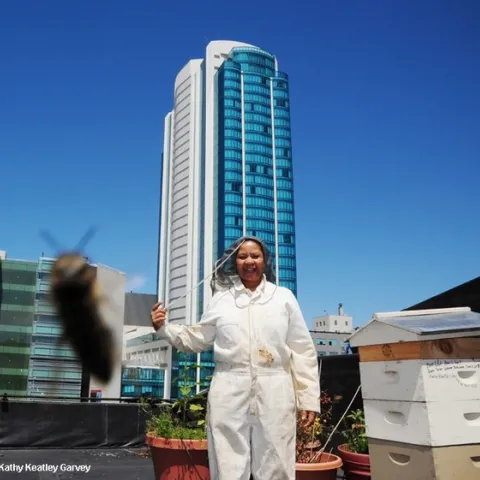
Noted entomologist Jerry Powell, director emeritus of the Essig Museum of Entomology, UC Berkeley, volunteers at the Bohart Museum. (Photo by Kathy Keatley Garvey)

Supporting the Bohart Museum

December 11, 2013
By Kathy Keatley Garvey
If you're looking for a cause to support, consider the Bohart Museum of Entomology at the University of California, Davis. The museum crew, led by director Lynn Kimsey, professor of entomology at UC Davis, is enthusiastic, knowledgeable, and dedicated.
View Article
UC Weed Science (weed control, management, ecology, and minutia): Article

JOB OPENING // Assistant Professor–Ornamental and Landscape Invasive Weed Management

December 11, 2013
By Gale Perez
Position Announcement Title: Assistant ProfessorOrnamental and Landscape Invasive Weed Management Location: Mid-Florida Research and Education Center, University of Florida, Institute of Food and Agricultural Sciences (IFAS) Apopka, Florida Salary: Commensurate with Qualifications and Experience Rev...
View Article
Primary Image
citrus frost
Topics in Subtropics: Article

Frozen Citrus Fruit and Young Trees

December 11, 2013
By Ben A Faber
Evaluating Damage to Baby Trees Requires Patience Earlier temperatures and forecasted temperatures do not appear to be cold enough to freeze baby trees in the citrus belt. Time will tell.
View Article
Primary Image
This wood duck box is being used as a bee hive in The Bee Sanctuary on the UC Davis campus. Examining it is Derek Downey who directs The Bee Collective and The Bee Sanctuary. (Photo by Kathy Keatley Garvey)

Ducks Vs. Bees

December 10, 2013
By Kathy Keatley Garvey
In March of 2012 when we were touring The Bee Collective's Bee Sanctuary near The Domes on the UC Davis campus with beekeeper/manager Derek Downey, we remember seeing an unusual "bee hive"--a wood duck box, moved there from a rural location after swarming honey bees claimed it.
View Article
Primary Image
Percent peck
UC Rice Blog: Article

Pecky rice

December 10, 2013
By Luis Espino
In the last post I described some experiments I was conducting to determine if the redshouldered stink bug could be the cause of some "mysterious" cases of pecky rice. The result is clear: when caged on heading rice plants, this stink bug can definitively feed on developing kernels and cause peck.
View Article
Primary Image
mandarin
Topics in Subtropics: Article

Lindcove Research and Extension Center Field Day

December 10, 2013
By Ben A Faber
Date: December 13, 2013 Time: 9:00 AM - 12:00 PM Contact: Anita Hunt Sponsor: Lindcove Research & Extension Center Location: 22963 Carson Ave, Exeter, CA 93221, USA Citrus growers and other Ag professionals are invited to attend the University of California, Lindcove Research and Extension Center An...
View Article
Primary Image
avocado
Topics in Subtropics: Article

Requests for Export of Produce to the US

December 10, 2013
By Ben A Faber
A note just caught my eye of China requesting to export fresh apples to the US. They already are the major exporter of apple juice to the US, and now fresh fruit.
View Article
Primary Image
Newly emerged Gulf Fritillary butterfly.(Photo by Kathy Keatley Garvey)

The Trouble with Late Bloomers

December 9, 2013
By Kathy Keatley Garvey
It's rather troubling trying to rear subtropical butterflies, Gulf Fritillaries (Agraulis vanillae), in late autumn. The string of warm sunny days in late November meant plenty of days for Gulf Frits to mate and reproduce.
View Article
UC Weed Science (weed control, management, ecology, and minutia): Article

Medusahead in San Diego County

December 9, 2013
By Gale Perez
Reposted (with permission) from the UC ANR blog Invasive Plants in Southern California Link to original post (December 6, 2013): Medusahead in San Diego County written by Carl Bell Medusahead [Elymus (Taeniatherum) caput-medusae] is a relatively new but serious invasive grass in San Diego County.
View Article
Primary Image
This honey bee was not aware of the "no fly" list; bees don't usually fly when the temperature is 49 degrees, but this one did. (Photo by Kathy Keatley Garvey)

Ah, Humbug!

December 6, 2013
By Kathy Keatley Garvey
It's no secret that bugs often get a bad rap. Take the negative expression, "Bah, Humbug!" uttered by Ebenezer Scrooge, a Charles Dickens character. Now it seems that everyone who dislikes Christmas says it, with an emphasis on "bug.
View Article