A Natural Solution for California's Herds: African Catfish Peptides

California's cattle producers and agricultural communities are all too familiar with the rising challenge of antibiotic resistance, making common bacterial infections harder to treat in livestock. But imagine a future where we could tackle these infections with a natural, powerful alternative. Our research points to just that: antimicrobial peptides (AMPs) found in African catfish.

We're really excited about these peptides because African catfish thrive in pathogen-rich freshwater, naturally producing these robust immune compounds in their skin mucus as a defense. This natural origin makes them highly appealing alternatives to synthetic drugs.

Predicted Safety and Potent Action

One of the most compelling aspects of these AMPs is their predicted safety for mammals. Our initial computer analyses suggest that various catfish AMPs are generally recognized as safe (GRAS). We predict they'll be absorbed in the human intestine without causing liver, brain, or heart toxicity. Furthermore, lab tests on a promising peptide, NACAP-II, confirmed it was non-hemolytic, meaning it didn't damage rabbit red blood cells—a strong indicator of its potential safety for mammalian cells.

Beyond safety, these peptides demonstrate effectiveness against problematic bacteria. One study revealed NACAP-II's strong activity against Extended-Spectrum Beta-Lactamase (ESBL)-producing Escherichia coli—a critical concern for both animal and human health due to its resistance to many common antibiotics. Another peptide, ACAP-IV, also showed antibacterial activity against E. coli and Staphylococcus aureus. We believe these AMPs work by directly disrupting bacterial cell membranes, a mechanism that makes it harder for bacteria to develop resistance compared to how they resist traditional antibiotics.

Primary Image
Brown marmoratted stinkbug

O no! Here we go again

September 27, 2013
By Ben A Faber
This article is reproduced because stinkbugs can attack avocado stems and weaken them, causing fruit drop. It' not clear that this species of stinkbug will attack avocado, but there is a possibility and we should all be on the lookout for it.
View Article
Primary Image
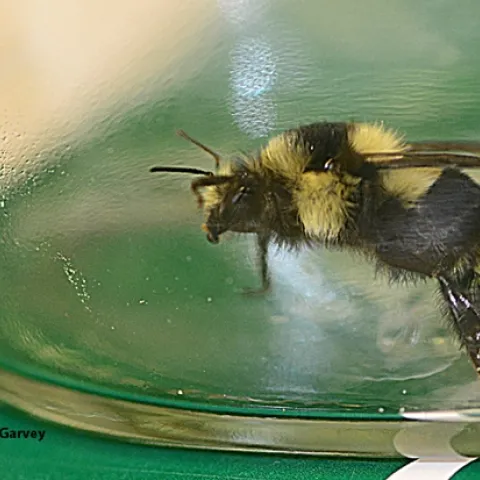
A Monarch butterfly nectaring on lantana. (Photo by Kathy Keatley Garvey)

Mighty Monarchs Gone Missing

September 26, 2013
By Kathy Keatley Garvey
The news is not good. Scores of Monarch butterflies (Danaus plexippus) are now migrating toward their overwintering zone in Mexico but they're doing so in dwindling numbers.
View Article
Primary Image
Two gray hairstreaks and a honey bee sharing a sedum. (Photo by Kathy Keatley Garvey)

Two 'Streaks on a Sedum

September 25, 2013
By Kathy Keatley Garvey
Two 'streaks on a sedum. Sounds like a song, doesn't it? Actually there were two gray hairstreaks (Strymon melinus) on a sedum today in the Hagen-Dazs Honey Bee Haven, a half-acre bee friendly garden on Bee Biology Road, University of California, Davis. Make that two 'streaks and a honey bee.
View Article
Primary Image
An adult Gulf Fritillary butterfly. (Photo by Kathy Keatley Garvey)

A Gulf Frit Kind of Day

September 23, 2013
By Kathy Keatley Garvey
It was a Gulf Fritillary kind of day last Saturday, Sept. 21 at the Bohart Museum of Entomology, UC Davis. That would be Agraulis vanillae. Visitors to the open house saw Gulf Frit eggs, caterpillars, chrysalids and adults.
View Article
Primary Image
Pallidosis related decline
E-Journal of Entomology and Biologicals: Article

Update on strawberry pallidosis-related decline and a short video

September 23, 2013
Dead and dying strawberry plants with pallidosis-related decline in Santa Maria. Photo by Surendra Dara Pallidosis-related decline or pallidosis disease of strawberries is a viral disease that appeared in several fields in the Santa Maria area early this year.
View Article
Primary Image
A new center pivot irrigation system at the UC West Side Research and Extension Center was introduced to participants in the twilight field day and farm tour in September.
Conservation Agriculture: Article

Mounting pressures on agriculture drive interest in conservation

September 23, 2013
By Jeannette Warnert
Diminishing water supplies, farm labor shortages, environmental impacts and shrinking agricultural profits are prompting more California farmers to seriously consider adopting conservation practices in their annual row crop production systems.
View Article