A Natural Solution for California's Herds: African Catfish Peptides

California's cattle producers and agricultural communities are all too familiar with the rising challenge of antibiotic resistance, making common bacterial infections harder to treat in livestock. But imagine a future where we could tackle these infections with a natural, powerful alternative. Our research points to just that: antimicrobial peptides (AMPs) found in African catfish.

We're really excited about these peptides because African catfish thrive in pathogen-rich freshwater, naturally producing these robust immune compounds in their skin mucus as a defense. This natural origin makes them highly appealing alternatives to synthetic drugs.

Predicted Safety and Potent Action

One of the most compelling aspects of these AMPs is their predicted safety for mammals. Our initial computer analyses suggest that various catfish AMPs are generally recognized as safe (GRAS). We predict they'll be absorbed in the human intestine without causing liver, brain, or heart toxicity. Furthermore, lab tests on a promising peptide, NACAP-II, confirmed it was non-hemolytic, meaning it didn't damage rabbit red blood cells—a strong indicator of its potential safety for mammalian cells.

Beyond safety, these peptides demonstrate effectiveness against problematic bacteria. One study revealed NACAP-II's strong activity against Extended-Spectrum Beta-Lactamase (ESBL)-producing Escherichia coli—a critical concern for both animal and human health due to its resistance to many common antibiotics. Another peptide, ACAP-IV, also showed antibacterial activity against E. coli and Staphylococcus aureus. We believe these AMPs work by directly disrupting bacterial cell membranes, a mechanism that makes it harder for bacteria to develop resistance compared to how they resist traditional antibiotics.

Primary Image
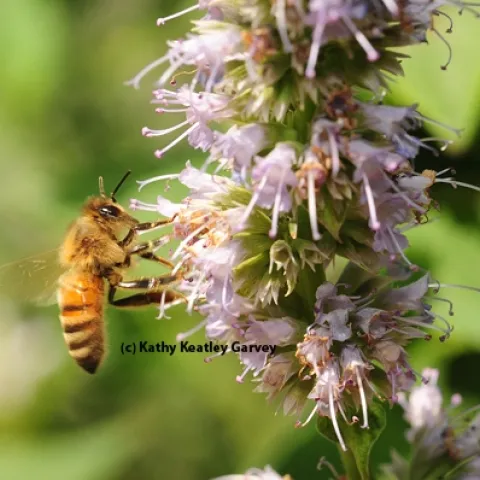
Bumble bee, Bombus vandykei, foraging on phacelia. (Photo by Kathy Keatley Garvey)

Going Native

April 24, 2013
By Kathy Keatley Garvey
The first thing you notice when you walk up to the Harry H. Laidlaw Jr. Honey Bee Research Facility on Bee Biology Road, UC Davis, are the natives. Native plants, that is. California golden poppies and phacelia are among the plants sharing the "Pollination Habitat" bed.
View Article
Colusa County: Article

Pomology Notes including Nickels Field Day

April 24, 2013
Nickels Soil Lab Annual Field Day Almond Varieties Crown Rot and Pruning Wound Cankers New video: Managing Almond Pests using the the Year-around IPM program Tying Young Trees Navel Orangeworm Pressure?
View Article
UC Weed Science (weed control, management, ecology, and minutia): Article

Technology for glyphosate-resistant weeds?

April 24, 2013
By Brad Hanson
A repost today from the Australian Herbicide Resistance Initiative. Int this snap shot, AHRI discusses new Monsanto technology called BioDirect (RNAi) for control of glyphosate-resistant weeds with glyphosate.
View Article
Primary Image
Two ladybugs in a tower of jewels, Echium wildpretii. (Photo by Kathy Keatley Garvey)

Ladybugs Coming Up in the World

April 23, 2013
By Kathy Keatley Garvey
Decisions, decisions... Where's the best spot for the new residents of my garden? I acquired two ladybugs last Saturday during the 99th annual UC Davis Picnic Day.
View Article
Colusa County: Article

Pomology Notes - Prunes

April 23, 2013
Practices to consider in prune orchards in April/May Sutter-Yuba Spring Field Meeting Orchard Irrigation Prune Tisshe Sampling for Leaf Analysis Efficient Nitrogen Management in Prune Production How hot was it at bloom, 2013?
View Article
Colusa County: Article

Orchard Notes

April 23, 2013
Field Meetings: Monitoring and Control of Walnut Husk Fly and Walnut Orchard Herbicide Research and Demonstration Field Day Final Chilling Hours Predicting Peach Harvest Sizing Peach Fruit Updated Website 36th Annual Nickels Field Day (announcement to be released soon)...
View Article
Primary Image
Yellow-faced bumble bee, Bombus vosnesenskii, on Scabiosa. (Photo by Kathy Keatley Garvey)
Bug Squad: Article

Sounding the Alarm for Bumble Bees

April 22, 2013
By Kathy Keatley Garvey
Bumble bees are major contributors to pollination of crops and wildflowers throughout the temperate northern hemisphere. Many species have declined, contributing to fears that we might face a 'pollination crisis.'" So says David Goulson, professor at the University of Stirling, U.K.
View Article
UC Weed Science (weed control, management, ecology, and minutia): Article

Earth Day

April 22, 2013
By Chris J McDonald
On Earth Day. Managing weeds is a costly and difficult task. Yet their impacts to the environment are high. Herbicides or hoes cost money and the impacts to the environment when weeds grow unchecked are also significant. The costs of managing invasive species are staggering.
View Article