A Natural Solution for California's Herds: African Catfish Peptides

California's cattle producers and agricultural communities are all too familiar with the rising challenge of antibiotic resistance, making common bacterial infections harder to treat in livestock. But imagine a future where we could tackle these infections with a natural, powerful alternative. Our research points to just that: antimicrobial peptides (AMPs) found in African catfish.

We're really excited about these peptides because African catfish thrive in pathogen-rich freshwater, naturally producing these robust immune compounds in their skin mucus as a defense. This natural origin makes them highly appealing alternatives to synthetic drugs.

Predicted Safety and Potent Action

One of the most compelling aspects of these AMPs is their predicted safety for mammals. Our initial computer analyses suggest that various catfish AMPs are generally recognized as safe (GRAS). We predict they'll be absorbed in the human intestine without causing liver, brain, or heart toxicity. Furthermore, lab tests on a promising peptide, NACAP-II, confirmed it was non-hemolytic, meaning it didn't damage rabbit red blood cells—a strong indicator of its potential safety for mammalian cells.

Beyond safety, these peptides demonstrate effectiveness against problematic bacteria. One study revealed NACAP-II's strong activity against Extended-Spectrum Beta-Lactamase (ESBL)-producing Escherichia coli—a critical concern for both animal and human health due to its resistance to many common antibiotics. Another peptide, ACAP-IV, also showed antibacterial activity against E. coli and Staphylococcus aureus. We believe these AMPs work by directly disrupting bacterial cell membranes, a mechanism that makes it harder for bacteria to develop resistance compared to how they resist traditional antibiotics.
Primary Image
tensiometer2
Topics in Subtropics: Article

Soil Moisture Sensors

April 18, 2013
By Ben A Faber
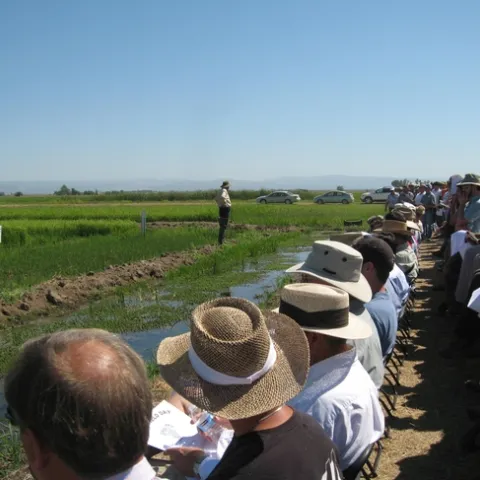
Soil moisture sensors fall into two broad categories, volumetric and tensiometric methods. One tells you how much water is in the soil and the other tells you how tightly the soil holds on to the water.
View Article
Primary Image
Briggs Hall is a popular place to be on UC Davis Picnic Day. (Photo by Kathy Keatley Garvey)
Bug Squad: Article

Bugs Will Rule at UC Davis Picnic Day

April 17, 2013
By Kathy Keatley Garvey
There's no doubt about it. Bugs will rule at the 99th annual UC Davis Picnic Day this Saturday, April 20. The UC Davis Department of Entomology is planning lots of "bug" activities as part of the campuswide celebration.
View Article
Primary Image
The malaria mosquito, Anopheles gambiae. (Photo by Anthony Cornel)
Bug Squad: Article

Targeting the Malaria Mosquito

April 16, 2013
By Kathy Keatley Garvey
If you're a research scientist studying the malaria mosquito, or interested in genomics, you'll want to attend a seminar on Wednesday, April 17 at the University of California, Davis.
View Article

California Agriculture weed science articles

April 16, 2013
By Brad Hanson
The newest issue of the journal "California Agriculture" (April-June 2013) published by the University of California and UC Division of Agriculture and Natural Resources just came out and has two articles written by UC weed researchers Check out the whole issue here or the specific articles at the l...
View Article
Colusa County: Article

April 2013

April 16, 2013
Summary of 2012 University of California Statewide Rice Variety Trials...
View Article
Primary Image
aqua app
UC Rice Blog: Article

Nitrogen Use in California Rice

April 16, 2013
By Luis Espino
I just read an article from the latest edition of California Agriculture: Nitrogen fertilizer use in California: Assessing the data, trends and a way forward. The article compiles data about inorganic N fertilizer use by major crops in California and compares data from the 1970s to the 2000s.
View Article

Fast-moving tree

April 16, 2013
By Guy Kyser
In ailanthus territory, you have to be careful not to park for too long in one place.
View Article
Primary Image
Crane fly resting on a stucco wall. (Photo by Kathy Keatley Garvey)
Bug Squad: Article

Crane Flies: Slender and Long-Legged

April 15, 2013
By Kathy Keatley Garvey
Some folks call them "mosquito hawks" or "skeeter eaters" or "blood suckers." They're not. None of the above. Crane flies, in the family Tipulidae, don't prey on mosquitoes and they don't suck blood. These slender, long-legged insects remind us of runway models. Thin. Demure. Fragile.
View Article

Ever heard of fumitory?

April 15, 2013
By Guy Kyser
This is a new-to-me weed, even though it's growing all around Robbins Hall where I've been working since typewriter times. Fumitory (Fumaria spp.) is a lacy, vine-like annual native to Europe. Looks sort of like parsley, though it's not related.
View Article