A Natural Solution for California's Herds: African Catfish Peptides

California's cattle producers and agricultural communities are all too familiar with the rising challenge of antibiotic resistance, making common bacterial infections harder to treat in livestock. But imagine a future where we could tackle these infections with a natural, powerful alternative. Our research points to just that: antimicrobial peptides (AMPs) found in African catfish.

We're really excited about these peptides because African catfish thrive in pathogen-rich freshwater, naturally producing these robust immune compounds in their skin mucus as a defense. This natural origin makes them highly appealing alternatives to synthetic drugs.

Predicted Safety and Potent Action

One of the most compelling aspects of these AMPs is their predicted safety for mammals. Our initial computer analyses suggest that various catfish AMPs are generally recognized as safe (GRAS). We predict they'll be absorbed in the human intestine without causing liver, brain, or heart toxicity. Furthermore, lab tests on a promising peptide, NACAP-II, confirmed it was non-hemolytic, meaning it didn't damage rabbit red blood cells—a strong indicator of its potential safety for mammalian cells.

Beyond safety, these peptides demonstrate effectiveness against problematic bacteria. One study revealed NACAP-II's strong activity against Extended-Spectrum Beta-Lactamase (ESBL)-producing Escherichia coli—a critical concern for both animal and human health due to its resistance to many common antibiotics. Another peptide, ACAP-IV, also showed antibacterial activity against E. coli and Staphylococcus aureus. We believe these AMPs work by directly disrupting bacterial cell membranes, a mechanism that makes it harder for bacteria to develop resistance compared to how they resist traditional antibiotics.
Primary Image
Predatory mite release
E-Journal of Entomology and Biologicals: Article

Year-round IPM program for strawberries: An annual plan for pest managment

February 25, 2013
Integrated pest management (IPM) is an ecosystem-based strategy that focuses on long-term prevention of pests or their damage through a combination of techniques such as biological control, habitat manipulation, modification of cultural practices, and use of resistant varieties.
View Article
UC Weed Science (weed control, management, ecology, and minutia): Article

Cover crops shown to successfully suppress weeds

February 25, 2013
By Gale Perez
[USDA 04 Feb 2013 by Ann Perry] -- Farmers can fine-tune their use of cover crops to help manage costs and maximize benefits in commercial organic production systems, according to U.S. Department of Agriculture (USDA) scientists.
View Article
Primary Image
B toxicity
Topics in Subtropics: Article

Boron is High in Many Southern San Joaquin Valley Citrus Trees

February 24, 2013
By Ben A Faber
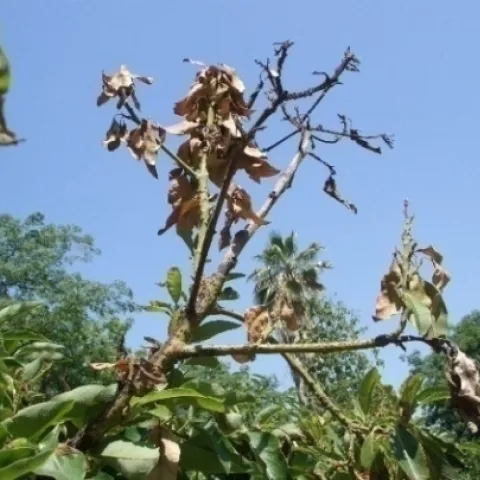
Many citrus trees in the southern end of the San Joaquin Valley are grown on moderately calcareous soils and frequently have high levels of boron in the leaf tissue. Citrus is sensitive to boron. Boron, when excessive, may cause defoliation and significant yield loss.
View Article
Primary Image
Honey bee heading toward almonds blossoms on Bee Biology Road, UC Davis. (Photo by Kathy Keatley Garvey)
Bug Squad: Article

Symphony in the Almonds

February 22, 2013
By Kathy Keatley Garvey
Symphony in the almond blossoms... There's a wild almond tree planted in a field off Bee Biology Road at the University of California, Davis, that's incredibly beautiful. Honey bees from the nearby apiary at the Harry H. Laidlaw Jr.
View Article
UC Weed Science (weed control, management, ecology, and minutia): Article

MSMA Herbicide update

February 22, 2013
By Brad Hanson
A quick post today with information about MSMA herbicides. There has been concern and lack of certainty about the registration status of MSMA and other organic arsenical herbicides. I was forwarded the attached press release and current labels for MSMA 6.6 and MSMA 6 Plus.
View Article
Primary Image
Molecular neurobiologist Anupama Dahanukar of UC Riverside working with Drosophila cultures with junior specialist, Adriana Medina.
Bug Squad: Article

Insects and Their Taste Receptors

February 21, 2013
By Kathy Keatley Garvey
If you want to know about the molecular neurobiology of feeding behavior in insects, then the University of California, Davis campus is the place to be on Wednesday, Feb. 27.
View Article
Primary Image
Spotted cucumber beetle inside flowering quince blossom. (Photo by Kathy Keatley Garvey)
Bug Squad: Article

The Imposter

February 20, 2013
By Kathy Keatley Garvey
'Tis the season for the return of the insects. Many a honey bee foraged in the flowering quince (Chaenomeles speciosa) last weekend. But wait, what's that? A spotted cucumber beetle (Diabrotica undecimpunctata) tucked inside a blossom.
View Article
Primary Image
Native pollinator specialist Robbin Thorp of UC Davis is a nationally known expert on bumble bees. (Photo by Kathy Keatley Garvey)

Saving the Rusty-Patched Bumble Bee

February 19, 2013
By Kathy Keatley Garvey
It's good to see that the Xerces Society for Invertebrate Conservation and noted bumble bee expert Robbin Thorp of UC Davis have filed a petition with the U.S. Fish and Wildlife Service for Endangered Species Act protection for the beleagured rusty-patched bumble bee.
View Article