A Natural Solution for California's Herds: African Catfish Peptides

California's cattle producers and agricultural communities are all too familiar with the rising challenge of antibiotic resistance, making common bacterial infections harder to treat in livestock. But imagine a future where we could tackle these infections with a natural, powerful alternative. Our research points to just that: antimicrobial peptides (AMPs) found in African catfish.

We're really excited about these peptides because African catfish thrive in pathogen-rich freshwater, naturally producing these robust immune compounds in their skin mucus as a defense. This natural origin makes them highly appealing alternatives to synthetic drugs.

Predicted Safety and Potent Action

One of the most compelling aspects of these AMPs is their predicted safety for mammals. Our initial computer analyses suggest that various catfish AMPs are generally recognized as safe (GRAS). We predict they'll be absorbed in the human intestine without causing liver, brain, or heart toxicity. Furthermore, lab tests on a promising peptide, NACAP-II, confirmed it was non-hemolytic, meaning it didn't damage rabbit red blood cells—a strong indicator of its potential safety for mammalian cells.

Beyond safety, these peptides demonstrate effectiveness against problematic bacteria. One study revealed NACAP-II's strong activity against Extended-Spectrum Beta-Lactamase (ESBL)-producing Escherichia coli—a critical concern for both animal and human health due to its resistance to many common antibiotics. Another peptide, ACAP-IV, also showed antibacterial activity against E. coli and Staphylococcus aureus. We believe these AMPs work by directly disrupting bacterial cell membranes, a mechanism that makes it harder for bacteria to develop resistance compared to how they resist traditional antibiotics.
UC Weed Science (weed control, management, ecology, and minutia): Article

Behavior of winged primrose willow and herbicide options for control

July 13, 2012
By Gale Perez
Summary Winged primrose willow is an invasive weed that was identified in Butte County rice fields in 2011. Most infestations were along borders of fields and canals; however, this weed can thrive in the flooded environment within rice fields.
View Article
Primary Image
Mayfly, from the family Baetidae, rests on a flowering artichoke. (Photo by Kathy Keatley Garvey)
Bug Squad: Article

Oh, the Critters We Overlook

July 12, 2012
By Kathy Keatley Garvey
Oh, the critters we overlook. If you have flowering artichokes, expect to see honey bees, bumble bees, carpenter bees, leafcutter bees and syrphid flies foraging on them. And a few spiders waiting for dinner. Don't expect to see a mayfly. The mayfly habitat is in or around water.
View Article
UC Weed Science (weed control, management, ecology, and minutia): Article

UCCE scientists wrestle with weed control in organic alfalfa

July 12, 2012
By Gale Perez
During the 2000s, organic milk production was one of the fastest growing segments of organic agriculture in the United States, according to a USDA Economic Research Service publication Characteristics, Costs, and Issues for Organic Dairy Farming.
View Article
Primary Image
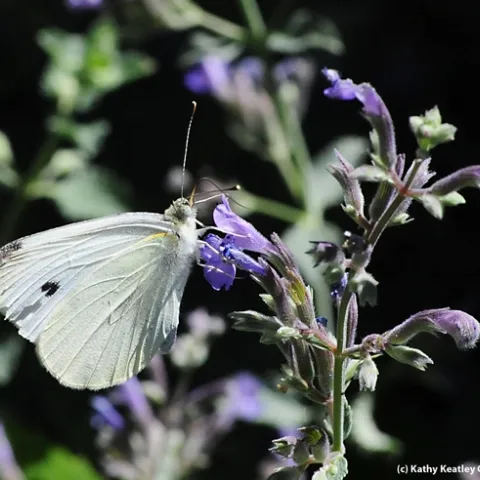
Alfalfa butterfly, Colias eurytheme, lands in a swimming pool. (Photo by Kathy Keatley Garvey)
Bug Squad: Article

These Colors Didn't Run

July 10, 2012
By Kathy Keatley Garvey
We've seen bumble bees, honey bees, sweat bees, wool carder bees and syrphid flies topple into our swimming pool, but never an alfalfa butterfly until now.
View Article
Primary Image
Worker bees working inside the hive. (Photo by Kathy Keatley Garvey)

Bee-ing Young

July 9, 2012
By Kathy Keatley Garvey
Pity the poor worker bee. In the spring/summer months, she lives only four to six weeks and then she dies. Bee scientists say she basically works herself to death.
View Article
Primary Image
avocado
Topics in Subtropics: Article

Foliar nutrients to avocado

July 9, 2012
By Ben A Faber
Thick, waxy coating on avocado leaves makes foliar nutrients difficult to abosorb. LTTLE EVIDENCE TO SUPPORT THE USE OF FOLIAR APPLIED NUTRIENTS IN AVOCADO Simon Newett, Extension Horticulturist.
View Article
Primary Image
workers
Topics in Subtropics: Article

Heat Stress

July 9, 2012
By Ben A Faber
Lettuce harvest Cal/OSHA HEAT ADVISORY When employees work in hot conditions, employers must take special precautions in order to prevent heat illness. Heat illness can progress to heat stroke and be fatal, especially when emergency treatment is delayed.
View Article
Primary Image
asphyxiation
Topics in Subtropics: Article

Asphyxiation

July 9, 2012
By Ben A Faber
Standing water can lead to asphyxiation ASPHYXIATION Asphyxiation is a physiological problem that may affect certain branches, whole limbs or the entire tree. Leaves wilt and may fall, the fruit withers and drops and the branches die back to a greater or lesser extent.
View Article