A Natural Solution for California's Herds: African Catfish Peptides

California's cattle producers and agricultural communities are all too familiar with the rising challenge of antibiotic resistance, making common bacterial infections harder to treat in livestock. But imagine a future where we could tackle these infections with a natural, powerful alternative. Our research points to just that: antimicrobial peptides (AMPs) found in African catfish.

We're really excited about these peptides because African catfish thrive in pathogen-rich freshwater, naturally producing these robust immune compounds in their skin mucus as a defense. This natural origin makes them highly appealing alternatives to synthetic drugs.

Predicted Safety and Potent Action

One of the most compelling aspects of these AMPs is their predicted safety for mammals. Our initial computer analyses suggest that various catfish AMPs are generally recognized as safe (GRAS). We predict they'll be absorbed in the human intestine without causing liver, brain, or heart toxicity. Furthermore, lab tests on a promising peptide, NACAP-II, confirmed it was non-hemolytic, meaning it didn't damage rabbit red blood cells—a strong indicator of its potential safety for mammalian cells.

Beyond safety, these peptides demonstrate effectiveness against problematic bacteria. One study revealed NACAP-II's strong activity against Extended-Spectrum Beta-Lactamase (ESBL)-producing Escherichia coli—a critical concern for both animal and human health due to its resistance to many common antibiotics. Another peptide, ACAP-IV, also showed antibacterial activity against E. coli and Staphylococcus aureus. We believe these AMPs work by directly disrupting bacterial cell membranes, a mechanism that makes it harder for bacteria to develop resistance compared to how they resist traditional antibiotics.
UC Weed Science (weed control, management, ecology, and minutia): Article

Cheating cheatgrass: new research to control a wily invasive weed

August 9, 2012
By Gale Perez
Abstract: Cheatgrass and its cousin, red brome, are exotic annual grasses that have invaded and altered ecosystem dynamics in more than 41 million acres of desert shrublands between the Rockies and the Cascade-Sierra chain.
View Article
Primary Image
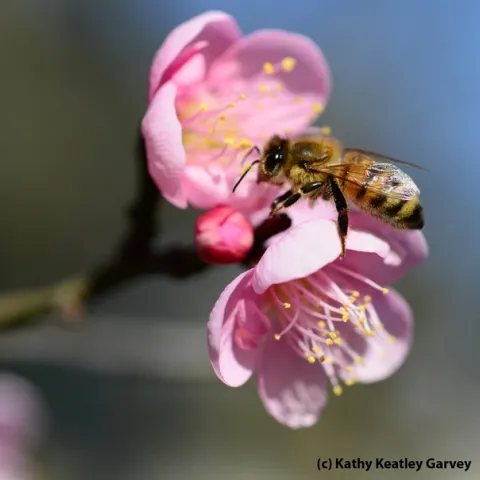
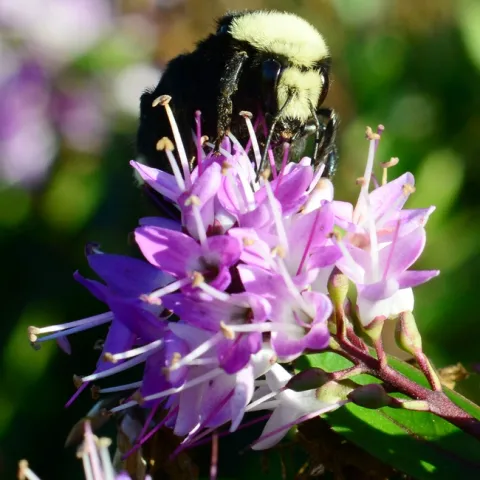
Yellow-faced bumble bee (Bombus vosnesenskii) crawls inside a penstemon, "Evelyn." (Photo by Kathy Keatley Garvey)
Bug Squad: Article

Native on Native

August 8, 2012
By Kathy Keatley Garvey
Native on native. That's when you get when you see a yellow-faced bumble bee (Bombus vosnesenskii) on a penstemon, also known as "beard's tongue." Both the bee and the flower are native to North America.
View Article
Primary Image
Male sweat bee, Agapostemon texanus, on a purple coneflower. (Photo by Kathy Keatley Garvey)
Bug Squad: Article

No Sweat Being Green

August 7, 2012
By Kathy Keatley Garvey
Beekeepers describe their honey bees as "my girls" or "my beautiful girls." It's a term of endearment. Now take the green metallic sweat bee, Agapostemon texanus. If honey bees are beautiful (and they are) then these bees are spectacular.
View Article
Primary Image
Close-up of a bordered plant bug, family Largidae. (Photo by Kathy Keatley Garvey)
Bug Squad: Article

How Blue Can It Be?

August 6, 2012
By Kathy Keatley Garvey
How blue can it be? We spotted a metallic blue bug, one of nature's most amazing colors, last Sunday. It was in the Mostly Natives Nursery in Tomales, a Marin County site frequented by many University of California entomologists and staff as they work on their urban bee research and publications.
View Article
UC Weed Science (weed control, management, ecology, and minutia): Article

Cost of developing a biotech crop

August 6, 2012
By Brad Hanson
I recently ran across a report published by Crop Life International (a federation of plant science industry companies) on the cost of getting a "biotech" crop variety to market.
View Article
Primary Image
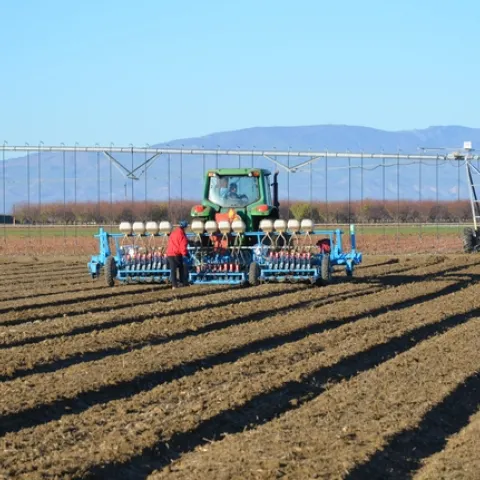
A whole new way of doing agriculture.
Conservation Agriculture: Article

Conservation agriculture video documentary debuts

August 6, 2012
By Jeannette Warnert
The first segment of the Conservation Agriculture Systems Innovation (CASI) six-part video documentary debuts today on the CASI website. (The video is also posted below.
View Article
Primary Image
Yellow sugarcane aphid
UC Rice Blog: Article

Unusual insect finds in California rice

August 6, 2012
By Luis Espino
While scouting for blast, a PCA noticed some yellow leaf tips. Close inspection revealed aphids. He got a little worried since he's never seen aphids on rice during his long career. They turned out to be yellow sugarcane aphid.
View Article
Primary Image
Bohart senior museum scientist Steve Heydon with Chancellor Linda Katehi. (Photo by Kathy Keatley Garvey)
Bug Squad: Article

An Honor Well Deserved

August 3, 2012
By Kathy Keatley Garvey
Sometimes you'll see him sitting cross-legged on the floor, circled by first graders. They're asking questions like "What is an insect?" and "How long do insects live?" and "What do they eat?" Sometimes you'll see him holding Madagascar hissing cockroaches and explaining why they hiss.
View Article