A Natural Solution for California's Herds: African Catfish Peptides

California's cattle producers and agricultural communities are all too familiar with the rising challenge of antibiotic resistance, making common bacterial infections harder to treat in livestock. But imagine a future where we could tackle these infections with a natural, powerful alternative. Our research points to just that: antimicrobial peptides (AMPs) found in African catfish.

We're really excited about these peptides because African catfish thrive in pathogen-rich freshwater, naturally producing these robust immune compounds in their skin mucus as a defense. This natural origin makes them highly appealing alternatives to synthetic drugs.

Predicted Safety and Potent Action

One of the most compelling aspects of these AMPs is their predicted safety for mammals. Our initial computer analyses suggest that various catfish AMPs are generally recognized as safe (GRAS). We predict they'll be absorbed in the human intestine without causing liver, brain, or heart toxicity. Furthermore, lab tests on a promising peptide, NACAP-II, confirmed it was non-hemolytic, meaning it didn't damage rabbit red blood cells—a strong indicator of its potential safety for mammalian cells.

Beyond safety, these peptides demonstrate effectiveness against problematic bacteria. One study revealed NACAP-II's strong activity against Extended-Spectrum Beta-Lactamase (ESBL)-producing Escherichia coli—a critical concern for both animal and human health due to its resistance to many common antibiotics. Another peptide, ACAP-IV, also showed antibacterial activity against E. coli and Staphylococcus aureus. We believe these AMPs work by directly disrupting bacterial cell membranes, a mechanism that makes it harder for bacteria to develop resistance compared to how they resist traditional antibiotics.
Primary Image
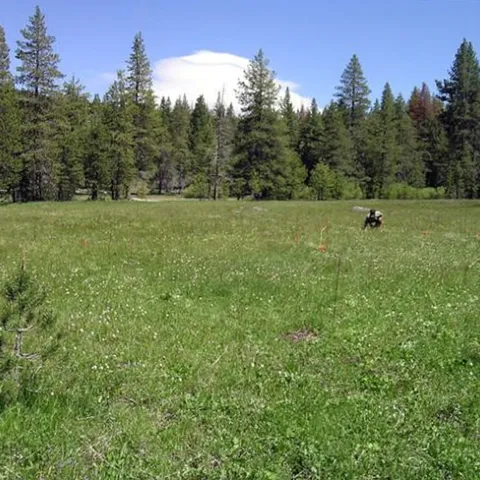
Jeff Mitchell
Conservation Agriculture: Article

Workgroup chair Jeff Mitchell's annual address

December 15, 2010
By Jeff Mitchell, workgroup chair Dec. 14, 2010 What I would like to do with you briefly this morning is take a minute to tell the story of the Conservation Tillage and Cropping Systems Workgroup, - who we are, what weve done, and why you should believe us.
View Article
Primary Image
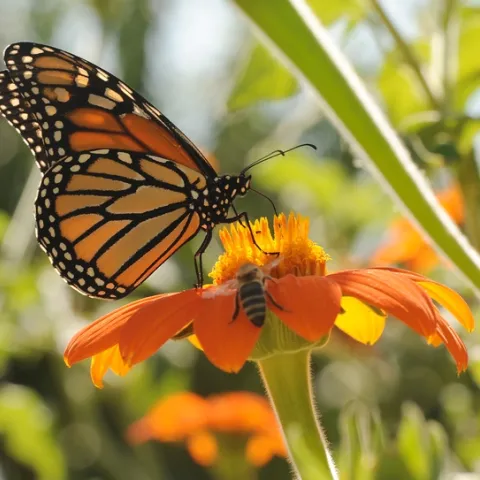
HONEY BEE gathers nectar from the mint bush sage at the Haagen-Dazs Honey Bee Haven at UC Davis. (Photo by Kathy Keatley Garvey)
Bug Squad: Article

Like Peppermint Candy

December 15, 2010
It's almost like peppermint candy. The red and white blossoms that grace the mint bush sage (Salvia microhylla) draw their share of bees. It's a late bloomer in the Hagen-Dazs Honey Bee Haven at the Harry H. Laidlaw Jr. Honey Bee Research Facility, University of California, Davis.
View Article
Primary Image
'QUEEN BEE' is a paper sculpture by talented artist Marilyn Judson of Davis. This is a three-dimensional art piece now on display in the Pence Gallery, Davis. The background of this photo was darkened in Photoshop for contrast purposes.(Photo by Kathy Keatley Garvey)
Bug Squad: Article

This Queen Bee Is White

December 14, 2010
It's a stunning piece of work. It's a three-dimensional paper sculpture of a queen bee. Noted artist Marilyn Judson (right) of Davis created the paper sculpture (below) now on display in the "Sticky Business: Art of the Honey Bee" show that runs through Dec. 23 at the Pence Gallery, 212 D St.
View Article
Primary Image
NORMAN GARY combines two occupations: bees and music. (Photo by Kathy Keatley Garvey)
Bug Squad: Article

The Bee Man

December 13, 2010
It's a honey of a book. Honey bee expert Norman Gary, emeritus professor of apiculture at the University of California, Davis, is the author of a newly published book on beginning beekeeping titled Honey Bee Hobbyist: The Care and Keeping of Bees.
View Article
UC Weed Science (weed control, management, ecology, and minutia): Article

Effective herbicide concentration for soil activity

December 12, 2010
By Brad Hanson
This week I received an email request for information on the soil concentration of herbicide necessary to have a phytotoxic effect. This is a simple-sounding question and I was able to confidently say Well, that depends..
View Article
Primary Image
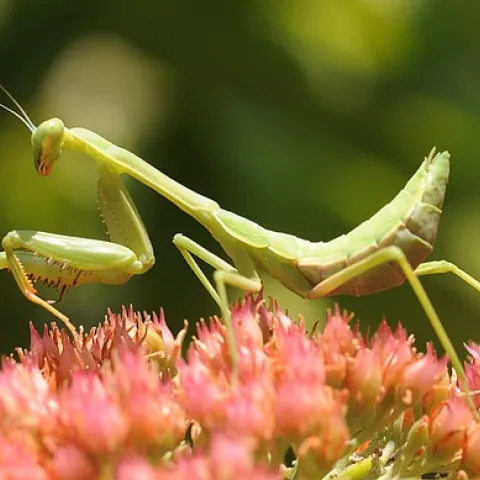
PRAYING MANTIS at the Harry H. Laidlaw Jr. Honey Bee Research Facility at UC Davis. (Photo by Kathy Keatley Garvey)
Bug Squad: Article

Bugs R Us

December 10, 2010
One of the highlights of the 58th annual Entomological Society of America meeting in San Diego, Dec. 12-15 is the Linnaean Games.
View Article
Primary Image
World-renowned organic chemist Wittko Francke (second from right) met with UC Davis researchers following his presentation on Wednesday at a UC Davis Department of Entomology seminar. From left are chemical ecologist Zain Syed of the Walter Leal lab; chemical ecologist and forest entomologist Steve Seybold of the USDA Forest Service, Pacific Southwest Research Station, Davis, and an affiliate of the UC Davis Department of Entomology; Wittko Francke; and chemical ecologist Walter Leal, professor and former c
Bug Squad: Article

A World of Scents

December 9, 2010
Nature is more a world of scents than a source of noise. That quote sound familiar? Chemical ecologist Jacques Le Magnen (1916-2002) said that back in 1970.
View Article
Primary Image
DOCTORAL CANDIDATE Ashley Horton with malaria mosquitoes, Anopheles gambiae. (Photo by Kathy Keatley Garvey)
Bug Squad: Article

Tackling Malaria

December 8, 2010
Those malaria mosquitoes may have met their match--with researchers at the University of California, Davis. UC Davis entomology doctoral candidate Ashley Horton, recent winner of the 2010 Arthur J. and Dorothy D. Palm Agricultural Scholarship, focuses her research on how mosquitoes transmit malaria.
View Article
Primary Image
HONEY BEE pollinating an almond tree at the Harry H. Laidlaw Jr. Honey Bee Research Facility, University of California, Davis. (Photo by Kathy Keatley Garvey)
Bug Squad: Article

CCD: Worldwide Malady

December 7, 2010
Honey bee guru Eric Mussen, Extension apiculturist and a member of the UC Davis Department of Entomology faculty, is quoted in a Dec. 6 article in the Epoch Times about colony collapse disorder (CCD).
View Article
Colusa County: Article

March 2003

December 7, 2010
How to determine the need to fertilize alfalfa and field day announcements for UCD Small Grains and Alfalfa/Forages field days on May 7th.
View Article