A Natural Solution for California's Herds: African Catfish Peptides

California's cattle producers and agricultural communities are all too familiar with the rising challenge of antibiotic resistance, making common bacterial infections harder to treat in livestock. But imagine a future where we could tackle these infections with a natural, powerful alternative. Our research points to just that: antimicrobial peptides (AMPs) found in African catfish.

We're really excited about these peptides because African catfish thrive in pathogen-rich freshwater, naturally producing these robust immune compounds in their skin mucus as a defense. This natural origin makes them highly appealing alternatives to synthetic drugs.

Predicted Safety and Potent Action

One of the most compelling aspects of these AMPs is their predicted safety for mammals. Our initial computer analyses suggest that various catfish AMPs are generally recognized as safe (GRAS). We predict they'll be absorbed in the human intestine without causing liver, brain, or heart toxicity. Furthermore, lab tests on a promising peptide, NACAP-II, confirmed it was non-hemolytic, meaning it didn't damage rabbit red blood cells—a strong indicator of its potential safety for mammalian cells.

Beyond safety, these peptides demonstrate effectiveness against problematic bacteria. One study revealed NACAP-II's strong activity against Extended-Spectrum Beta-Lactamase (ESBL)-producing Escherichia coli—a critical concern for both animal and human health due to its resistance to many common antibiotics. Another peptide, ACAP-IV, also showed antibacterial activity against E. coli and Staphylococcus aureus. We believe these AMPs work by directly disrupting bacterial cell membranes, a mechanism that makes it harder for bacteria to develop resistance compared to how they resist traditional antibiotics.
Primary Image
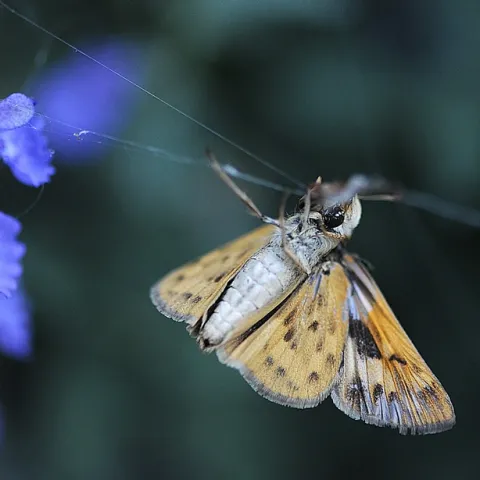
Fiery skipper struggles to free itself in a spider web. (Photo by Kathy Keatley Garvey)

The Skipper Wasn't Skipping

September 14, 2011
By Kathy Keatley Garvey
The skipper wasn't skipping. In fact, it wasn't doing much of anything. The fiery skipper butterfly (Hylephila phyleus), tangled in a spider web, struggled furiously to free itself. Not going to happen. The sticky substance stuck to her like super glue. It's a scene you don't often see.
View Article
Primary Image
TSSM and Lewis mites
E-Journal of Entomology and Biologicals: Article

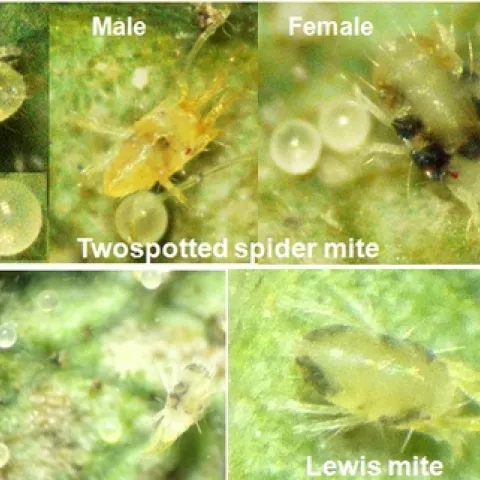
Twospotted spider mite and Lewis mite: A comparison

September 14, 2011
Life stages twospotted spider mite and Lewis mite. Notice the similarities between twospotted spider mite female (top right) and Lewis mite (bottom). Photos by Surendra Dara A few species of spider mites infest strawberries grown on the California coast.
View Article
Primary Image
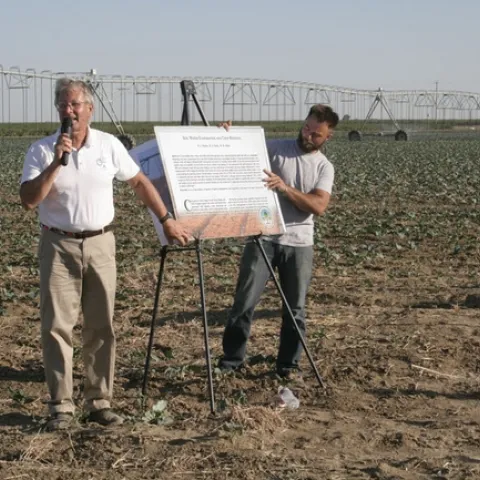
Jeff Mitchell presents research updates on a broccoli field with overhead irrigation.
Conservation Agriculture: Article

The body of CT research knowledge continues to grow

September 14, 2011
By Jeannette Warnert
UC scientists presented recent additions to the growing body of research on conservation tillage in California at the second annual Twilight Conservation Tillage and Cropping Systems field day Sept.
View Article
Primary Image
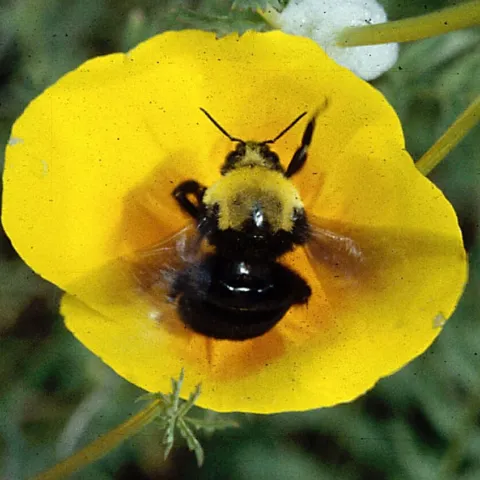
Franklin's bumble bee on a California poppy. (Photo by Robbin Thorp)
Bug Squad: Article

Saving Franklin's Bumble Bee

September 13, 2011
By Kathy Keatley Garvey
Native pollinator specialist Robbin Thorp, emeritus professor of entomology at the University of California, Davis, is on a mission. He and fellow members of the Xerces Society for Invertebrate Conservation are trying to save Franklin's bumble bee from extinction.
View Article
Primary Image
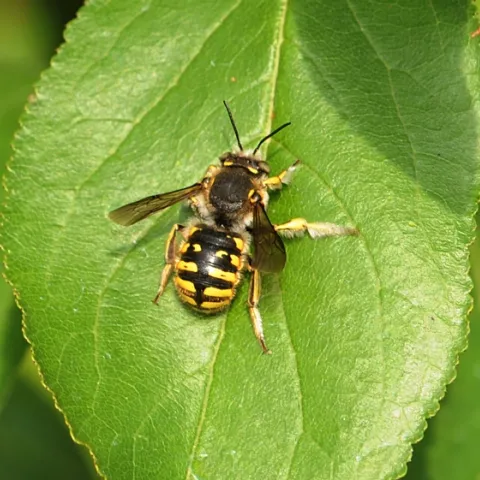
Wool carder bee sunning itself on a plum leaf. (Photo by Kathy Keatley Garvey)

Sunny Side of a Leaf

September 12, 2011
By Kathy Keatley Garvey
A good time to photograph the European wool carder bee is in the early morning when it's warming its muscles to prepare for flight. It lies perfectly still. That's what it did in our yard last weekend. It warmed itself on the sunny side of a leaf. Not unlike the sunny side of a street...
View Article
Primary Image
IMG 0034
UC Rice Blog: Article

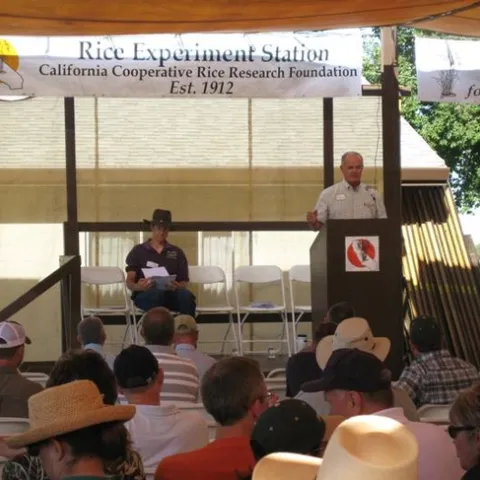
Rice Experiment Station Field Day

September 12, 2011
By Luis Espino
Almost two weeks ago the California Rice Experiment Station (RES) had its annual field day. It was a great opportunity to see fist-hand the research going on at the station.
View Article
Primary Image
IMG 3199
UC Rice Blog: Article

Boron toxicity

September 12, 2011
By Luis Espino
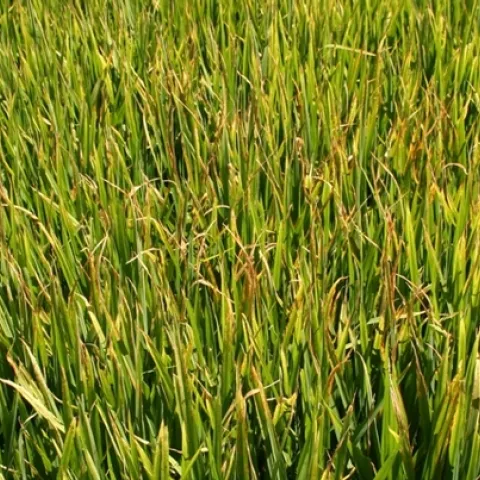
I visited a field a few weeks ago in the Woodland area. Older leaves showed discolored tips and margins, and necrotic spots. Leaf tips eventually turned brown and die. The grower was worried it might have been blast, because of some of the lesions were elliptical and resembled blast lesions.
View Article
Primary Image
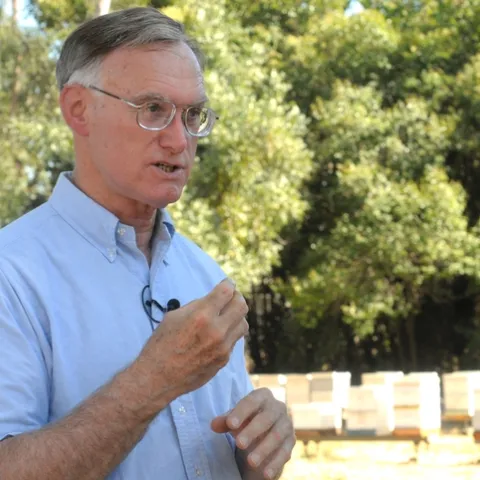
Eric Mussen will be a key speaker at the Western Apicultural Society conference in Hawaii. (Photo by Kathy Keatley Garvey)

Aloha, Bees!

September 9, 2011
By Kathy Keatley Garvey
When beekepers from all over the Western states converge on the Western Apicultural Society (WAS) meeting in Hawaii next week, they won't be there to bask in the sun.
View Article
UC Weed Science (weed control, management, ecology, and minutia): Article

Keeping track of digital plot photos

September 9, 2011
By Guy Kyser
Joe DiTomaso, John JR Roncoroni, and I evaluated a purple starthistle trial in Napa County last month.
View Article