A Natural Solution for California's Herds: African Catfish Peptides

California's cattle producers and agricultural communities are all too familiar with the rising challenge of antibiotic resistance, making common bacterial infections harder to treat in livestock. But imagine a future where we could tackle these infections with a natural, powerful alternative. Our research points to just that: antimicrobial peptides (AMPs) found in African catfish.

We're really excited about these peptides because African catfish thrive in pathogen-rich freshwater, naturally producing these robust immune compounds in their skin mucus as a defense. This natural origin makes them highly appealing alternatives to synthetic drugs.

Predicted Safety and Potent Action

One of the most compelling aspects of these AMPs is their predicted safety for mammals. Our initial computer analyses suggest that various catfish AMPs are generally recognized as safe (GRAS). We predict they'll be absorbed in the human intestine without causing liver, brain, or heart toxicity. Furthermore, lab tests on a promising peptide, NACAP-II, confirmed it was non-hemolytic, meaning it didn't damage rabbit red blood cells—a strong indicator of its potential safety for mammalian cells.

Beyond safety, these peptides demonstrate effectiveness against problematic bacteria. One study revealed NACAP-II's strong activity against Extended-Spectrum Beta-Lactamase (ESBL)-producing Escherichia coli—a critical concern for both animal and human health due to its resistance to many common antibiotics. Another peptide, ACAP-IV, also showed antibacterial activity against E. coli and Staphylococcus aureus. We believe these AMPs work by directly disrupting bacterial cell membranes, a mechanism that makes it harder for bacteria to develop resistance compared to how they resist traditional antibiotics.
UC Weed Science (weed control, management, ecology, and minutia): Article

Precise and Accurate Herbicide Applications

November 7, 2010
By Brad Hanson
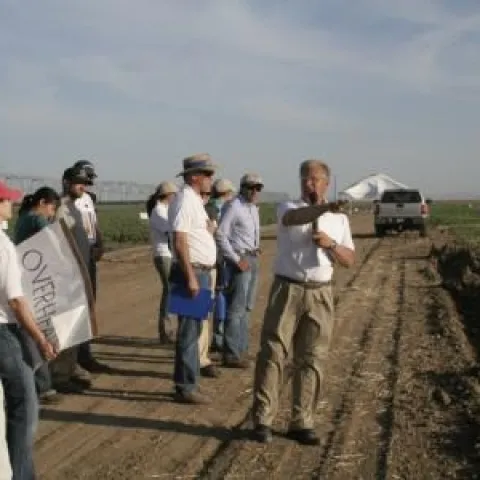
If youve ever taken target practice, you probably know that accuracy and precision are not necessarily the same things a rifle that always shoots low and to the left of the bulls-eye is precise but is not accurate. The same idea holds true for herbicide applications.
View Article
Primary Image
UC DAVIS graduate student Matan Shelomi, who studies with major professor Lynn Kimsey, director of the Bohart Museum of Entomology, scored a big hit in this costume. "He looks just like Billy the Exterminator!" Kimsey exclaimed. (Photo by Louie Yang)
Bug Squad: Article

What Entomologists Do to Have Fun

November 5, 2010
Ghouls just like to have fun at Halloween. So do entomologists. When the Bohart Museum of Entomology. located at 1124 Academic Surge, University of California, Davis, holds its annual Halloween Open House, guests are in for a real treat. A few tricks, too--in the form of tricky costumes.
View Article
Primary Image
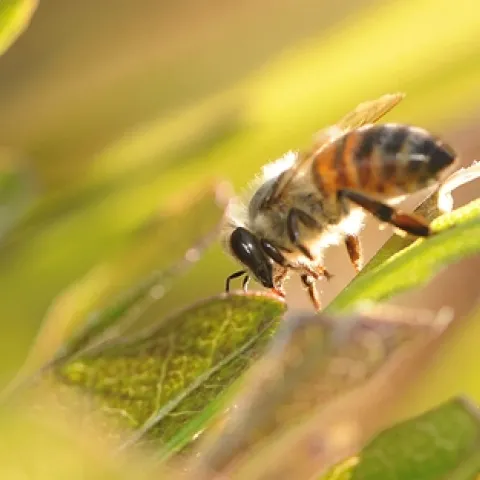
BETWEEN THE BRANCHES--A beehive column, as seen through the branches of an olive tree at the Haagen-Dazs Honey Bee Haven on Bee Biology Road, UC Davis. The bee box (fourth from bottom) shows a honey bee in flight with a close-up below. (Photo by Kathy Keatley Garvey)
Bug Squad: Article

A Fly By

November 4, 2010
What's a fly doing there? Just soaking up the sun. A fly that landed on one of the two colorfully painted beehive columns that grace the entrance to the Hagen-Dazs Honey Bee Haven at the University of California, Davis, seemed like part of the scene.
View Article
Primary Image
EMERITUS PROFESSOR Hugh Dingle, shown here wearing one of his favorite "bug" shirts, will discuss the rapidly evolving soapberry bug at a noon seminar on Wednesday, Nov. 10 in 122 Briggs Hall, UC Davis. (Photo by Kathy Keatley Garvey)
Bug Squad: Article

Soapberry Bugs: Evolution in Action

November 3, 2010
Briggs Hall at UC Davis is a good place to learn about soapberry bugs. That would be "the rapidly evolving soapberry bugs." Hugh Dingle, emeritus professor of entomology at UC Davis, will present a UC Davis Department of Entomology seminar from 12:10 to 1 p.m. on Wednesday, Nov.
View Article
Primary Image
'WONDER FLIES' sharing a squash blossom with two honey bees in Napa. (Photo by Kathy Keatley Garvey)
Bug Squad: Article

Wonder Flies

November 1, 2010
They're called "wonder flies." And for a good reason. Folks wonder what they are.
View Article
UC Weed Science (weed control, management, ecology, and minutia): Article

Salinas Valley Weed School - November 9, 2010

November 1, 2010
By Brad Hanson
On November 9, weed biology and management information will be presented at the Salinas Valley Weed School 2010 (contact: Richard Smith). For more information check the calendar section at the UC Cooperative ExtensionMonterey County website. http://cemonterey.ucdavis.
View Article