A Natural Solution for California's Herds: African Catfish Peptides

California's cattle producers and agricultural communities are all too familiar with the rising challenge of antibiotic resistance, making common bacterial infections harder to treat in livestock. But imagine a future where we could tackle these infections with a natural, powerful alternative. Our research points to just that: antimicrobial peptides (AMPs) found in African catfish.

We're really excited about these peptides because African catfish thrive in pathogen-rich freshwater, naturally producing these robust immune compounds in their skin mucus as a defense. This natural origin makes them highly appealing alternatives to synthetic drugs.

Predicted Safety and Potent Action

One of the most compelling aspects of these AMPs is their predicted safety for mammals. Our initial computer analyses suggest that various catfish AMPs are generally recognized as safe (GRAS). We predict they'll be absorbed in the human intestine without causing liver, brain, or heart toxicity. Furthermore, lab tests on a promising peptide, NACAP-II, confirmed it was non-hemolytic, meaning it didn't damage rabbit red blood cells—a strong indicator of its potential safety for mammalian cells.

Beyond safety, these peptides demonstrate effectiveness against problematic bacteria. One study revealed NACAP-II's strong activity against Extended-Spectrum Beta-Lactamase (ESBL)-producing Escherichia coli—a critical concern for both animal and human health due to its resistance to many common antibiotics. Another peptide, ACAP-IV, also showed antibacterial activity against E. coli and Staphylococcus aureus. We believe these AMPs work by directly disrupting bacterial cell membranes, a mechanism that makes it harder for bacteria to develop resistance compared to how they resist traditional antibiotics.
Primary Image
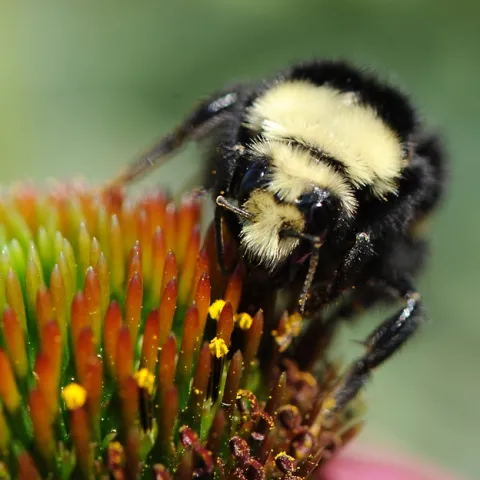
Yellow-faced bumble bee (Bombus vosnesenskii) nectaring on California white sage. (Photo by Kathy Keatley Garvey)

A Bee Celebration

June 3, 2011
Talk about a bee celebration! Folks with a passion for honey bees and native bees can head over to Mill Valley on Saturday, June 18 for "The Celebration of the Bees." To be held from 1 to 4 p.m.
View Article
Primary Image
Crane fly resting on salvia. (Photo by Kathy Keatley Garvey)

Long and Gangly

June 2, 2011
The crane fly is as long-legged and slender as a runway model, but as gangly as a teenager. The insect, from the family Tipulidae, is sometimes called daddy long-legs (not!) or a skeeter eater (not!). They don't eat mosquitoes and they don't bite. The adults sip nectar.
View Article
UC Weed Science (weed control, management, ecology, and minutia): Article

Weed Day 2011 comes to UC Davis July 14

June 2, 2011
The latest developments in weed control will take center stage at UC Davis once again when scores of scientists, students, regulators and more gather July 14 for the 55th annual Weed Day.
View Article
Primary Image
June bug, aka fig beetle (Cotinus mutabilis) at the Bohart Museum of Entomology. (Photo by Andrew Richards)
Bug Squad: Article

Cute as a June Bug

June 1, 2011
You never hear anyone say "He's as cute as an earwig." Or, he's as cute as a "lygus bug." No. It's "Cute as a June bug," which could be any number of bugs, including the fig beetle (Cotinus mutabilis).
View Article
UC Weed Science (weed control, management, ecology, and minutia): Article

Research program overview

June 1, 2011
By Brad Hanson
I gave an overview presentation on my research program today as part of the Plant Science Departmental Seminar series at UC Davis. I thought I'd post it here for several reasons: 1. There might be someone out there who is just dying to know what I do - here you go! 2.
View Article
Primary Image
Honey bee on lavender. (Photo by Kathy Keatley Garvey)
Bug Squad: Article

The Golden Girls

May 31, 2011
When you encounter a "Golden Girl" in your backyard, there's one thing to do: grab the camera. The "Golden Girl," in this case, is an Italian honey bee (Apis mellifera liguistica), the most common honey bee in the United States. Make that the world.
View Article
UC Weed Science (weed control, management, ecology, and minutia): Article

The human dimension of weed control

May 31, 2011
By Brad Hanson
I recently ran across an article from Western Farm Press (written last November) that I thought was interesting and worth reposting here. The article, which was entitled "Weed Control: Communication with Farmers Essential", provided a synopsis of a journal article on the subject.
View Article
Primary Image
Pollen-packing honey bee heading toward a rock purslane. (Photo by Kathy Keatley Garvey)
Bug Squad: Article

Red-Eye Flight?

May 30, 2011
Unlike airplane pilots, honey bees don't file a flight plan. They know where they're going because their sisters tell them with their waggle dances. Pollen. Nectar. Propolis. All good. Bees seem to really like the pollen on rock purslane (Calandrinia grandiflora).
View Article
Primary Image
Crab spider nails a flower fly in the Haagen-Dazs Honey Bee Haven. (Photo by Kathy Keatley Garvey)
Bug Squad: Article

Not a Good Day for a Flower Fly

May 27, 2011
It was not a good day for a flower fly. A flower fly, aka syrphid fly, dropped down in a patch of pink roses at the Hagen-Dazs Honey Bee Haven at UC Davis today to sip nectar. It was a pink-rose kind of day. Not for the flower fly, though. A crab spider, lying in wait, pounced.
View Article