A Natural Solution for California's Herds: African Catfish Peptides

California's cattle producers and agricultural communities are all too familiar with the rising challenge of antibiotic resistance, making common bacterial infections harder to treat in livestock. But imagine a future where we could tackle these infections with a natural, powerful alternative. Our research points to just that: antimicrobial peptides (AMPs) found in African catfish.

We're really excited about these peptides because African catfish thrive in pathogen-rich freshwater, naturally producing these robust immune compounds in their skin mucus as a defense. This natural origin makes them highly appealing alternatives to synthetic drugs.

Predicted Safety and Potent Action

One of the most compelling aspects of these AMPs is their predicted safety for mammals. Our initial computer analyses suggest that various catfish AMPs are generally recognized as safe (GRAS). We predict they'll be absorbed in the human intestine without causing liver, brain, or heart toxicity. Furthermore, lab tests on a promising peptide, NACAP-II, confirmed it was non-hemolytic, meaning it didn't damage rabbit red blood cells—a strong indicator of its potential safety for mammalian cells.

Beyond safety, these peptides demonstrate effectiveness against problematic bacteria. One study revealed NACAP-II's strong activity against Extended-Spectrum Beta-Lactamase (ESBL)-producing Escherichia coli—a critical concern for both animal and human health due to its resistance to many common antibiotics. Another peptide, ACAP-IV, also showed antibacterial activity against E. coli and Staphylococcus aureus. We believe these AMPs work by directly disrupting bacterial cell membranes, a mechanism that makes it harder for bacteria to develop resistance compared to how they resist traditional antibiotics.
UC Weed Science (weed control, management, ecology, and minutia): Article

Weed Science School 2011 (date change #2)

April 11, 2011
By Gale Perez
**EVENT DATE CHANGE** Event: Weed Science School 2011 Date: Aug. 30-Sept. 1, 2011 (not Sept. 6-8, 2011 and not Sept. 19-21, 2011) Location: UC Davis More information will be posted on the UC Weed Research & Information Center website (http://wric.ucdavis.edu.
View Article
Primary Image
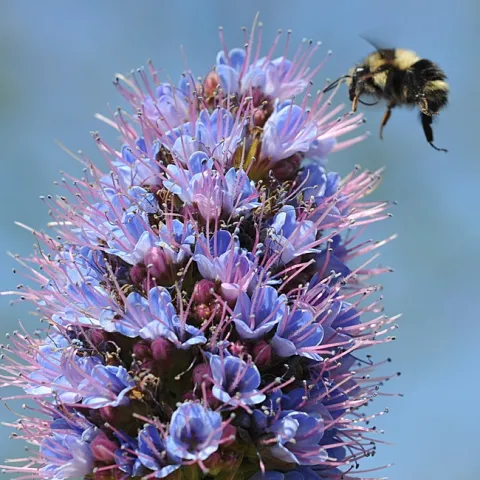
Bombus melanopygus heading toward the Pride of Madeira, Echium candicans. (Photo by Kathy Keatley Garvey)
Bug Squad: Article

Bumble Bee at Bodega Bay

April 11, 2011
By Kathy Keatley Garvey
It's called the "Pride of Madeira" but don't let that name fool you. True, it's the pride of the Portuguese island of Madeira, where it's endemic, but it's also the joy of Bodega Bay. "What's that purplish spiked flower that grows somewhat like a yucca or a tower of jewels?" visitors ask.
View Article
Colusa County: Article

Orchard Notes Meeting Announcement Update

April 11, 2011
Gopher and Ground Squirrel Control in Orchard Crops Field Meeting taking place this Thursday. As you can see the meeting location has been moved to D&D Farms at 3890 Tudor Rd, Yuba City (see attached map).
View Article
Primary Image
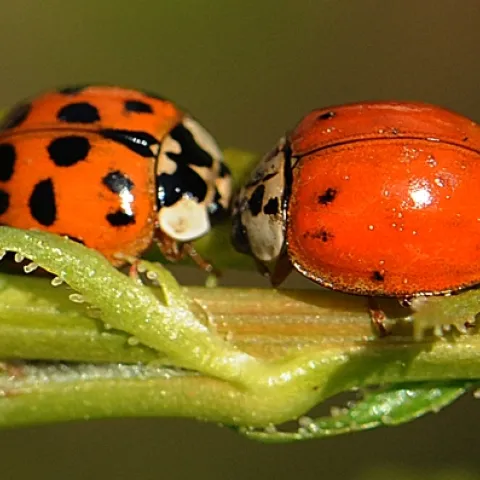
LADYBUGS converging on a plum tree leaf. (Photo by Kathy Keatley Garvey)
Bug Squad: Article

Why We Love Ladybugs

April 8, 2011
By Kathy Keatley Garvey
There's a good reason why lady beetles, aka ladybugs, are prevalent this time of year: aphids. Ladybugs, from the family Coccinellidae, are actually beetles with voracious appetites for those soft-bodied insects that suck plant juices. Wherever there are aphids, you'll usually see ladybugs.
View Article
Primary Image
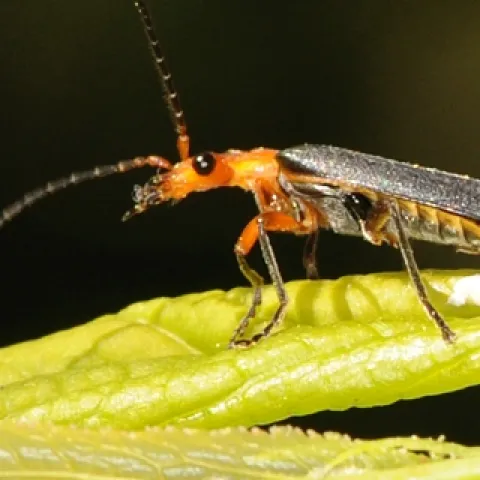
SOLDIER BEETLE, perched on a plum tree leaf, checks it surroundings. It's an avid aphid-eater. (Photo by Kathy Keatley Garvey)
Bug Squad: Article

The Leather Wings

April 7, 2011
By Kathy Keatley Garvey
Some call them "soldier beetles." Some call them "leather-winged beetles." Some call them "Cantharids" (family Cantharidae). Whatever you call them, be sure to welcome them to your garden. They eat aphids, lots of aphids. Like the good soldiers they are, they're ready to do battle.
View Article
Bug Squad: Article

Festooning

April 6, 2011
By Kathy Keatley Garvey
That old saying, "Be all you can be," should be changed to "Bee all you can bee.
View Article
Primary Image
BRUCE HAMMOCK, distinguished professor of entomology at UC Davis, in his habitat on the garden level of Briggs Hall. (Photo by Kathy Keatley Garvey)
Bug Squad: Article

From Moths to Medicine

April 5, 2011
By Kathy Keatley Garvey
From moths to medicine... When distinguished professor Bruce Hammock of the UC Davis Department of Entomology speaks at the department's noonhour seminar tomorrow (Wednesday, April 6) in 122 Briggs Hall, his topic is sure to draw attention.
View Article
Primary Image
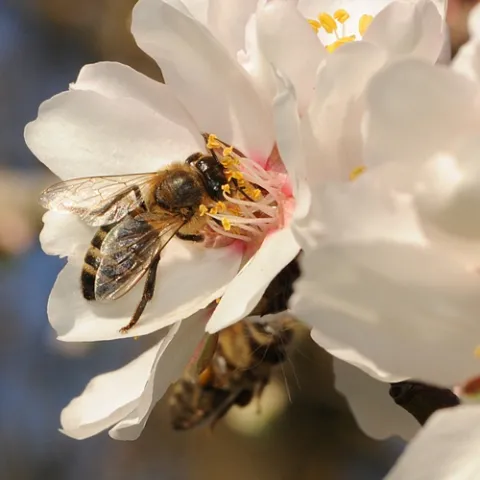
HONEY BEES work the almonds at the Harry H. Laidlaw Jr. Honey Bee Research Facility at UC Davis. (Photo by Kathy Keatley Garvey)
Bug Squad: Article

Bee-ing There for the Vote

April 4, 2011
By Kathy Keatley Garvey
Beekeepers with more than 50 colonies and who do business in California will soon have the opportunity to help support honey bee research.
View Article