A Natural Solution for California's Herds: African Catfish Peptides

California's cattle producers and agricultural communities are all too familiar with the rising challenge of antibiotic resistance, making common bacterial infections harder to treat in livestock. But imagine a future where we could tackle these infections with a natural, powerful alternative. Our research points to just that: antimicrobial peptides (AMPs) found in African catfish.

We're really excited about these peptides because African catfish thrive in pathogen-rich freshwater, naturally producing these robust immune compounds in their skin mucus as a defense. This natural origin makes them highly appealing alternatives to synthetic drugs.

Predicted Safety and Potent Action

One of the most compelling aspects of these AMPs is their predicted safety for mammals. Our initial computer analyses suggest that various catfish AMPs are generally recognized as safe (GRAS). We predict they'll be absorbed in the human intestine without causing liver, brain, or heart toxicity. Furthermore, lab tests on a promising peptide, NACAP-II, confirmed it was non-hemolytic, meaning it didn't damage rabbit red blood cells—a strong indicator of its potential safety for mammalian cells.

Beyond safety, these peptides demonstrate effectiveness against problematic bacteria. One study revealed NACAP-II's strong activity against Extended-Spectrum Beta-Lactamase (ESBL)-producing Escherichia coli—a critical concern for both animal and human health due to its resistance to many common antibiotics. Another peptide, ACAP-IV, also showed antibacterial activity against E. coli and Staphylococcus aureus. We believe these AMPs work by directly disrupting bacterial cell membranes, a mechanism that makes it harder for bacteria to develop resistance compared to how they resist traditional antibiotics.
Primary Image
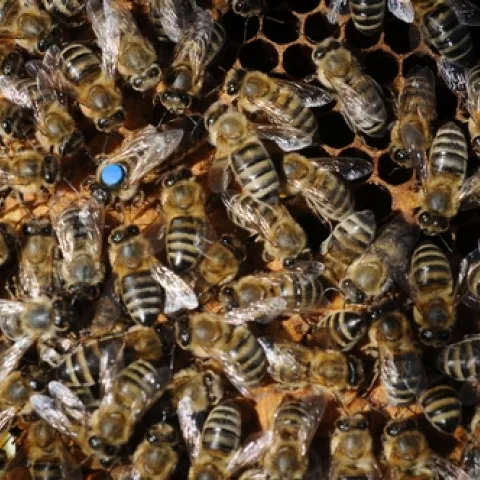
YELLOW-FACED BUMBLE BEE, Bombus vosnesenskii, gathers nectar from a tower of jewels. The Cameron study looked at three species of western bumble bees, including this species. (Photo by Kathy Keatley Garvey)
Bug Squad: Article

Declining Bumble Bees: Alarming

January 4, 2011
Some species of bumble bees are disappearing at an alarming rate. And that, in itself, is alarming. A three-year study published Jan.
View Article
Primary Image
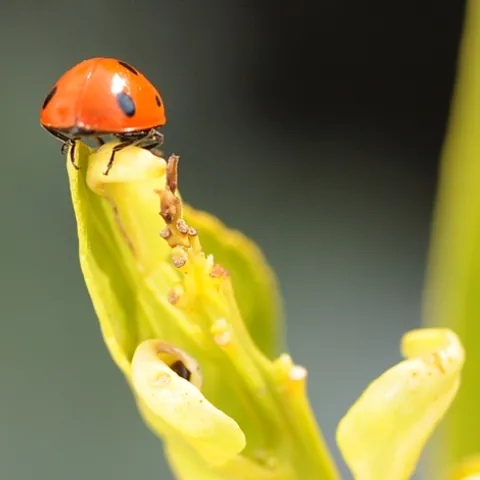
HONEY BEE nectaring salvia. This one is Salvia leucantha or "Mexican sage." (Photo by Kathy Keatley Garvey)
Bug Squad: Article

Salivating the Salvia

January 3, 2011
Hmm, ever wonder why honey bees love salvia? Are they going for that nectar or are they going for something else? Salvia divinorum, which like all the salvias, is a member of the mint family, is gaining notoriety for its hallucinogenic effects.
View Article
Primary Image
2010 CHAMPIONSHIP LINNAEAN TEAM is Ohio State. From left are Joshua Bryant, Kaitlin Uppstrom, Nicola Gallagher and Glene Mynhardt, battling with UC Davis. Ryan Caesar (not pictured) later participated on the team. (Photo by Kathy Keatley Garvey)
Bug Squad: Article

Name That Bug!

December 31, 2010
Emcee Tom Turpin of Purdue University stood at the podium and acknowledged he might mispronounce an entomology student's name. "If it sounds anything like your name and Im looking at you, thats you.
View Article
Primary Image
artshapiro
Bug Squad: Article

To Catch a Cabbage White

December 30, 2010
So you're out roaming the countryside or cityscape in Solano, Yolo or Sacramento counties at the start of the new year and you encounter a Cabbage White butterfly.
View Article
Primary Image
ARTIST Christopher Marley presented a talk on "Aesthetic Entomology" at the 58th annual meeting of the Entomological Society of America. (Photo by Kathy Keatley Garvey)

Insect Art

December 29, 2010
You'd never know by his stunning art work that Christopher Marley once hated insects. (At right: a portion of his spectacular "Coleoptera Mosaic.
View Article
UC Weed Science (weed control, management, ecology, and minutia): Article

California Agriculture article on glyphosate resistant hairy fleabane

December 28, 2010
By Brad Hanson
This is one part follow up to my previous post on glyphosate resistance and one part test of a tool to imbed articles in the blog. The above frame has a 2008 report that Anil Shrestha, Kurt Hembree, and I wrote for California Agriculture on our glyphosate-resistant hairy fleabane work.
View Article
Primary Image
CHEMICAL ECOLOGISTS John Hildebrand (left) of the University of Arizona and Walter Leal of the University of California, Davis, organized and moderated a lively discussion at their seminar at the Entomological Society of America's 58th annual meeting, held recently in San Diego. (Photo by Kathy Keatley Garvey)

Interpreting the Chemical Cues

December 28, 2010
Most of us just finished a whirlwind of olfaction and taste during the holidays, but in the Walter Leal lab at the University of California, Davis, it's a full-time commitment.
View Article
Primary Image
robdunn

Lessons from the Ants

December 27, 2010
We can learn from the ants. Indeed, we can take lessons from the ants, according to ecologist Rob Dunn (right), assistant professor in the Department of Biology, North Carolina State University, Raleigh.
View Article