A Natural Solution for California's Herds: African Catfish Peptides

California's cattle producers and agricultural communities are all too familiar with the rising challenge of antibiotic resistance, making common bacterial infections harder to treat in livestock. But imagine a future where we could tackle these infections with a natural, powerful alternative. Our research points to just that: antimicrobial peptides (AMPs) found in African catfish.

We're really excited about these peptides because African catfish thrive in pathogen-rich freshwater, naturally producing these robust immune compounds in their skin mucus as a defense. This natural origin makes them highly appealing alternatives to synthetic drugs.

Predicted Safety and Potent Action

One of the most compelling aspects of these AMPs is their predicted safety for mammals. Our initial computer analyses suggest that various catfish AMPs are generally recognized as safe (GRAS). We predict they'll be absorbed in the human intestine without causing liver, brain, or heart toxicity. Furthermore, lab tests on a promising peptide, NACAP-II, confirmed it was non-hemolytic, meaning it didn't damage rabbit red blood cells—a strong indicator of its potential safety for mammalian cells.

Beyond safety, these peptides demonstrate effectiveness against problematic bacteria. One study revealed NACAP-II's strong activity against Extended-Spectrum Beta-Lactamase (ESBL)-producing Escherichia coli—a critical concern for both animal and human health due to its resistance to many common antibiotics. Another peptide, ACAP-IV, also showed antibacterial activity against E. coli and Staphylococcus aureus. We believe these AMPs work by directly disrupting bacterial cell membranes, a mechanism that makes it harder for bacteria to develop resistance compared to how they resist traditional antibiotics.
Primary Image
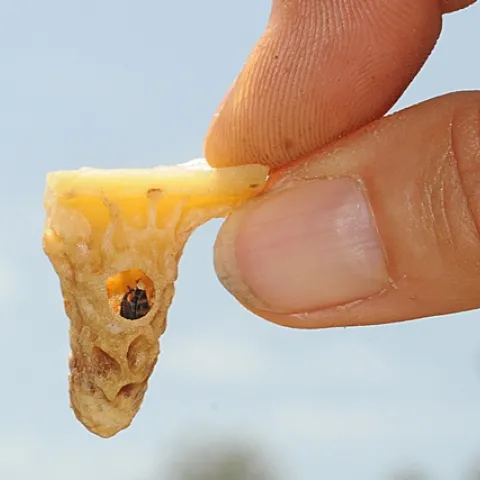
HOLE in the queen cell indicates that the worker bees went in and destroyed the yet-to-be-born queen. The first queen to emerge makes a mark on the shell to indicate that the worker bees are to destroy it. (Photo by Kathy Keatley Garvey)

Not All Sweetness

June 30, 2009
By Kathy Keatley Garvey
The honey bee hive is not all sweetness. The first virgin queen bee to emerge from her cell (each queen cell resembles a peanut shell) will rid the colony of her competition. After emerging, the queen makes a mark on the other queen cells.
View Article
Primary Image
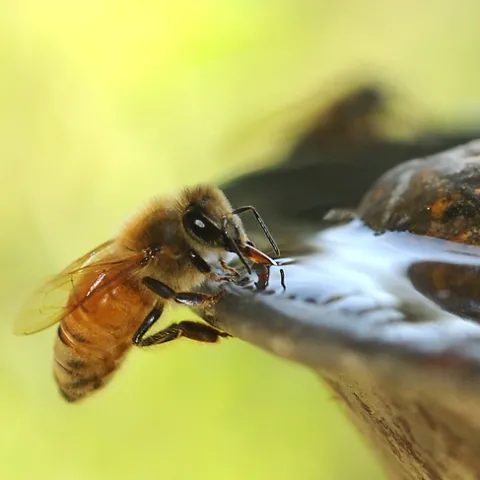
A THIRSTY BEE drinks from a watering device at the Harry H. Laidlaw Jr. Honey Bee Research Facility at UC Davis. Bees don't like to get their feet wet. (Photo by Kathy Keatley Garvey)

Cool It!

June 29, 2009
By Kathy Keatley Garvey
The bees are dropping like flies--in swimming pools all over northern California during this triple-digit heat wave. Honey bees collect water to aircondition their hive. They sip from bird baths, dripping faucets, water-splashed plants and even wet laundry hanging on the line.
View Article
Primary Image
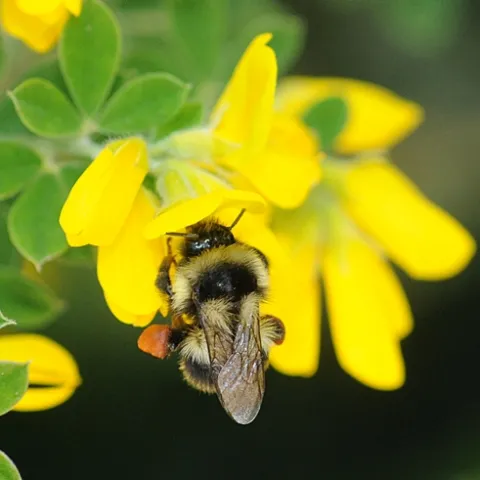
A BUMBLE BEE nectars flowers on the grounds of the Marshall (Calif.) Post Office in Marin County. (Photo by Kathy Keatley Garvey)

Signed, Sealed and Delivered

June 26, 2009
By Kathy Keatley Garvey
A trip today to Marin County, with a side trip to the Marshall Post Office in Marshall, yielded a triple bonus. A bumble bee, a honey bee, and a syrphid or flower fly all were nectaring flowers on the post office grounds, located right across from a restaurant and marina we were visiting.
View Article
Primary Image
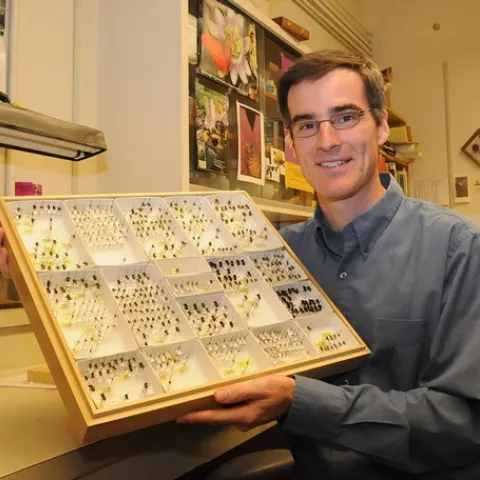
NATIVE POLLINATOR SPECIALIST Neal Williams has just joined the UC Davis Department of Entomology faculty. Here he shows a collection of native bees. (Photo by Kathy Keatley Garvey)

Just in Time for National Pollinator Week

June 25, 2009
By Kathy Keatley Garvey
It's National Pollinator Week, and what a perfect time to welcome native pollinator specialist Neal Williams to the UC Davis Department of Entomology faculty. He's actually no stranger to UC Davis. He's been collaborating with researchers at the Harry H. Laidlaw Jr.
View Article
Primary Image
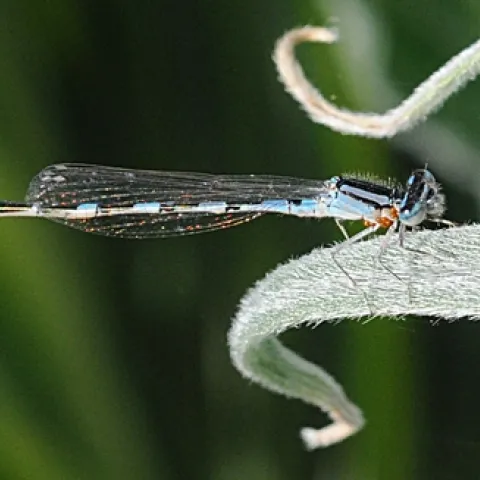
A DAMSELFLY, probably a bluet, perches on a tower of jewels, a bee-friendly plant. Now it's a damselfly-friendly plant. (Photo by Kathy Keatley Garvey)

A Damsel Not in Distress

June 24, 2009
By Kathy Keatley Garvey
They're as long and thin as darning needles. And, sometimes theyre as difficult to find as a needle in the proverbial haystack. These slender, frail-looking insects (below) are damselflies. They fly around ponds and streams and perch on plants near the shoreline.
View Article
Primary Image
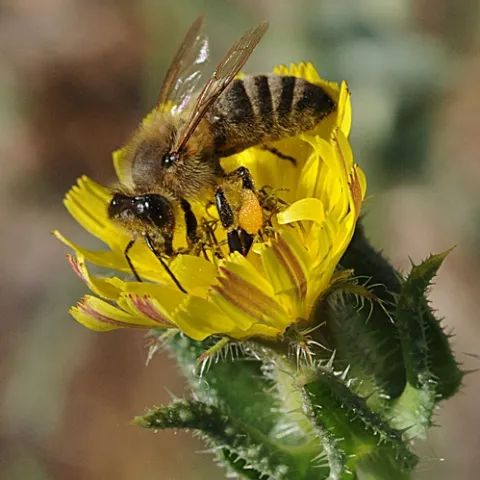
HONEY BEE touches down on a bristly oxtongue, a plant considered a noxious weed to people but a treasure to bees. (Photo by Kathy Keatley Garvey)

Noxious or Nice?

June 23, 2009
By Kathy Keatley Garvey
Today, in honor of National Pollinator Week, we turn to the Picris echioides. Picris echioides? You either hate it or love it. Honey bees love it. Gardeners hate it. ?If you plant a lawn with Picris echioides, expect a visit from Code Compliance.
View Article
Primary Image
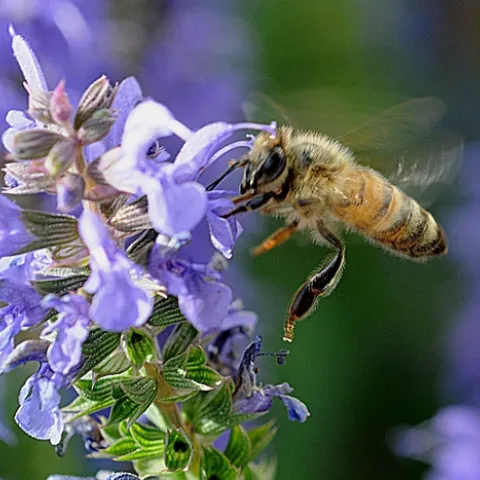
THE HONEY BEE (Apis mellifera) is a cause for celebration during National Pollinator Week, June 22-28. This honey bee is nectaring sage. (Photo by Kathy Keatley Garvey)

First Garden, First Hives, First Bees

June 22, 2009
By Kathy Keatley Garvey
This week (June 22-28) is National Pollinator Week, and what better time to celebrate the honey bee than now? The White House Victory Garden, planted the first day of spring on part of the South Lawn, now has thousands of new residents: honey bees (Apis mellifera).
View Article
Primary Image
HONEY BEE, one leg extended, heads for the pollen. (Photo by Kathy Keatley Garvey)

Packing 'n Pressing Pollen

June 19, 2009
By Kathy Keatley Garvey
Quick! How many legs does a honey bee have? If you said "three pairs" or "six legs," you'd bee right. But have you ever noticed the honey bee in flight? The worker bee packs pollen in her pollen baskets or corbiculae, located on the midsegments of her outer hind legs.
View Article
Primary Image
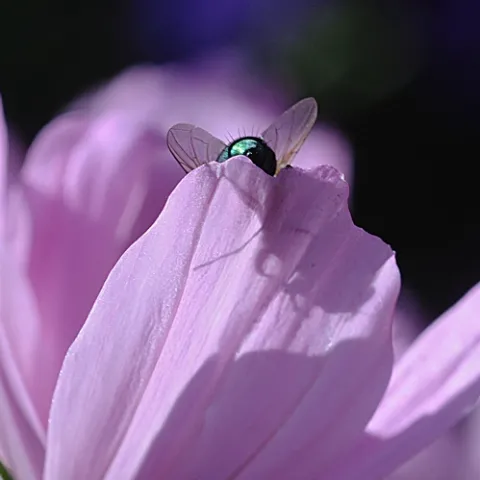
BOTTLE-GREEN blow fly, the color of emeralds, on a pink cosmos. (Photo by Kathy Keatley Garvey)

The Bug Stops Here

June 18, 2009
By Kathy Keatley Garvey
President Obama caught a little flak when he smacked a fly during a recent press interview in the White House. During the interview, a pesky fly buzzed around his head and then landed on his hand. Big mistake. The commander-in-chief nailed him. The bug stopped there. "I got the sucker," he said.
View Article
Primary Image
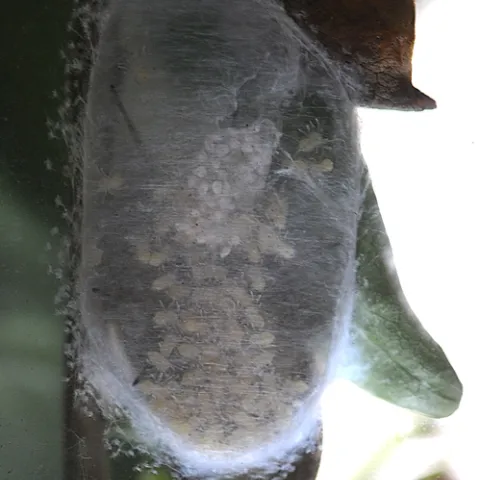
SPIDER COCOON outside the window of John Emery's San Francisco office. (Photo courtesy of John Emery)
Bug Squad: Article

Our Spider Man in San Francisco

June 17, 2009
By Kathy Keatley Garvey
John Emery is a spider man. Oh, hes not a super hero who clings to city skyscrapers and chases villains and rescues damsels in distress. Hes the IT manager for Sue Mills, a company which sells school uniforms. But he's truly a spider man.
View Article