A Natural Solution for California's Herds: African Catfish Peptides

California's cattle producers and agricultural communities are all too familiar with the rising challenge of antibiotic resistance, making common bacterial infections harder to treat in livestock. But imagine a future where we could tackle these infections with a natural, powerful alternative. Our research points to just that: antimicrobial peptides (AMPs) found in African catfish.

We're really excited about these peptides because African catfish thrive in pathogen-rich freshwater, naturally producing these robust immune compounds in their skin mucus as a defense. This natural origin makes them highly appealing alternatives to synthetic drugs.

Predicted Safety and Potent Action

One of the most compelling aspects of these AMPs is their predicted safety for mammals. Our initial computer analyses suggest that various catfish AMPs are generally recognized as safe (GRAS). We predict they'll be absorbed in the human intestine without causing liver, brain, or heart toxicity. Furthermore, lab tests on a promising peptide, NACAP-II, confirmed it was non-hemolytic, meaning it didn't damage rabbit red blood cells—a strong indicator of its potential safety for mammalian cells.

Beyond safety, these peptides demonstrate effectiveness against problematic bacteria. One study revealed NACAP-II's strong activity against Extended-Spectrum Beta-Lactamase (ESBL)-producing Escherichia coli—a critical concern for both animal and human health due to its resistance to many common antibiotics. Another peptide, ACAP-IV, also showed antibacterial activity against E. coli and Staphylococcus aureus. We believe these AMPs work by directly disrupting bacterial cell membranes, a mechanism that makes it harder for bacteria to develop resistance compared to how they resist traditional antibiotics.

Primary Image
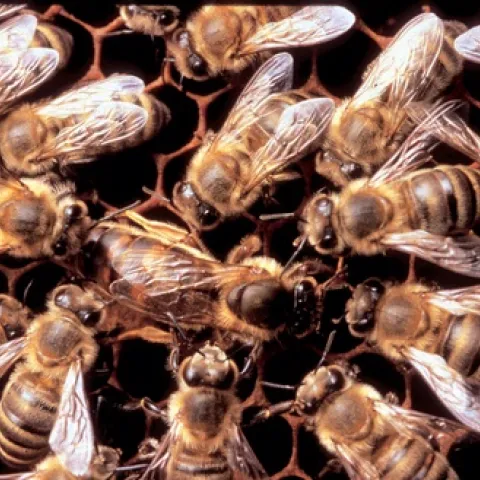
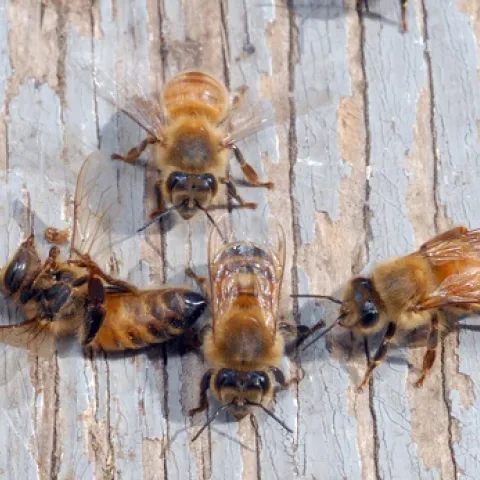
THE QUEEN--The queen bee (center) lays about 2000 eggs a day during the peak season. Here she's surrounded by worker bees (infertile females). (Photo courtesy of Susan Cobey, Harry H. Laidlaw Jr. Honey Bee Research Facility, UC Davis)

What Has Five Eyes, Six Legs and Two Pairs of Wings?

December 16, 2008
What has five eyes, six legs, two pairs of wings and can fly about 20 miles per hour? Got to be an insect, right? Right. But which one? More hints: Its been around for 30 million years. Its primary form of communication is a chemical called a pheromone. Well, that could be Okay, now it gets easier.
View Article
Primary Image
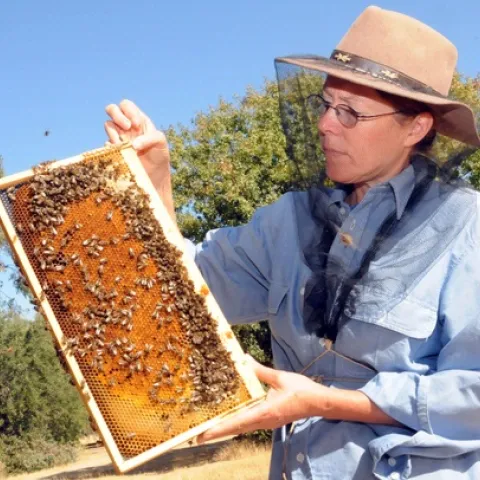
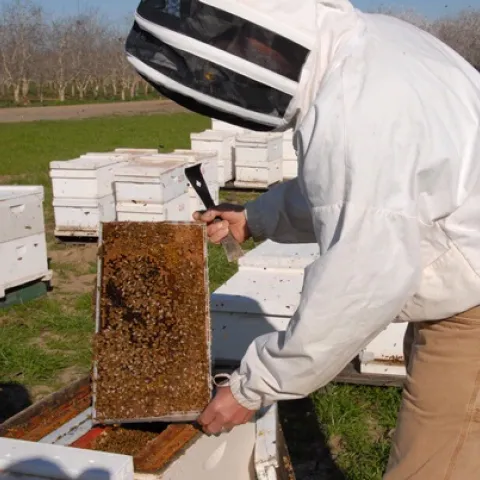
THE BEES--Honey bees are the good insects. Here UC Davis bee breeder-geneticist Susan Cobey looks at a healthy frame of bees. (Photo by Kathy Keatley Garvey)

We're Outnumbered

December 15, 2008
Were outnumbered. Plain as day. And theyre not going away. The estimated ratio of insects to humans is 200 million to one, say Iowa State University entomologists Larry Pedigo and Marlin Rice in their newly published (sixth edition) textbook, Entomology and Pest Management.
View Article
Primary Image
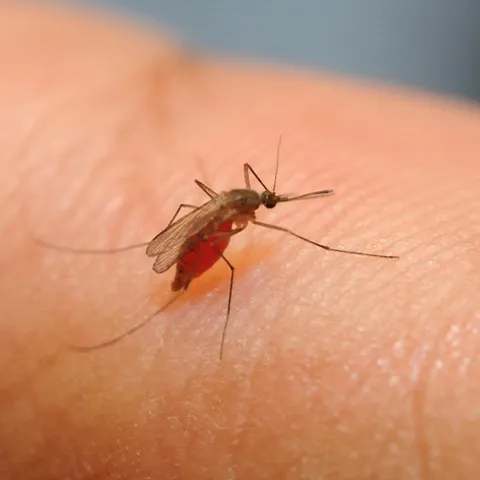
SEEING RED--A blood-fed mosquito on a researcher's arm. (Photo by Kathy Keatley Garvey)

Going Green, Seeing Red

December 12, 2008
We're in a recession, but the mosquitoes aren't. The mortgage meltdown and the resulting green swimming pools are perfect breeding sites for mosquitoes, which can transmit the deadly West Nile virus (WNV). So far this year WNV has sickened 411 Californians, killing 13.
View Article
Primary Image
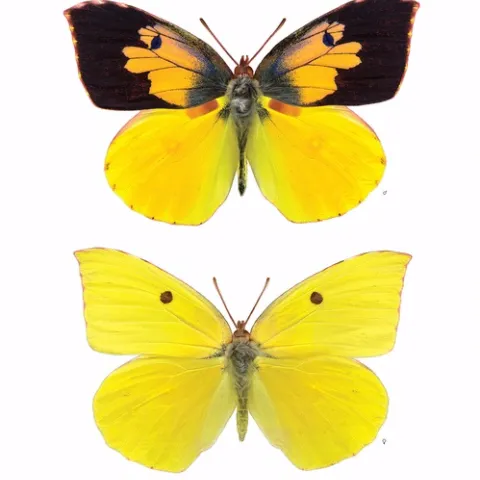
POSTER CHILD--This poster, designed by UC Davis entomology doctoral candidate Fran Keller with photographs by Greg Kareofelas of Davis, shows the California state insect, the dogface butterfly. The male (top) is known as "the flying pansy." The female (bottom) is mostly yellow. The poster received praise from Gov. Arnold Schwarzenegger in April. Now it's received more acclaim. (See story above).

Poster Child

December 11, 2008
It's a high-flying butterfly--rarely seen and rarely recognized. Ironically, it's now down-to-earth, frequently seen, and frequently recognized, thanks to the Internet.
View Article
Primary Image
THE DEAD BEE--Worker bees prepare to remove their dead sister (far left) from the hive. (Photo by Kathy Keatley Garvey)

A Hymn for Her

December 10, 2008
Did you catch the "The Burns and the Bees" episode on The Simpsons Sunday night? Dead honey bees take over the otherwise animated TV show. Bart, on a dare from schoolyard bullies, knocks a bee's nest from a tree and it lands kerplop on the playground.
View Article
Primary Image
TO BEE OR NOT TO BEE--Yao Hua Law (left) and Randy Veirs hold up the "To Bee or Not to Bee" t-shirt. It is intended to do double duty: to raise funds for the UC Davis Entomology Graduate Students' Association and to raise awareness for the plight of honey bees. (Photo by Kathy Keatley Garvey)

To Bee or Not to Bee

December 9, 2008
"To bee or not to bee." That is the question. What is the solution? The plight of the honey bees has not escaped the UC Davis Entomology Graduate Students' Association (EGSA).
View Article
Primary Image
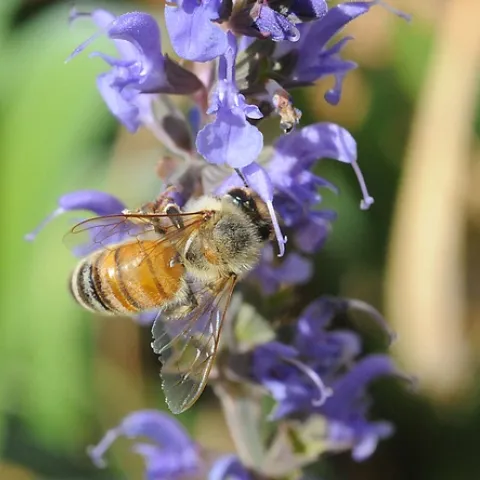
HAVEN FOR HONEY BEES--A honey bee gathers nectar from salvia (sage). Sage is sure to be one of the featured plants in bee friendly garden at the Harry H. Laidlaw Jr. Honey Bee Research Facility. (Photo by Kathy Keatley Garvey)

Pollinator Paradise

December 8, 2008
There's been trouble in paradise far too long. Now, thanks to a generous donation from Hagen-Dazs, there will be a pollinator paradise--in the way of a bee friendly garden--at the Harry H. Laidlaw Jr. Honey Bee Research Facility at UC Davis.
View Article
Primary Image
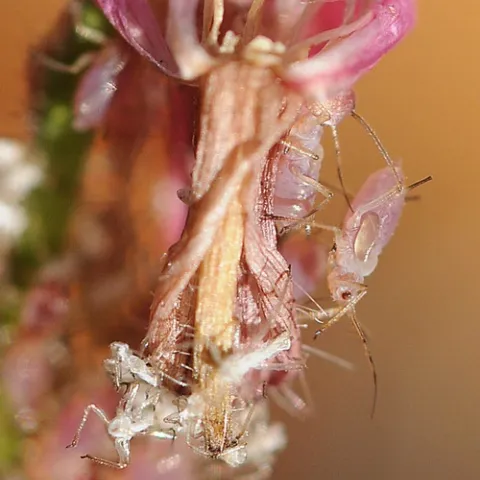
APHIDS ON GAURA--These aphids are feasting on a gaura. (Photo by Kathy Keatley Garvey)

They Suck

December 5, 2008
Call them plant lice. Call them plant suckers. Call them aphids. The tiny, soft-bodied insects with pear-shaped bodies form denses colonies on plants. They suck. Literally. Their destructive feeding habits do not endear them to gardeners and farmers. No love lost. No lost love.
View Article
Primary Image
THE FLY--A fly on sage, posterized through Photoshop. (Photo by Kathy Keatley Garvey)

Fly Away

December 3, 2008
God in His wisdom made the fly And then forgot to tell us why. --Ogden Nash, "The Fly" Every time I see a fly I think of the Ogden Nash poem. Our bee-friendly garden is attracting a few flies. I captured this one visiting sage and then preserved it for posterity: I posterized it in Photoshop.
View Article