A Natural Solution for California's Herds: African Catfish Peptides

California's cattle producers and agricultural communities are all too familiar with the rising challenge of antibiotic resistance, making common bacterial infections harder to treat in livestock. But imagine a future where we could tackle these infections with a natural, powerful alternative. Our research points to just that: antimicrobial peptides (AMPs) found in African catfish.

We're really excited about these peptides because African catfish thrive in pathogen-rich freshwater, naturally producing these robust immune compounds in their skin mucus as a defense. This natural origin makes them highly appealing alternatives to synthetic drugs.

Predicted Safety and Potent Action

One of the most compelling aspects of these AMPs is their predicted safety for mammals. Our initial computer analyses suggest that various catfish AMPs are generally recognized as safe (GRAS). We predict they'll be absorbed in the human intestine without causing liver, brain, or heart toxicity. Furthermore, lab tests on a promising peptide, NACAP-II, confirmed it was non-hemolytic, meaning it didn't damage rabbit red blood cells—a strong indicator of its potential safety for mammalian cells.

Beyond safety, these peptides demonstrate effectiveness against problematic bacteria. One study revealed NACAP-II's strong activity against Extended-Spectrum Beta-Lactamase (ESBL)-producing Escherichia coli—a critical concern for both animal and human health due to its resistance to many common antibiotics. Another peptide, ACAP-IV, also showed antibacterial activity against E. coli and Staphylococcus aureus. We believe these AMPs work by directly disrupting bacterial cell membranes, a mechanism that makes it harder for bacteria to develop resistance compared to how they resist traditional antibiotics.
Event Primary Image
Sunshine through tree
UC Marin Master Gardeners: Event

Woody Plant Biology

Event Date
Jul 9, 2025

Program: This class will cover the basic biological functions of woody trees and shrubs, including how they obtain nutrients, their growth habits, wound response, and related functions. Woody Plant Biology, along with the second class in our Pruning Guild series “Introduction to Aesthetic Pruning” provide…
UC Marin Master Gardeners
View Event
Event Primary Image
Native plants
UC Marin Master Gardeners: Event

Native Ground Covers

Event Date
Jul 22, 2025

Program: Ground covers serve many functions in the landscape, including suppressing weeds, reducing erosion, replacing lawns, softening hardscapes, and filling in large expanses. Native groundcovers have the benefits of being adapted to our environment and supporting native biodiversity. In addition,…
UC Marin Master Gardeners
View Event
Event Primary Image
Petaluma spring event for kids gardening exploration
UC Master Gardener Program of Sonoma County: Event

Children in the Garden

Event Date
Jun 14, 2025

 Children, along with an adult, are warmly invited to the Unity Garden at Bounty Farms in Sonoma County on Saturday, June 14 from 2-4pm.Children will plant, learn and explore the natural wonders of this Demonstration Garden, a project of the UC Master Gardener Program of Sonoma County. At the event…
UC Master Gardener Program of Sonoma County
View Event
Forestry Research and Outreach: Event

Forest Stewardship Field Day: L.A. Moran Reforestation Center

Event Date
Jul 18, 2025

The Forest Stewardship and Post-fire Forest Resilience Programs are collaborating with CAL FIRE's Lewis A. Moran Reforestation Center to host a field trip to the nursery facility in Davis, CA. Join us as we discuss cone collection and processing; seed processing; propagation and seedling care; and how forest…
Forestry Research and Outreach
View Event
Forestry Research and Outreach: Event

Biomass Facility Tour: Tuolumne County

Event Date
Jun 4, 2025

Visit the newly developed Heartwood Biomass facility in Jamestown. Heartwood Biomass specializes in utilizing woody biomass such as small-diameter trees and forest management residuals to make wood products. By making value-added products using otherwise non-merchantable materials, Heartwood Biomass aims to…
Forestry Research and Outreach
View Event
Primary Image
Cross section of a tree trunk that has trellis-like tunnels throughout. The tunnels are dark stained and go deep into the wood.
Pests in the Urban Landscape: Article

Mediterranean Oak Borer: Questions & Answers

May 28, 2025
By Lauren Fordyce
The Mediterranean Oak Borer (MOB) is an invasive ambrosia beetle that infests several species of white oaks in California: valley oak, blue oak, and Oregon oak. The beetle is spreading rapidly in Northern California counties and there is considerable potential for the beetle's range to expand as they…
View Article
Primary Image
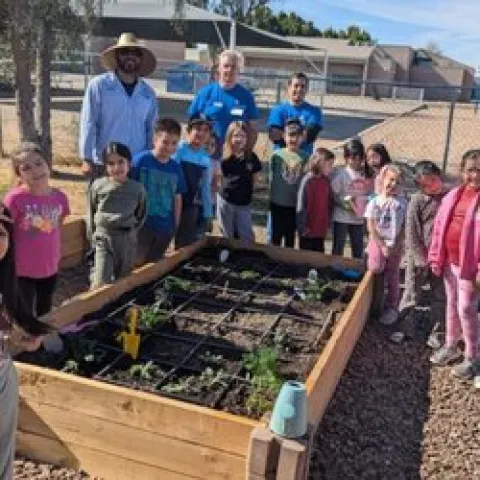
UCMGs and little students around a wooden raised garden bed.
The Low Desert Gardener: Article

Why I Decided to Pursue the Master Gardener Program

May 28, 2025
By Jessica Delgado
Hi, I’m Diego Torres — a proud certified Master Gardener with a green thumb that didn’t come naturally (believe me, I’ve earned it one plant at a time). When I first set out on this journey, my goal was simple: become a better gardener to support my role as a Health Educator for the CalFresh program. My work…
View Article
Livestock & Natural Resources Information Center - Plumas, Sierra & Butte Counties: Page

NRCS Livestock-Predator Interaction Management

UCCE created opportunities for livestock to producers to learn about a new NRCS funding during an in person session on May 27 in Loyalton California and on a webinar co-hosted with California Cattlemen's Association on May 28, 2025.   During these sessions NRCS shared about their Livestock-Predator…
View Page