

Mulch can play an important role in your landscaping. In addition to aesthetics, proper mulch application provides benefits to water retention, soil temperature, weed inhibition, and soil erosion. Improving water retention and reducing weed growth can help reduce fuel risk in fire-prone areas, but unfortunately, when mulch is composed of wood-based, plant-based, or petroleum products, using mulch also introduces a new combustible material into your landscape. For this reason, it is important to consider the type, location, and quantity of mulch used to best achieve your goals and help protect your property and home from fire.
What is Mulch?
Mulch is any material used to cover the soil surface for a variety of purposes. There are three types of mulch materials - organic, inorganic, and synthetic. Each type can vary considerably in terms of size, shape, texture, and parent material, all of which can influence their combustibility.
- Organic Mulches - derived from living plant materials such as wood chips, shredded bark, hay and straw, compost, tree trimmings (e.g., arborist wood chips), grass clippings and leaves, and pine needles.
- Inorganic Mulches - derived from naturally occurring, non-living materials such as rock, gravel, paving stones, and brick chips.
Synthetic Mulches - derived from manufactured materials such as shredded rubber and landscape fabrics made of polypropylene and polyester
Combustion Characteristics of Mulch
Although inorganic mulches are not combustible, organic and synthetic mulches are combustible. Organic and synthetic mulches can ignite from embers, radiant heat, or direct flame contact. Not all combustible mulch materials have the same combustion characteristics. It is important to understand how different materials and their structures affect the flammability of mulch. Be aware that depending on where you live, products may go by different names.
Below is a table outlining anticipated fire behavior characteristics for commonly used organic, inorganic, and synthetic mulch types. Anticipated fire behavior does not include information on anticipated behavior under extreme fire and weather conditions.
Mulch Type | Description | Anticipated Fire Behavior |
Organic Materials | ||
Bark Nuggets and Non-Composted Wood ChipsImage  |
|
|
Composted Wood ChipsImage 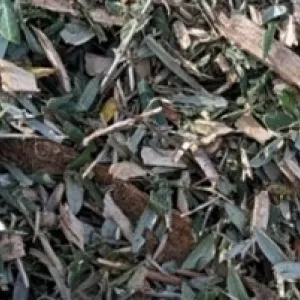 |
|
|
Pine Needles and StrawImage  |
|
|
Shredded BarkImage  |
|
|
Inorganic Materials | ||
Gravel, Rock Mulches, and Paving StonesImage  |
|
|
Synthetic Materials | ||
Shredded Rubber or Ground RubberImage  |
|
|
Integrating Mulch into Defensible Space Landscaping Strategies
When applying mulch to a landscape, it is important to consider defensible space and the risk associated with having combustible materials near the house and other structures. Reducing the continuity and amount of combustible materials near structures increases the likelihood that those structures will survive a wildfire event. Defensible Space Zone guidelines help mitigate the intensity and spread of wildfires by increasing the horizontal and vertical spacing between vegetation and combustible materials near structures. Consider the purpose of each defensible space zone when determining which mulch to apply to your landscape.
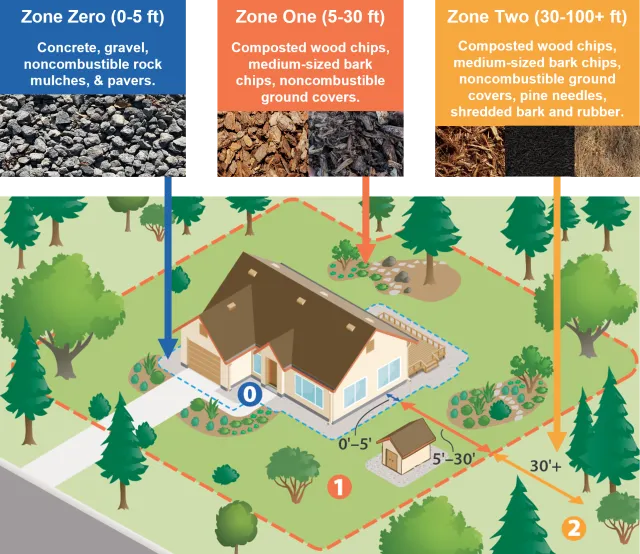
Zone Zero (0-5 ft)
Zone Zero reduces the potential for for direct flame contact and ember ignition to the structure by removing all vegetation and combustible materials. Maintaining noncombustible, ignition-resistant areas immediately adjacent to the house, other structures, fences, or wood retaining walls is particularly important for defensible space and structure protection. Combustible mulches are not recommended for use within five feet of the house and other structures.
- Recommended Materials: concrete, gravel, noncombustible rock mulches, and pavers.
Zone One (5-30 ft)
Zone One can slow the spread of wildfire to aid firefighters in structure defense. Zone One can reduce the potential for crown fire by creating additional spacing between vegetation and combustible materials. Combustible mulches should not be applied in a widespread or continuous matter and their depth should be limited to four inches. Areas covered with combustible mulch should be broken up with noncombustible materials, such as walkways or short concrete or stone walls.
- Recommended Materials: composted wood chips, concrete, gravel, medium-sized bark chips (1-3 inches in diameter), noncombustible rock mulches, and pavers. It is recommended to limit the use of inorganic mulches around the base of trees due to their ability to retain heat and damage the roots. This is particularly true for California native oaks.
Zone Two (30-100+ ft)
Zone Two (30-100+ ft) can moderate the behavior of an approaching wildfire. Under moderate conditions, a fire in the canopy of dominant vegetation in Zone Two may drop to the ground and burn with less extreme fire behavior. Limit the depth of combustible mulches to four inches. Overall, limiting the depth of combustible mulches across the landscape can lead to less hazardous combustion characteristics and is recommended, especially in areas close to the house and other structures.
- Recommended Materials: composted wood chips, concrete, gravel, medium-sized bark chips (1-3 inches in diameter), noncombustible rock mulches, pavers, pine needles, shredded cedar or redwood bark, and shredded rubber.
Additional Considerations
- Fire-retardant-treated mulches are not recommended near the house. These products have a limited service life and fire behavior of retardant-treated mulch has been shown to be no different than that of untreated mulch.
- A best practice is to limit all combustible materials around the first 5 feet of any structure, regardless of how they are marketed to behave.
- Do not rely on watering combustible mulches to reduce wildfire risk near structures, as water supply and pressure may be limited or unavailable during a wildfire and these fuels can dry out quickly.
- Note that some types of irrigation, such as drip irrigation, do not wet the entire area, which could result in unseen dry areas of wood and bark mulches.
- Dry, hot, and windy weather during some wildfires can dry out the mulch bed well in advance of the flaming front, rendering the irrigation’s defense useless.
Additional Resources
Check out these mulch-related wildfire preparedness resources from Fire Network Members and our colleagues!
These materials are not maintained by UC ANR and may not meet current accessibility standards. If you need assistance accessing this content or require an accessible format, please contact University of Nevada, Reno Extension.