

Overview
Growing vegetables in your home or garden is good for you, your neighborhood, and helps to reduce your global footprint on this earth. Growing vegetables at home can be done in a single pot on your patio or on a larger scale, depending on the space and time you have available.
Good planning and preparation will reduce the workload in your garden. For example, if you install a drip system that can accommodate all of your beds, you will never have to drag an irrigation hose around. If you apply a heavy layer of coarse mulch between the beds, your weeding will be minimal. If you build raised beds, your garden will be more organized and less likely to degrade to weeds. There are many resources to help you plan the perfect garden for your home and family. Connect with your local UC Master Gardener Program for free advice and help!
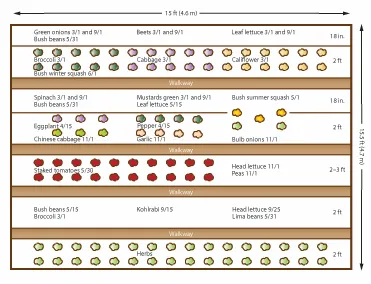
One of the best ways to make a plan for your garden is to use grid paper and draw where you are planting specific vegetables, including planting dates, varieties, and other notes. This will come in handy to reference during your growing season as well as for next year's planning.
Planning Your Vegetable Garden
Resources
- Have a gardening question? Connect with your local UC Master Gardener Program!
- California Master Gardener Handbook (UC ANR publication 3382)