UC ANR is committed to providing an accessible and inclusive web experience for all users. If you encounter an accessibility barrier or need content in an alternative or remediated accessible format, please contact anraccessibility@ucanr.edu.
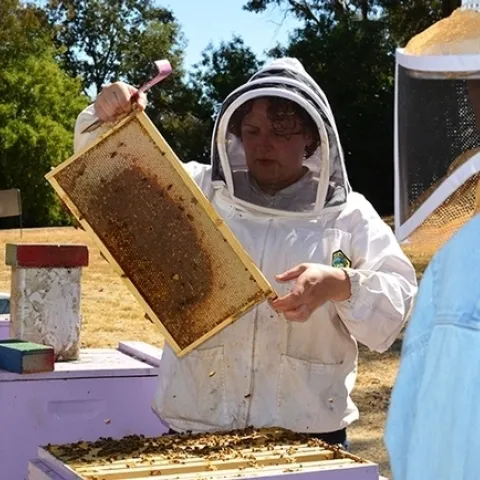
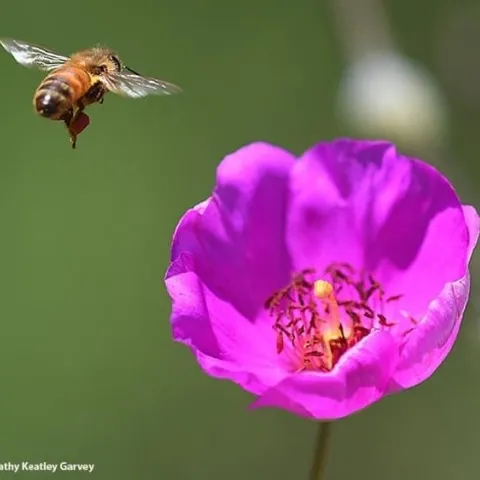
Newly published UC Davis research, the first of its kind, reveals that pesticide exposure and food scarcity pack a double punch to blue orchard bees, Osmia lignaria, a wild bee that pollinates early spring bloom, including almonds.
One of the many wonderful things about California's climate is that in many regions of the state you'll find orchards of walnut, almond, pecan, pistachio or chestnut trees. You may be growing or planning to grow one or more of these trees in your yard so you can enjoy consuming the nuts.
As part of its mission of sustainability in agriculture, the University of California Sustainable Agriculture Research and Education Program (UC SAREP) is interested in crops that hold environmental and economic promise such as moringa, the drought-tolerant superfood grown by Central Valley farmers...
In 2017, the National Academies of Science, Engineering, and Medicine (NASEM) released comprehensive recommendations to update the food packages provided by the federal Special Supplemental Nutrition Assistance Program for Women, Infants and Children (WIC) to align with the 2015-2020 Dietary Guideli...
Looking for some outdoor fun and fresh fall fruit? Join us for one of the 2020 Persimmon U-Pick event sessions being held on Tuesday November 3rd, Friday November 6th, and Tuesday November 10th. Limited space available - pre-registration required. Click here to register Click here to register.
November is a prime month to enjoy pomegranates, which grow well in the Central Sierra and most of California. In fact, more than 90% of all the pomegranates grown for sale in the U.S. are produced here in California, where they enjoy sunny, dry summers.
October has been National Farm to School month, and in the Central Sierra we thank all of the many community champions who help to connect students with local foods and agricultural education.