A Natural Solution for California's Herds: African Catfish Peptides

California's cattle producers and agricultural communities are all too familiar with the rising challenge of antibiotic resistance, making common bacterial infections harder to treat in livestock. But imagine a future where we could tackle these infections with a natural, powerful alternative. Our research points to just that: antimicrobial peptides (AMPs) found in African catfish.

We're really excited about these peptides because African catfish thrive in pathogen-rich freshwater, naturally producing these robust immune compounds in their skin mucus as a defense. This natural origin makes them highly appealing alternatives to synthetic drugs.

Predicted Safety and Potent Action

One of the most compelling aspects of these AMPs is their predicted safety for mammals. Our initial computer analyses suggest that various catfish AMPs are generally recognized as safe (GRAS). We predict they'll be absorbed in the human intestine without causing liver, brain, or heart toxicity. Furthermore, lab tests on a promising peptide, NACAP-II, confirmed it was non-hemolytic, meaning it didn't damage rabbit red blood cells—a strong indicator of its potential safety for mammalian cells.

Beyond safety, these peptides demonstrate effectiveness against problematic bacteria. One study revealed NACAP-II's strong activity against Extended-Spectrum Beta-Lactamase (ESBL)-producing Escherichia coli—a critical concern for both animal and human health due to its resistance to many common antibiotics. Another peptide, ACAP-IV, also showed antibacterial activity against E. coli and Staphylococcus aureus. We believe these AMPs work by directly disrupting bacterial cell membranes, a mechanism that makes it harder for bacteria to develop resistance compared to how they resist traditional antibiotics.
Primary Image
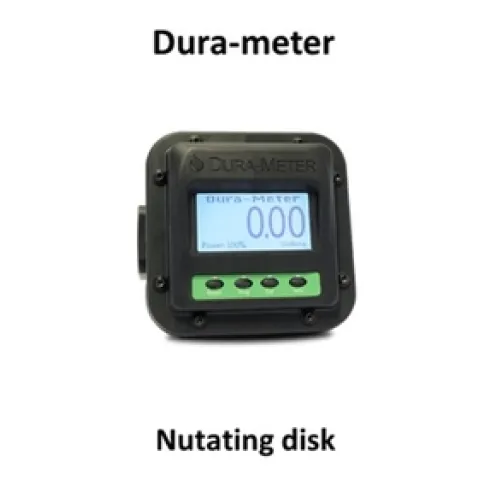
Figure 1. Three models of flowmeters that use different mechanisms for measuring flow were evaluated for accuracy in measuring the volume of fertilizer pumped from a tank.
Salinas Valley Agriculture: Article

Evaluation of flowmeters for accurately metering liquid fertilizers

September 30, 2023
By Michael D Cahn
Growers will need to implement best management practices that reduce nitrate leaching losses on the Central Coast to comply with Agricultural Discharge Order 4.0. The use of drip irrigation has allowed many growers to be efficient with both water and nitrogen fertilizer.
View Article
Primary Image
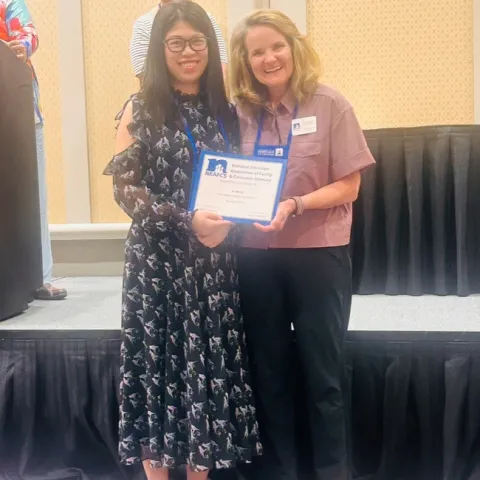
Yu Meng, receives the NEAFCS New Professional Award from Western Region President Dianne Christensen.
ANR Employee News: Article

Names in the News

September 29, 2023
By Pamela S Kan-Rice
Cervantes joins NOS as broadcast communication specialist Diana Cervantes joined UC ANR on Sept. 5 as the new broadcast communication specialist for News and Information Outreach in Spanish, or NOS.
View Article
UC Master Gardeners of Solano County: Article

Fall 2023

September 29, 2023
The Gift of Garden Tools Mediterranean Oak Borer: A New Invasive Species Preservation Pointers: Flavored Vinegars and Oils It's Time to Get Started on Your Winter Vegetable Garden! A Hoophouse for the Backyard Financial Incentives for Planting Trees! Sprouts in the Garden: Kids Corner The Huntington...
View Article
Colusa County: Article

October 2023

September 29, 2023
Ornamental Plant of the Month Hosta Garden of the Month San Francisco Botanical Garden Edible Plant of the Month Edible Landscaping with Fall Color Recipe of the Month Tandoori Chicken Garden Guide Safety Notes...
View Article
Primary Image
A young woman
ANR News Releases: Article

California 4-H’er selected as runner-up for national 4-H award

September 29, 2023
By Saoimanu Sope
National 4-H Council today (Sept. 29, 2023) announced that Michaela Auyeung of Los Gatos, is a runner-up for the 2024 4-H Youth in Action Award. Auyeung is recognized nationally for her commitment to providing STEM access and improving mental and physical well-being for girls in her community.
View Article
Primary Image
USDA logo with NIFA signature lockup
ANR Employee News: Article

Please acknowledge NIFA funding of projects

September 29, 2023
By Pamela S Kan-Rice
Our partners at USDA National Institute of Food and Agriculture ask that recipients of USDA NIFA grants acknowledge support from the funds when writing and talking about funded projects.
View Article
Primary Image
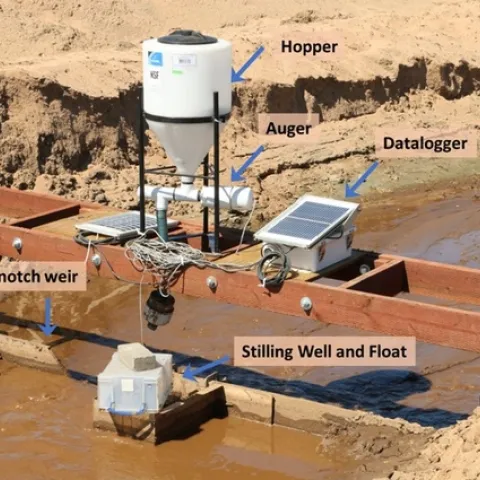
Figure 2. Applicator for dosing granular PAM into drainage ditches.
Salinas Valley Agriculture: Article

New approaches to using polyacrylamide (PAM) to reduce sediment and sediment bound pesticides and nutrients in runoff and improve chlorine efficacy: Part II—an auger applicator for treating irrigation runoff in farm ditches

September 29, 2023
By Michael D Cahn
Minimizing suspended sediments in irrigation runoff is desirable for several reasons. For growers reusing tailwater for watering their crops, they must assure that the water has minimal food safety risks by testing it for generic E coli and/or treating it with chlorine.
View Article