A Natural Solution for California's Herds: African Catfish Peptides

California's cattle producers and agricultural communities are all too familiar with the rising challenge of antibiotic resistance, making common bacterial infections harder to treat in livestock. But imagine a future where we could tackle these infections with a natural, powerful alternative. Our research points to just that: antimicrobial peptides (AMPs) found in African catfish.

We're really excited about these peptides because African catfish thrive in pathogen-rich freshwater, naturally producing these robust immune compounds in their skin mucus as a defense. This natural origin makes them highly appealing alternatives to synthetic drugs.

Predicted Safety and Potent Action

One of the most compelling aspects of these AMPs is their predicted safety for mammals. Our initial computer analyses suggest that various catfish AMPs are generally recognized as safe (GRAS). We predict they'll be absorbed in the human intestine without causing liver, brain, or heart toxicity. Furthermore, lab tests on a promising peptide, NACAP-II, confirmed it was non-hemolytic, meaning it didn't damage rabbit red blood cells—a strong indicator of its potential safety for mammalian cells.

Beyond safety, these peptides demonstrate effectiveness against problematic bacteria. One study revealed NACAP-II's strong activity against Extended-Spectrum Beta-Lactamase (ESBL)-producing Escherichia coli—a critical concern for both animal and human health due to its resistance to many common antibiotics. Another peptide, ACAP-IV, also showed antibacterial activity against E. coli and Staphylococcus aureus. We believe these AMPs work by directly disrupting bacterial cell membranes, a mechanism that makes it harder for bacteria to develop resistance compared to how they resist traditional antibiotics.
Primary Image
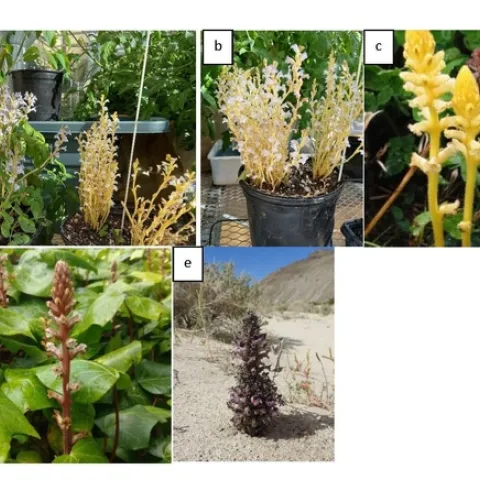
Figure 1: Broomrape species
a: Egyptian broomrape (left) grown in bio-control greenhouse with branched broomrape (right), b: branched broomrape, c: two color morphs of small broomrape, d: ivy broomrape e: dessert broomrape
UC Weed Science (weed control, management, ecology, and minutia): Article

Broomrape Species: ecological insights and economic significance

September 28, 2023
By Brad Hanson
The Orobanchaceae family comprises 270 holoparasitic species that cannot photosynthesize. Instead, they rely entirely on the host plant roots for nutrition, and can produce great numbers of minute, dust-like seeds that last for years in the soil.
View Article
Primary Image
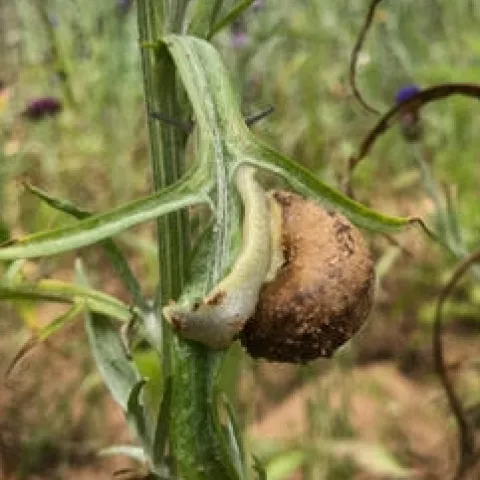
Hand pick snails the early morning. (All photos: Nancy Devaurs)
Fresno Gardening Green: Article

This week in the garden: Sept. 29 - Oct. 7

September 28, 2023
Pick a bouquet of herbs in the early morning to retain flavor. Keep them in a vase and use them all week. Tasks Monitor soil moisture after rain and water if needed, especially for trees and shrubs. Renovate cool-season lawns remove thatch and aerate.
View Article
Nutrition Policy Institute News: Article

New study identifies a promising combination of school-based Supplemental Nutrition Assistance Program-Education interventions for improving student fitness

September 28, 2023
By Sridharshi C Hewawitharana, Miranda W Brown, Gail M Woodward-Lopez, Danielle Lee
A recent study finds that comprehensive school-based Supplemental Nutrition Assistance Program-Education, also known as SNAP-Ed, interventions focused on improving wellness policies and increasing physical activity opportunities are associated with better student fitness.
View Article
Primary Image
Santos stands beside a long flatbed truck loaded with irrigation pipes.
ANR Employee News: Article

Hansen REC move to Camarillo almost complete

September 28, 2023
By Pamela S Kan-Rice
The Hansen Agricultural Research and Extension Center staff have almost completed relocating from Santa Paula to their new property in Camarillo, said Annemiek Schilder, director of UCCE Ventura County and HAREC.
View Article
UCCE in Santa Barbara County: Article

FREE, Monthly Garden Talks with UC Master Gardeners

September 28, 2023
The UC Master Gardeners of Santa Barbara County invite you to join us for a free, online Garden Talk on Monday, October 9, 2023, at 7:00 pm. UC Master Gardener Debbi Knauft will share a research-based presentation, A Guide to Edible Flowers in Your Garden.
View Article
Primary Image
Shafts of sunlight filters into a forest
ANR Employee News: Article

Enter photo contest: UC ANR in action

September 28, 2023
By Pamela S Kan-Rice
Deadline extended to Nov. 15, 2023 UC ANR is once again launching a photography contest and calling all staff and academics to submit their best shots. The 2023 contest theme is ANR in action.
View Article