A Natural Solution for California's Herds: African Catfish Peptides

California's cattle producers and agricultural communities are all too familiar with the rising challenge of antibiotic resistance, making common bacterial infections harder to treat in livestock. But imagine a future where we could tackle these infections with a natural, powerful alternative. Our research points to just that: antimicrobial peptides (AMPs) found in African catfish.

We're really excited about these peptides because African catfish thrive in pathogen-rich freshwater, naturally producing these robust immune compounds in their skin mucus as a defense. This natural origin makes them highly appealing alternatives to synthetic drugs.

Predicted Safety and Potent Action

One of the most compelling aspects of these AMPs is their predicted safety for mammals. Our initial computer analyses suggest that various catfish AMPs are generally recognized as safe (GRAS). We predict they'll be absorbed in the human intestine without causing liver, brain, or heart toxicity. Furthermore, lab tests on a promising peptide, NACAP-II, confirmed it was non-hemolytic, meaning it didn't damage rabbit red blood cells—a strong indicator of its potential safety for mammalian cells.

Beyond safety, these peptides demonstrate effectiveness against problematic bacteria. One study revealed NACAP-II's strong activity against Extended-Spectrum Beta-Lactamase (ESBL)-producing Escherichia coli—a critical concern for both animal and human health due to its resistance to many common antibiotics. Another peptide, ACAP-IV, also showed antibacterial activity against E. coli and Staphylococcus aureus. We believe these AMPs work by directly disrupting bacterial cell membranes, a mechanism that makes it harder for bacteria to develop resistance compared to how they resist traditional antibiotics.

UCCE Central Sierra Agriculture: Page

How to Access Weather Data

Having access to reliable weather data is an important part of farming. Weather affects irrigation scheduling, spraying for disease and insect pests, cultural practices and growth of crops.
View Page
UCCE Central Sierra Agriculture: Page

Powdery mildew (Erysiphe necator)

Powdery mildew is a serious disease of wine grapes that all grape growers need to treat for. Successful mildew control depends on: TIMING of treatments.
View Page
UCCE Central Sierra Agriculture: Page

Grape Day Presentations

Foothill Grape Day is an annual educational event for wine grape growers sponsored and organized by the Central Sierra University of California Cooperative Extension.
View Page
Primary Image
Landscape view of a Christmas tree farm. A brown house can be seen in the distance
UCCE Central Sierra Agriculture: Page

Christmas Trees Production

Christmas tree production has become a lucrative farming business in the foothills attracting more and more growers. The Emeritus Advisor, Lynn Wunderlich, has previously had worked with farms to determine more resilient species and completed a Christmas Tree Cost Study 2005.
View Page
Primary Image
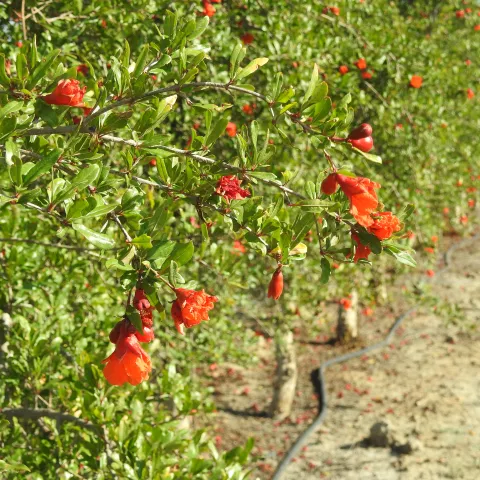
Orange-red blossoms on green bushes in a row with a bare orchard floor
UCCE Central Sierra Agriculture: Page

Pomegranate Production

Pomegranates grow naturally as a bushy shrub or as a small tree-if trained, they may grow 15 to 20 feet high. The tree is deciduous in interior and desert regions, but in coastal areas may lose only a portion of its leaves in winter.
View Page
UCCE Central Sierra Agriculture: Page

Weed Control in Vineyards

Weed control in vineyards enhances the establishment of newly planted vines and improves the growth and yield of established vines.
View Page
Primary Image
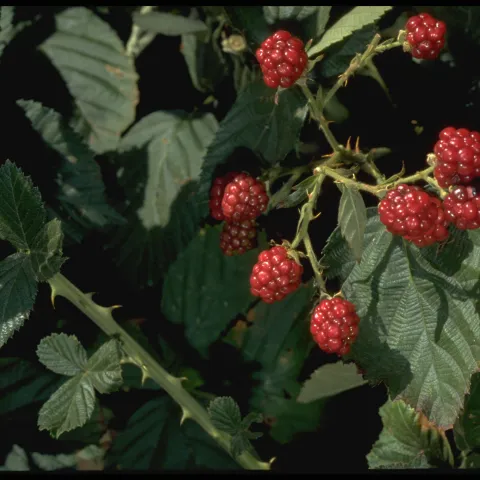
Close up of red berries on green stems with thorns
UCCE Central Sierra Agriculture: Page

Berry Production

Raspberry and Blackberry, Fruit & Nuts Research & Information Center, UC Davis Blackberry varieties do best on sunny slopes. They should be planted 4 to 5 feet apart in rows 10 feet apart and canes trained on 4 foot high, 2 wire trellis. Raspberry plantings do best on cool North slopes.
View Page
UCCE Central Sierra Agriculture: Page

Central Sierra | Agriculture | Resources

Access to agricultural resources, cost studies, pest management, and post harvest information relevant to growers, shippers, marketers, carriers, distributors, retailers, processors, and consumers of fresh horticultural crops is linked to on this page.
View Page