A Natural Solution for California's Herds: African Catfish Peptides

California's cattle producers and agricultural communities are all too familiar with the rising challenge of antibiotic resistance, making common bacterial infections harder to treat in livestock. But imagine a future where we could tackle these infections with a natural, powerful alternative. Our research points to just that: antimicrobial peptides (AMPs) found in African catfish.

We're really excited about these peptides because African catfish thrive in pathogen-rich freshwater, naturally producing these robust immune compounds in their skin mucus as a defense. This natural origin makes them highly appealing alternatives to synthetic drugs.

Predicted Safety and Potent Action

One of the most compelling aspects of these AMPs is their predicted safety for mammals. Our initial computer analyses suggest that various catfish AMPs are generally recognized as safe (GRAS). We predict they'll be absorbed in the human intestine without causing liver, brain, or heart toxicity. Furthermore, lab tests on a promising peptide, NACAP-II, confirmed it was non-hemolytic, meaning it didn't damage rabbit red blood cells—a strong indicator of its potential safety for mammalian cells.

Beyond safety, these peptides demonstrate effectiveness against problematic bacteria. One study revealed NACAP-II's strong activity against Extended-Spectrum Beta-Lactamase (ESBL)-producing Escherichia coli—a critical concern for both animal and human health due to its resistance to many common antibiotics. Another peptide, ACAP-IV, also showed antibacterial activity against E. coli and Staphylococcus aureus. We believe these AMPs work by directly disrupting bacterial cell membranes, a mechanism that makes it harder for bacteria to develop resistance compared to how they resist traditional antibiotics.
Primary Image
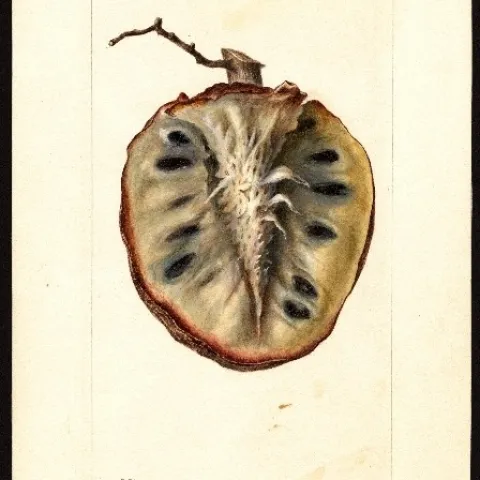
cherimoya usda drawing
Topics in Subtropics: Article

Art of the USDA

November 20, 2024
By Ben A Faber
The USDA Pomological Watercolor Collection is one of the most unique collections in the Rare and Special Collections of the National Agricultural Library (NAL).
View Article
Primary Image
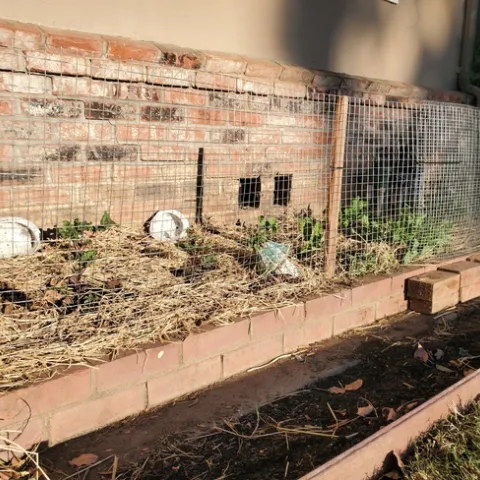
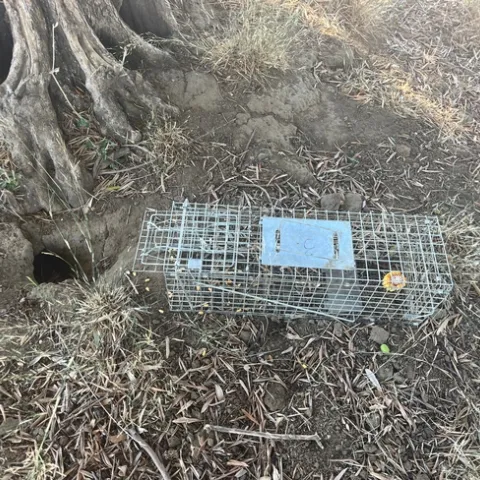
A wire cage trap next to a hole in in the ground.
Pests in the Urban Landscape: Article

Managing California Ground Squirrels in Urban Environments

November 20, 2024
By Niamh M Quinn, Roger A Baldwin, Carolyn Whitesell
With the passing of law AB 1322 in 2023 and the recent passing of AB 2552 in September 2024, the options for managing California ground squirrels using lethal methods in urban areas will be more limited.
View Article
Primary Image
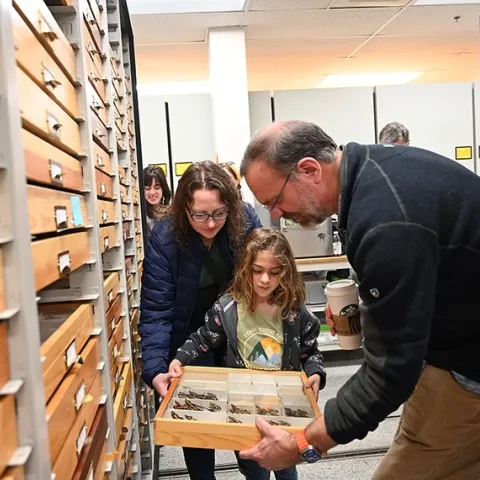
UC Davis professor Jason Bond, director of the Bohart Museum, shows butterfly specimens to Woodland residents Olive Smith, 8, and her mother Sarah Smith. Bond is the Evert and Marion Schlinger Endowed Chair, UC Davis Department of Entomology and Nematology, and associate dean, UC Davis College of Agricultural and Environmental Sciences. (Photo by Kathy Keatley Garvey)
Bug Squad: Article

2025 UC Davis Biodiversity Museum Day Set Saturday, Feb. 8

November 19, 2024
By Kathy Keatley Garvey
Mark your calendar! The 14th annual UC Davis Biodiversity Museum Day is set for Saturday, Feb. 8, 2025. announced coordinator and co-founder Tabatha Yang, the public education and outreach coordinator for the Bohart Museum of Entomology. Biodiversity Museum Day.
View Article
Primary Image
photos by Lindi Houser
The Savvy Sage: Article

Cat Got Your Kale?

November 19, 2024
I recently planted some purple kale and arugula in our front garden bed a few weeks ago here in West Sacramento. Everything was going really well until I discovered one morning this week that all of our kale plants had been nibbled on.
View Article
Primary Image
photos by Michelle Schlegel
Under the Solano Sun: Article

Rain

November 19, 2024
The weather has cooled, thankfully. Seasons are now changing. The local birds have moved on, and sweet, flitting finches are visiting. The horse's and dog's coats are getting thicker. Yes, the winterizing has begun.
View Article
UCCE Siskiyou: Article

2024 Pest Management Seminar

November 19, 2024
Registration is now open for the 2024 Pest Management Seminar Tuesday, December 17, 2024 From 8:00 am to 4:10 pm Free to public! Available via Zoom Click here to register today!...
View Article
Primary Image
Figure 1. Metal art structure in transit to California. Photo credit: Sonoma County Dept of Agriculture/W&M
Pests in the Urban Landscape: Article

Spotted Lanternfly: The Need to Remain Vigilant (Part 1)

November 19, 2024
By Cindy Kron
On March 27th, 2024, a flatbed truck carrying a metal art structure originating in New York and headed to Petaluma, California was stopped at the California Department of Food and Agriculture (CDFA) Agricultural Inspection Station in Truckee, California due to live spotted lanternfly (SLF) egg masse...
View Article