A Natural Solution for California's Herds: African Catfish Peptides

California's cattle producers and agricultural communities are all too familiar with the rising challenge of antibiotic resistance, making common bacterial infections harder to treat in livestock. But imagine a future where we could tackle these infections with a natural, powerful alternative. Our research points to just that: antimicrobial peptides (AMPs) found in African catfish.

We're really excited about these peptides because African catfish thrive in pathogen-rich freshwater, naturally producing these robust immune compounds in their skin mucus as a defense. This natural origin makes them highly appealing alternatives to synthetic drugs.

Predicted Safety and Potent Action

One of the most compelling aspects of these AMPs is their predicted safety for mammals. Our initial computer analyses suggest that various catfish AMPs are generally recognized as safe (GRAS). We predict they'll be absorbed in the human intestine without causing liver, brain, or heart toxicity. Furthermore, lab tests on a promising peptide, NACAP-II, confirmed it was non-hemolytic, meaning it didn't damage rabbit red blood cells—a strong indicator of its potential safety for mammalian cells.

Beyond safety, these peptides demonstrate effectiveness against problematic bacteria. One study revealed NACAP-II's strong activity against Extended-Spectrum Beta-Lactamase (ESBL)-producing Escherichia coli—a critical concern for both animal and human health due to its resistance to many common antibiotics. Another peptide, ACAP-IV, also showed antibacterial activity against E. coli and Staphylococcus aureus. We believe these AMPs work by directly disrupting bacterial cell membranes, a mechanism that makes it harder for bacteria to develop resistance compared to how they resist traditional antibiotics.

UC Dry Bean Blog: Article

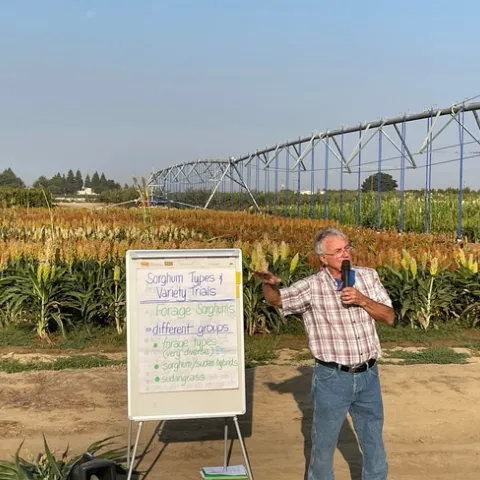
2024 Kearney Field Crops, Alfalfa and Forage Field Day

August 20, 2024
By Nicholas E Clark
No cost to attend! All are welcome. To view the agenda, click or follow this link: https://ucanr.edu/sites/kingscounty/files/401843.pdf Pre-registration helps us plan lunch. To register, click or follow this link: https://surveys.ucanr.edu/survey.
View Article
UC Dry Bean Blog: Article

2024 Kearney Field Crops, Alfalfa and Forage Field Day

August 20, 2024
By Nicholas E Clark
No cost to attend! All are welcome. This year's agenda features multiple presentations covering UC efforts to improve dry bean varieties. To view the agenda, click or follow this link: https://ucanr.edu/sites/kingscounty/files/401656.pdf Pre-registration helps us plan lunch.
View Article
Primary Image
IMG 8921
Climate Smart Agriculture: Article

Welcome to our new CES in Tulare and Kern counties, Danielle Duyst!

August 20, 2024
By Caddie Bergren
Danielle Duyst is our newest Community Education Specialist with the UC ANR Climate Smart Agriculture Program based in Tulare and Kern Counties. She is excited to support farmers throughout the Central Valley and assist in implementing sustainable farm practices.
View Article
Kern County: Article

Kern UCCE/DWR Weekly Crop Water Use Report 08-19-2024

August 20, 2024
Please see below link to access "How To Use Weekly Crop Water Use (ET) Reports to Assist Farm Water Management" How to Use Weekly Crop Water Use Report Please see below link to access "Weekly ET Report 08-19-2024" ET Report 08-19-2024 Please see disclaimer link below: University of California Divisi...
View Article
Primary Image
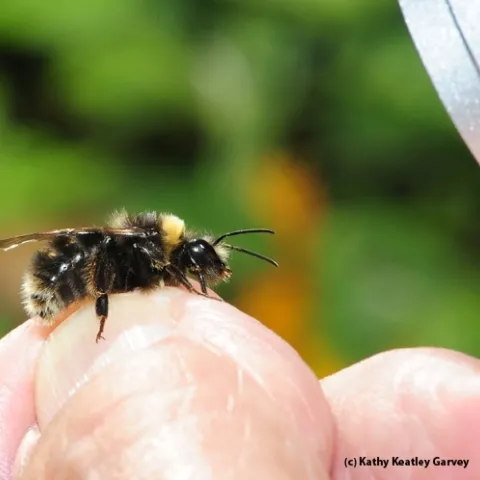
UC Davis research shows that rising temperatures are particularly alarming to some bumble bee species, including the Western bumble bee, Bombus occidentalis. This one was located on Aug. 15, 2012 in the Mt. Shasta area. (Photo by Kathy Keatley Garvey)
Bug Squad: Article

Bumble Bees: Feeling Impact of Climate Change

August 19, 2024
By Kathy Keatley Garvey
We remember the reaction of Robbin Thorp (1933-2019), UC Davis distinguished emeritus professor of entomology and an international authority on bumble bees, when he spotted a lone Western bumble bee, Bombus occidentalis, on Aug. 15, 2012 in the Mt. Shasta area.
View Article