A Natural Solution for California's Herds: African Catfish Peptides

California's cattle producers and agricultural communities are all too familiar with the rising challenge of antibiotic resistance, making common bacterial infections harder to treat in livestock. But imagine a future where we could tackle these infections with a natural, powerful alternative. Our research points to just that: antimicrobial peptides (AMPs) found in African catfish.

We're really excited about these peptides because African catfish thrive in pathogen-rich freshwater, naturally producing these robust immune compounds in their skin mucus as a defense. This natural origin makes them highly appealing alternatives to synthetic drugs.

Predicted Safety and Potent Action

One of the most compelling aspects of these AMPs is their predicted safety for mammals. Our initial computer analyses suggest that various catfish AMPs are generally recognized as safe (GRAS). We predict they'll be absorbed in the human intestine without causing liver, brain, or heart toxicity. Furthermore, lab tests on a promising peptide, NACAP-II, confirmed it was non-hemolytic, meaning it didn't damage rabbit red blood cells—a strong indicator of its potential safety for mammalian cells.

Beyond safety, these peptides demonstrate effectiveness against problematic bacteria. One study revealed NACAP-II's strong activity against Extended-Spectrum Beta-Lactamase (ESBL)-producing Escherichia coli—a critical concern for both animal and human health due to its resistance to many common antibiotics. Another peptide, ACAP-IV, also showed antibacterial activity against E. coli and Staphylococcus aureus. We believe these AMPs work by directly disrupting bacterial cell membranes, a mechanism that makes it harder for bacteria to develop resistance compared to how they resist traditional antibiotics.

Primary Image
A wooden shipping pallet. (Photo: A. Collin)
The Backyard Gardener: Article

Picking Pallets for Raised Beds

August 19, 2024
Raised bed gardening has become increasingly popular among gardeners who seek more control over their growing environments. It can offer an alternative way to garden especially in some of our areas where native soil just isn't great to grow things.
View Article
Article

Updates on UC campus climate efforts

August 19, 2024
By Pamela S Kan-Rice
Dear UC community, As the 2024-25 academic year begins on our campuses over the next few days and weeks, I want to share a few updates about our work this summer to ensure a safe, inclusive campus climate that fosters a free exchange of ideas across the University of California.
View Article
Cooperative Extension Ventura County: Article

Topics in Subtropics Summer Issue 2024

August 19, 2024
This edition includes the following: Cherimoya Growers Handbook Available On-Line Learning From the Rain Optimizing Avocado Irrigation Management Practices Using Soil Moisture Sensing Pest Alert: Fig Wax Scale Ag Labor Management Resources Upcoming meetings Avocado Irrigation workshops Avocado Sunbl...
View Article
Cooperative Extension Ventura County: Article

Topics in Subtropics Summer Issue 2024

August 19, 2024
This edition includes the following: Cherimoya Growers Handbook Available On-Line Learning From the Rain Optimizing Avocado Irrigation Management Practices Using Soil Moisture Sensing Pest Alert: Fig Wax Scale Ag Labor Management Resources Upcoming meetings Avocado Irrigation workshops Avocado Sunbl...
View Article
Primary Image
Two Western spotted cucumber beetles, Diabrotica undecimpunctata, on a Coreposis. (Photo by Kathy Keatley Garvey)
Bug Squad: Article

Seeing Spots and Holes?

August 16, 2024
By Kathy Keatley Garvey
So there you are, admiring your Coreopsis and suddenly you notice spots and holes--spots on the backs of two western spotted cucumber beetles, and holes cut in the petals. Ah, there's two of them. The beetles, about a fourth of an inch long, are fun to photograph, but they're not your buddies.
View Article
Primary Image
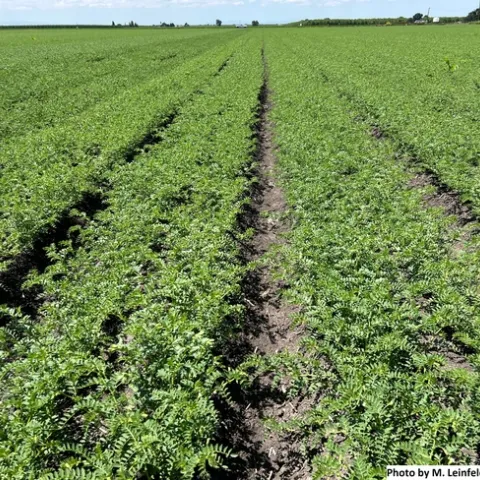
Fig. 1. Garbanzos at flowering.
SJC and Delta Field Crops: Article

2024 Garbanzo Bean Variety Evaluation

August 16, 2024
By Michelle M Leinfelder-Miles
In 2024, UCCE began evaluating garbanzo varieties in Central Valley regional trials. In a San Joaquin County commercial field, we evaluated six advanced lines from the UC Davis garbanzo breeding program and two standard varieties (UC 27 and Sutter).
View Article