A Natural Solution for California's Herds: African Catfish Peptides

California's cattle producers and agricultural communities are all too familiar with the rising challenge of antibiotic resistance, making common bacterial infections harder to treat in livestock. But imagine a future where we could tackle these infections with a natural, powerful alternative. Our research points to just that: antimicrobial peptides (AMPs) found in African catfish.

We're really excited about these peptides because African catfish thrive in pathogen-rich freshwater, naturally producing these robust immune compounds in their skin mucus as a defense. This natural origin makes them highly appealing alternatives to synthetic drugs.

Predicted Safety and Potent Action

One of the most compelling aspects of these AMPs is their predicted safety for mammals. Our initial computer analyses suggest that various catfish AMPs are generally recognized as safe (GRAS). We predict they'll be absorbed in the human intestine without causing liver, brain, or heart toxicity. Furthermore, lab tests on a promising peptide, NACAP-II, confirmed it was non-hemolytic, meaning it didn't damage rabbit red blood cells—a strong indicator of its potential safety for mammalian cells.

Beyond safety, these peptides demonstrate effectiveness against problematic bacteria. One study revealed NACAP-II's strong activity against Extended-Spectrum Beta-Lactamase (ESBL)-producing Escherichia coli—a critical concern for both animal and human health due to its resistance to many common antibiotics. Another peptide, ACAP-IV, also showed antibacterial activity against E. coli and Staphylococcus aureus. We believe these AMPs work by directly disrupting bacterial cell membranes, a mechanism that makes it harder for bacteria to develop resistance compared to how they resist traditional antibiotics.

UCCE in Santa Barbara County: Article

Master Gardeners @ Santa Maria Public Library

June 21, 2024
UC Master Gardeners of Santa Barbara County, in Partnership with the Santa Maria Public Library Present: A FREE, In-Person Garden Presentation Sunday, July 7, 2024, 2:00 - 3:30 pm Santa Maria Public Library 421 South McClelland St.
View Article
UCCE in Santa Barbara County: Article

July Online Garden Talk

June 21, 2024
Join Master Gardeners Janet Rogers and Trudy Adair-Verbais as they discuss a research-based presentation on keeping home chickens.
View Article
Primary Image
palmer amaranth
Topics in Subtropics: Article

New Weed Control Method

June 21, 2024
By Ben A Faber
New article :: Exploring sterile pollen technique as a novel tool for management of Palmer amaranth (Amaranthus palmeri) Posted by: Gale Perez Published on: May 26, 2024 Newly published research provides a novel and sustainable weed-management strategy WESTMINSTER, Colorado 22 May2024 Recently pub...
View Article
Primary Image
July Rose Garden Corral
Spill the Beans: Article

Rose Garden Corral - July 2024

June 21, 2024
In the Master Gardener's Rose Cycle, July is when we fertilize lightly with organic products if needed. Deadheading continues and pruning of crossing branches or dying canes are a must. We also monitor our irrigation systems for the proper amount of water provided.
View Article
Primary Image
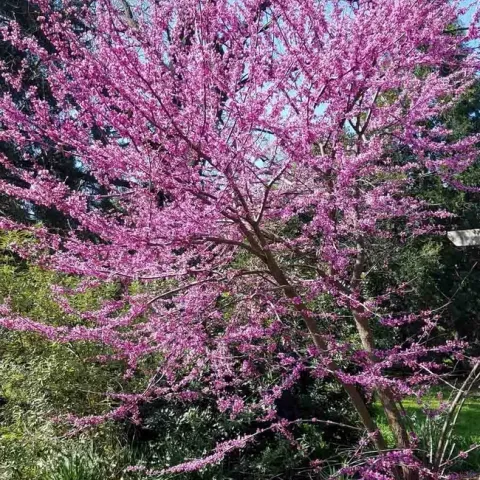
Redbud in bloom in the spring, Jeanette Alosi
The Real Dirt: Article

Local Trees: Consider the Redbud

June 21, 2024
Redbuds in bloom are a most welcome harbinger of spring. Their dense clusters of magenta flowers bloom early, providing splashes of color against a winter landscape of browns and grays.
View Article
Primary Image
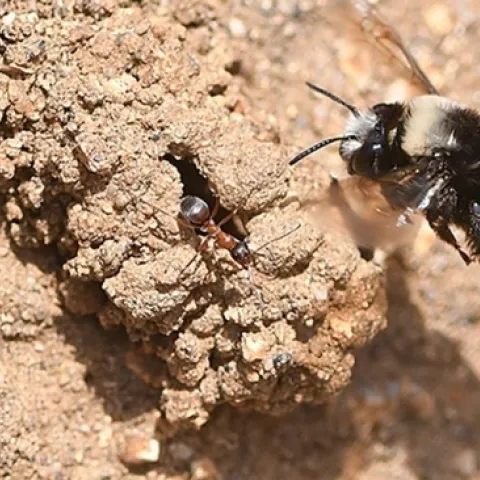
A digger bee, Anthophora bomboides standfordina, heading to her nest at Bodega Head. Note the ant. (Photo by Kathy Keatley Garvey)
Bug Squad: Article

Digging the Digger Bees and the Newly Published Research

June 20, 2024
By Kathy Keatley Garvey
Have you ever seen the digger bees on the sandy cliffs of Bodega Head, Sonoma County? if you hike a short distance up a meandering trail, you'll see a landscape of turrets, the work of solitary, ground-nesting digger bees, Anthophora bomboides standfordina. The nests remind us tiny sandcastles.
View Article
Primary Image
Provide a water source in the garden to attract birds and other pollinators. (Photo: PxHere)
Fresno Gardening Green: Article

This week in the garden: June 21 - 27

June 20, 2024
Pre-dawn irrigation is preferable to reduce the amount of water lost to evaporation. Tasks Control weeds before they flower, produce seed and multiply. If citrus trees have scale, mites or thrips, spray with summer weight horticultural oil.
View Article
Primary Image
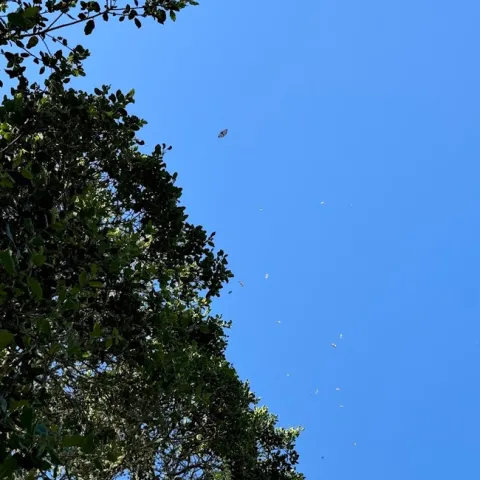
IMG 1097
Santa Cruz Forests Update: Article

California Oak Moths Visible in Santa Cruz County

June 20, 2024
By Brian Woodward
Are those moths? What are they doing to my oaks? Why are they out in the daytime? If you live in the Santa Cruz area (or much of the Bay Area) and have coast live oak or other oak species on your property, you have probably been wondering these exact questions. Bird? Plane? No-- California oak moth.
View Article