A Natural Solution for California's Herds: African Catfish Peptides

California's cattle producers and agricultural communities are all too familiar with the rising challenge of antibiotic resistance, making common bacterial infections harder to treat in livestock. But imagine a future where we could tackle these infections with a natural, powerful alternative. Our research points to just that: antimicrobial peptides (AMPs) found in African catfish.

We're really excited about these peptides because African catfish thrive in pathogen-rich freshwater, naturally producing these robust immune compounds in their skin mucus as a defense. This natural origin makes them highly appealing alternatives to synthetic drugs.

Predicted Safety and Potent Action

One of the most compelling aspects of these AMPs is their predicted safety for mammals. Our initial computer analyses suggest that various catfish AMPs are generally recognized as safe (GRAS). We predict they'll be absorbed in the human intestine without causing liver, brain, or heart toxicity. Furthermore, lab tests on a promising peptide, NACAP-II, confirmed it was non-hemolytic, meaning it didn't damage rabbit red blood cells—a strong indicator of its potential safety for mammalian cells.

Beyond safety, these peptides demonstrate effectiveness against problematic bacteria. One study revealed NACAP-II's strong activity against Extended-Spectrum Beta-Lactamase (ESBL)-producing Escherichia coli—a critical concern for both animal and human health due to its resistance to many common antibiotics. Another peptide, ACAP-IV, also showed antibacterial activity against E. coli and Staphylococcus aureus. We believe these AMPs work by directly disrupting bacterial cell membranes, a mechanism that makes it harder for bacteria to develop resistance compared to how they resist traditional antibiotics.
Primary Image
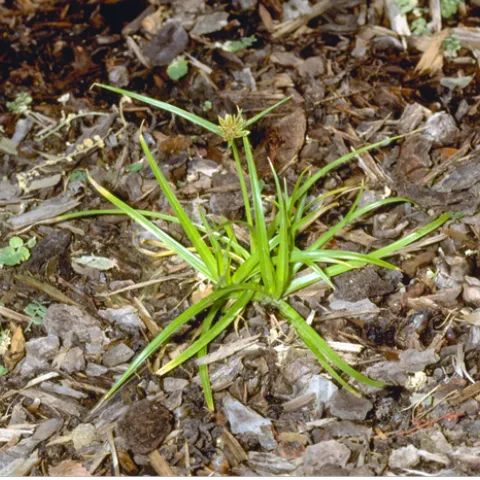
A small green plant with long, narrow leaves in a bed of brown wood bark mulch.

Nutsedge—Yes, We Hate It Too!

June 26, 2024
By Belinda Messenger-Sikes
Nutsedges are aggressive and persistent weeds that commonly infest lawns, vegetable and flower gardens, and landscapes. These perennial sedges are a problem in lawns because they grow faster than turfgrasses and result in non-uniform turf.
View Article
Primary Image
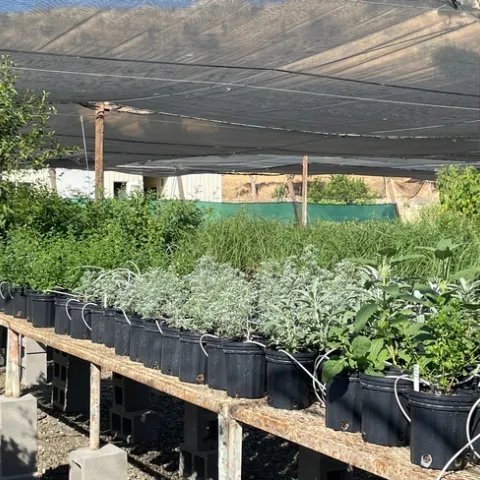
photos by Ina Rommeck
The Savvy Sage: Article

Putah Creek Natives

June 26, 2024
By Jennifer M Baumbach
Sadly, Putah Creek Natives Nursery is closing on July 15th. New homes need to be found for 16,000 native California plants sourced sustainably from the Putah-Cache watershed. All plants are 40% off wholesale pricing with no minimum order. Contact Ina Rommeck at nursery@putahcreekcouncil.
View Article
Primary Image
In a conference room, 14 people sit around a conference table littered with laptops.
ANR Employee News: Article

STAR awards presented to three teams, 22 individuals

June 26, 2024
By Pamela S Kan-Rice
UC ANR's staff appreciation and recognition awards were presented to three teams and 22 individuals on June 20 during a statewide, online event hosted by Bethanie Brown, interim director of Human Resources. A recording of the event is posted on YouTube at https://youtu.
View Article
Primary Image
Plant flowers in the garden or near the garden to attract pollinators. Here a large pot of flowering plants is adjacent to the garden bed. (Photo: Ann Edahl)
Fresno Gardening Green: Article

What’s the buzz? Attracting pollinators to your garden

June 25, 2024
Pollinators are all around us, a crucial part of our ecosystem. When you think about pollinators, the first one that comes to mind is probably the non-native honey bee. But there are 1,600 species of bees in California, and 20,000 species recorded worldwide.
View Article
Primary Image
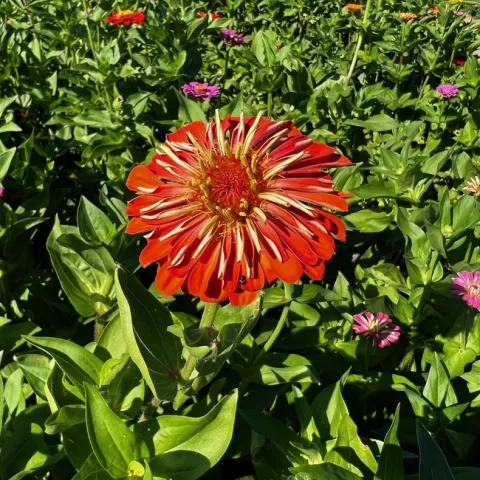
Zinnia at Metzger Zinnia Patch. photo by Jennifer Baumbach
The Savvy Sage: Article

Zinna Summer

June 25, 2024
By Jennifer M Baumbach
Zinnias blaze in sun, Summer's palette vivid, bright, Petals dance with light.
View Article