A Natural Solution for California's Herds: African Catfish Peptides

California's cattle producers and agricultural communities are all too familiar with the rising challenge of antibiotic resistance, making common bacterial infections harder to treat in livestock. But imagine a future where we could tackle these infections with a natural, powerful alternative. Our research points to just that: antimicrobial peptides (AMPs) found in African catfish.

We're really excited about these peptides because African catfish thrive in pathogen-rich freshwater, naturally producing these robust immune compounds in their skin mucus as a defense. This natural origin makes them highly appealing alternatives to synthetic drugs.

Predicted Safety and Potent Action

One of the most compelling aspects of these AMPs is their predicted safety for mammals. Our initial computer analyses suggest that various catfish AMPs are generally recognized as safe (GRAS). We predict they'll be absorbed in the human intestine without causing liver, brain, or heart toxicity. Furthermore, lab tests on a promising peptide, NACAP-II, confirmed it was non-hemolytic, meaning it didn't damage rabbit red blood cells—a strong indicator of its potential safety for mammalian cells.

Beyond safety, these peptides demonstrate effectiveness against problematic bacteria. One study revealed NACAP-II's strong activity against Extended-Spectrum Beta-Lactamase (ESBL)-producing Escherichia coli—a critical concern for both animal and human health due to its resistance to many common antibiotics. Another peptide, ACAP-IV, also showed antibacterial activity against E. coli and Staphylococcus aureus. We believe these AMPs work by directly disrupting bacterial cell membranes, a mechanism that makes it harder for bacteria to develop resistance compared to how they resist traditional antibiotics.
Primary Image
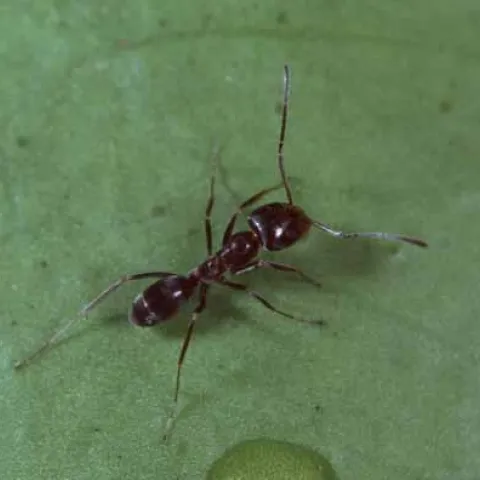
Adult Argentine ant. Jack Kelly Clark, UC IPM Program
The Real Dirt: Article

Dealing with an Ant Invasion

March 29, 2024
It's that time of the year again Ant Season! We often experience ants in our homes when weather conditions change. They are typically looking for food, water, warmth, and/or protection from extreme weather conditions.
View Article
Nutrition Policy Institute News: Article

NPI welcomes KC Whitsett as new project policy analyst

March 28, 2024
By Lorrene D Ritchie, Danielle Lee, KC Fiedler
KC Whitsett joined the Nutrition Policy Institute at the University of California, Agriculture and Natural Resources on March 25, 2024, as a project policy analyst. Originally from Virginia, KC earned a BS in Kinesiology and Health Sciences from the College of William & Mary.
View Article
UC Cooperative Extension San Diego County : Article

Issue 007

March 28, 2024
Spring, March 2024, Issue 007...
View Article
Primary Image
UCDelivers1
Blog - Forest Research and Outreach : Article

Empowerment and Incentivization for Forest Management

March 28, 2024
By Grace N Dean
Protecting California's forests and building climate-resilient communities and ecosystems requires forest landowners, managers, and natural resource professionals to actively engage in stewardship.
View Article
Primary Image
avocado trunk damge 5

Weed B Gone and Tree B Gone?

March 28, 2024
By Ben A Faber
With all the rain last year, even extending into August and now with the rains since December there is a lot of natural ground cover growing, When it gets out of hand, we call it weedy.
View Article
Glenn County: Article

Glenn County 4-H ABA Judging Scored

March 28, 2024
March 29, 2024 ABA Judging Scored! More than 40 Glenn County 4-H Youth Members participated in the ABA (Anything But Animals) Judging Event held on Thursday, February 15, 2024, at Plaza Elementary School, reports Glenn County 4-H Community Education Specialist Christine Kampmann.
View Article
Primary Image
Author with a cup of tea and a good book.
The Stanislaus Sprout: Article

Teatime!

March 28, 2024
By Anne E Schellman
Since I am half Scottish, drinking tea has always been a part of my life. A relaxing cup of tea is a wonderful way to start or end a day. It is comforting, delicious, and pairs well with many foods. Some varieties have medicinal properties.
View Article