A Natural Solution for California's Herds: African Catfish Peptides

California's cattle producers and agricultural communities are all too familiar with the rising challenge of antibiotic resistance, making common bacterial infections harder to treat in livestock. But imagine a future where we could tackle these infections with a natural, powerful alternative. Our research points to just that: antimicrobial peptides (AMPs) found in African catfish.

We're really excited about these peptides because African catfish thrive in pathogen-rich freshwater, naturally producing these robust immune compounds in their skin mucus as a defense. This natural origin makes them highly appealing alternatives to synthetic drugs.

Predicted Safety and Potent Action

One of the most compelling aspects of these AMPs is their predicted safety for mammals. Our initial computer analyses suggest that various catfish AMPs are generally recognized as safe (GRAS). We predict they'll be absorbed in the human intestine without causing liver, brain, or heart toxicity. Furthermore, lab tests on a promising peptide, NACAP-II, confirmed it was non-hemolytic, meaning it didn't damage rabbit red blood cells—a strong indicator of its potential safety for mammalian cells.

Beyond safety, these peptides demonstrate effectiveness against problematic bacteria. One study revealed NACAP-II's strong activity against Extended-Spectrum Beta-Lactamase (ESBL)-producing Escherichia coli—a critical concern for both animal and human health due to its resistance to many common antibiotics. Another peptide, ACAP-IV, also showed antibacterial activity against E. coli and Staphylococcus aureus. We believe these AMPs work by directly disrupting bacterial cell membranes, a mechanism that makes it harder for bacteria to develop resistance compared to how they resist traditional antibiotics.
Primary Image
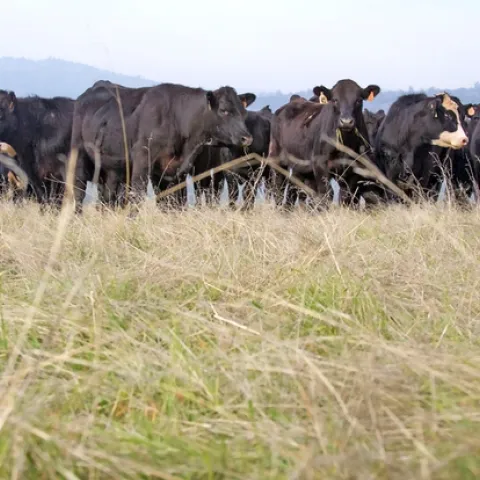
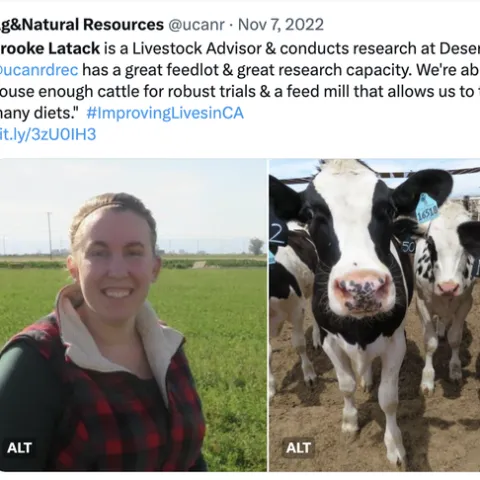
Brooke is pictured next to a photo of black and white cows.
ANR Employee News: Article

Celebration Corner

March 28, 2024
By Pamela S Kan-Rice
Humiston wins CUCSA leadership award, reappointed to state ag board Vice President Glenda Humiston was recently honored with the Outstanding Senior Leadership Award from CUCSA, the Council of UC Staff Assemblies.
View Article
Primary Image
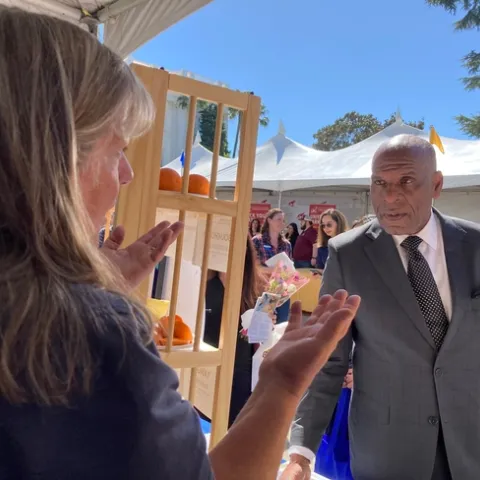
Tammy stands behind the booth table and Bradford picks up an avocado
ANR Employee News: Article

ANR shines at Ag Day at the Capitol

March 27, 2024
By Pamela S Kan-Rice
Legislators, agency staff and other policymakers celebrated Ag Day at the Capitol in Sacramento with UC ANR leaders, UC Cooperative Extension advisors, The VINE, UC Master Gardeners and 4-H members on March 19.
View Article
Primary Image
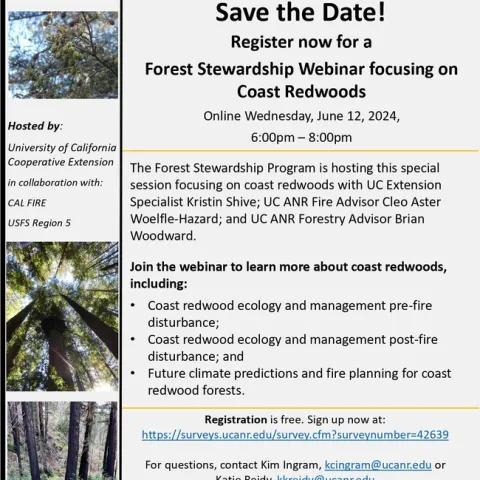
Redwoods Webinar flyer page-0001
Santa Cruz Forests Update: Article

Coast Redwoods Stewardship Webinar planned for June

March 27, 2024
By Brian Woodward
I'm excited to announce we have a great webinar planned in June covering coast redwood ecology and stewardship both pre- and postfire! Join me and two of my amazing UCANR colleagues Kristen Shive and Cleo Wlfle Hazard. Sign up free at https://surveys.ucanr.edu/survey.
View Article
Primary Image
Christian Jordan
ANR Employee News: Article

Names in the News

March 27, 2024
By Pamela S Kan-Rice
Jordan joins UCCE as forestry and natural resources advisor Christian Jordan joined UCCE on March 18 as a forestry and natural resources advisor for Shasta Siskiyou, and Trinity counties.
View Article
Primary Image
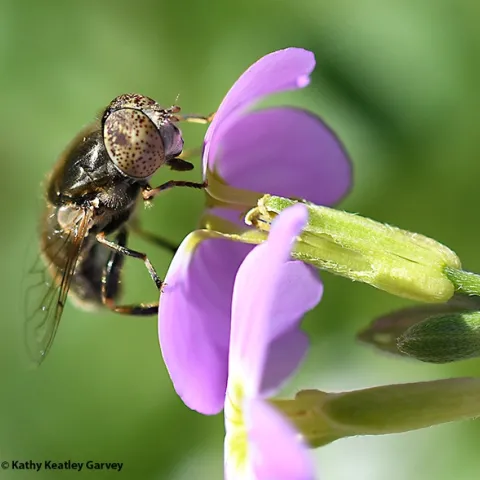
The lagoon fly is a syrphid fly, Eristalinus aeneus. This one is foraging on Virginia stock (Malcolmia maritima), in a Vacaville garden. (Photo by Kathy Keatley Garvey).
Bug Squad: Article

Lagoon Fly: Seeing Spots

March 27, 2024
By Kathy Keatley Garvey
Ever seen a lagoon fly? It's a syrphid fly, Eristalinus aeneus, distinguished by small black spots patterning its eyes. Syrphids, also known hoverflies or flower flies, hover over a flower before foraging. They're pollinators.
View Article