A Natural Solution for California's Herds: African Catfish Peptides

California's cattle producers and agricultural communities are all too familiar with the rising challenge of antibiotic resistance, making common bacterial infections harder to treat in livestock. But imagine a future where we could tackle these infections with a natural, powerful alternative. Our research points to just that: antimicrobial peptides (AMPs) found in African catfish.

We're really excited about these peptides because African catfish thrive in pathogen-rich freshwater, naturally producing these robust immune compounds in their skin mucus as a defense. This natural origin makes them highly appealing alternatives to synthetic drugs.

Predicted Safety and Potent Action

One of the most compelling aspects of these AMPs is their predicted safety for mammals. Our initial computer analyses suggest that various catfish AMPs are generally recognized as safe (GRAS). We predict they'll be absorbed in the human intestine without causing liver, brain, or heart toxicity. Furthermore, lab tests on a promising peptide, NACAP-II, confirmed it was non-hemolytic, meaning it didn't damage rabbit red blood cells—a strong indicator of its potential safety for mammalian cells.

Beyond safety, these peptides demonstrate effectiveness against problematic bacteria. One study revealed NACAP-II's strong activity against Extended-Spectrum Beta-Lactamase (ESBL)-producing Escherichia coli—a critical concern for both animal and human health due to its resistance to many common antibiotics. Another peptide, ACAP-IV, also showed antibacterial activity against E. coli and Staphylococcus aureus. We believe these AMPs work by directly disrupting bacterial cell membranes, a mechanism that makes it harder for bacteria to develop resistance compared to how they resist traditional antibiotics.

Primary Image
hoddle office
Topics in Subtropics: Article

Who is Hoddle?

March 20, 2024
By Ben A Faber
By Jules Bernstein | Photo by Stan Lim, UCR News https://news.ucr.
View Article
Primary Image
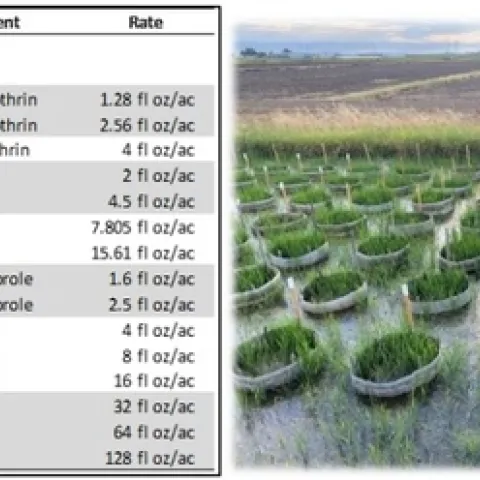
types of treatments tested on the left and the treatment areas on the right
UC Rice Blog: Article

Management of Rice Seed Midge - Insecticide Trial Results

March 20, 2024
By Consuelo B Baez Vega, Taiyu Guan, Ian M Grettenberger
Rice seed midge damage was first officially recorded in California rice production in 1953, and this pest is actually a number of different species that are frequently lumped together in terms of defining them as a pest. Midges are some of the first colonizers of freshly flooded rice fields.
View Article
Primary Image
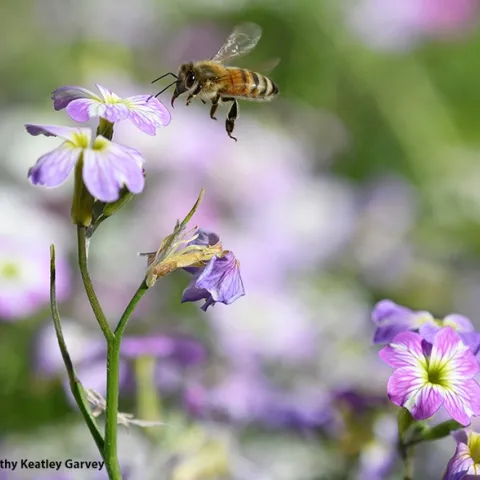
It's spring! A honey bee heads toward a Virginia stock blossom, Malcolmia maritima. (Photo by Kathy Keatley Garvey)
Bug Squad: Article

Take Stock: It's the First Day of Spring

March 19, 2024
By Kathy Keatley Garvey
Take stock of your flowers and pollinators; today is the first day of spring. If Virginia stock, Malcolmia maritima, is blooming in your garden now, you'll likely be seeing honey bees, syrphid flies and other pollinators. M.
View Article
Primary Image
Barbara Vartan holds a photo of herself as a toddler enjoying the backyard at what is now the Clark/Kendrick home. (Photo: Sarah del Pozo)
Fresno Gardening Green: Article

Spring Garden Tour a trip down memory lane for one Master Gardener

March 19, 2024
When Master Gardener Barbara Vartan learned a historical two-story home on Carmen Street in Fresno was part of the 2024 Spring Garden Tour, she knew where she wanted to volunteer. The 102-year-old home in the heart of the Wilson Historical Tract was the backdrop for her idyllic post-war childhood.
View Article
Primary Image
IMG 1705
UC Weed Science (weed control, management, ecology, and minutia): Article

Branched broomrape: what we want to avoid in CA

March 19, 2024
By Brad Hanson
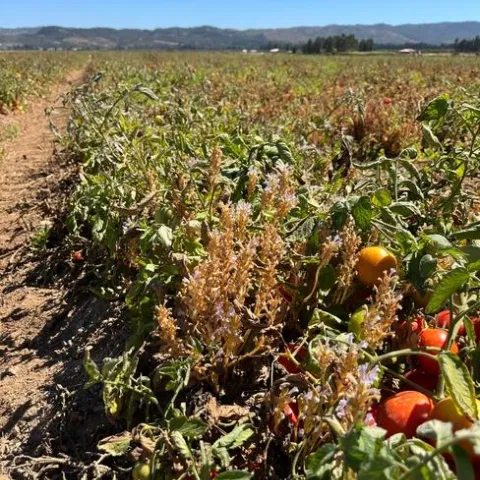
Last week, I had a chance to visit research cooperators in Chile and tour some of their processing tomato fields with serious infestations of the parasitic weed, branched broomrape and it was really eye opening for me.
View Article