A Natural Solution for California's Herds: African Catfish Peptides

California's cattle producers and agricultural communities are all too familiar with the rising challenge of antibiotic resistance, making common bacterial infections harder to treat in livestock. But imagine a future where we could tackle these infections with a natural, powerful alternative. Our research points to just that: antimicrobial peptides (AMPs) found in African catfish.

We're really excited about these peptides because African catfish thrive in pathogen-rich freshwater, naturally producing these robust immune compounds in their skin mucus as a defense. This natural origin makes them highly appealing alternatives to synthetic drugs.

Predicted Safety and Potent Action

One of the most compelling aspects of these AMPs is their predicted safety for mammals. Our initial computer analyses suggest that various catfish AMPs are generally recognized as safe (GRAS). We predict they'll be absorbed in the human intestine without causing liver, brain, or heart toxicity. Furthermore, lab tests on a promising peptide, NACAP-II, confirmed it was non-hemolytic, meaning it didn't damage rabbit red blood cells—a strong indicator of its potential safety for mammalian cells.

Beyond safety, these peptides demonstrate effectiveness against problematic bacteria. One study revealed NACAP-II's strong activity against Extended-Spectrum Beta-Lactamase (ESBL)-producing Escherichia coli—a critical concern for both animal and human health due to its resistance to many common antibiotics. Another peptide, ACAP-IV, also showed antibacterial activity against E. coli and Staphylococcus aureus. We believe these AMPs work by directly disrupting bacterial cell membranes, a mechanism that makes it harder for bacteria to develop resistance compared to how they resist traditional antibiotics.
ANR Employee News: Article

Review evaluation process and learn about support tools

February 26, 2024
By Pamela S Kan-Rice
The annual performance evaluation is an opportunity for staff and supervisors to recognize accomplishments, identify opportunities to build skills, and align individual efforts to high-level unit and division goals. The evaluation review period runs from April 1, 2023, through March 31, 2024.
View Article
Primary Image
Person in protective gear applies pesticide to a tree.
ANR Employee News: Article

Pesticide policy trainings set for spring

February 26, 2024
By Pamela S Kan-Rice
The Office of Pesticide Information and Coordination has opened online registration for its annual UC ANR Pesticide Policy Update Trainings.
View Article
Primary Image
20240222 103518
Kearney news updates: Article

Highly successful grafting workshop held at Kearney.

February 26, 2024
By Ryan D Puckett
UCCE Small Farms Fresno hosted a very well attended grafting workshop at Kearney REC on Thursday, February 22nd. Attendees rotated through four stations and spent the day learning grafting techniques from local experts and UCCE specialists.
View Article
Primary Image
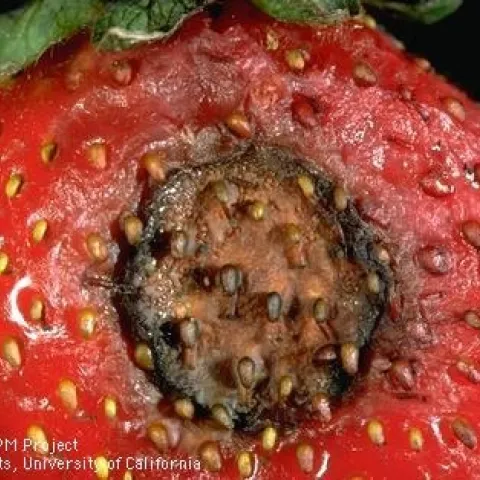
Classic symptom of anthracnose on strawberry fruit, brown to black sunken spot. Photo courtesy UC IPM.
Strawberries and Caneberries: Article

Anthracnose is Around Right Now – Caution Advised

February 26, 2024
By Mark P Bolda, Yu-Chen Wang
We had picture brought in by a grower on Friday of some fruit from his field showing clear signs of anthracnose. That is to say, dark, lens shaped lesions on the fruit.
View Article
Primary Image
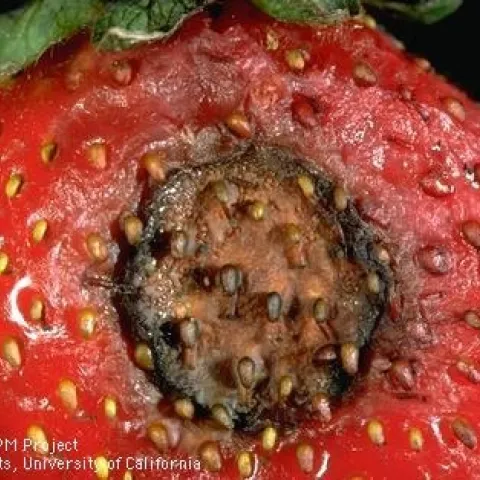
Mancha de color negra a marrón, un poco hundida y dura. Foto por UC IPM.
Fresas y Moras: Article

Se avisa precaución- se ha encontrado antracnosis

February 26, 2024
By Mark P Bolda
Se nos entreg una foto por un productor en el vienes de la semana pasada de unas fresas de su campo que demostraron sntomas obvios de antracnosis. Quiere decir lesiones oscuras en forma de una lente por la superficie de la fruta.
View Article