A Natural Solution for California's Herds: African Catfish Peptides

California's cattle producers and agricultural communities are all too familiar with the rising challenge of antibiotic resistance, making common bacterial infections harder to treat in livestock. But imagine a future where we could tackle these infections with a natural, powerful alternative. Our research points to just that: antimicrobial peptides (AMPs) found in African catfish.

We're really excited about these peptides because African catfish thrive in pathogen-rich freshwater, naturally producing these robust immune compounds in their skin mucus as a defense. This natural origin makes them highly appealing alternatives to synthetic drugs.

Predicted Safety and Potent Action

One of the most compelling aspects of these AMPs is their predicted safety for mammals. Our initial computer analyses suggest that various catfish AMPs are generally recognized as safe (GRAS). We predict they'll be absorbed in the human intestine without causing liver, brain, or heart toxicity. Furthermore, lab tests on a promising peptide, NACAP-II, confirmed it was non-hemolytic, meaning it didn't damage rabbit red blood cells—a strong indicator of its potential safety for mammalian cells.

Beyond safety, these peptides demonstrate effectiveness against problematic bacteria. One study revealed NACAP-II's strong activity against Extended-Spectrum Beta-Lactamase (ESBL)-producing Escherichia coli—a critical concern for both animal and human health due to its resistance to many common antibiotics. Another peptide, ACAP-IV, also showed antibacterial activity against E. coli and Staphylococcus aureus. We believe these AMPs work by directly disrupting bacterial cell membranes, a mechanism that makes it harder for bacteria to develop resistance compared to how they resist traditional antibiotics.

Primary Image
Los horticultores aprenden sobre los cultivos de cubiertas vegetales en una huerta de almendras del condado de Colusa. Fotografía por Evett Kilmartin
Blog Verde: Article

Subsidio millonario impulsará prácticas a favor de la salud de la tierra y una agricultura climáticamente inteligente

January 10, 2024
By Diana Cervantes
Granjas regionales darn demostraciones sobre prcticas como el cultivo de cubiertas vegetales, reduccin de labranza, composta y mantillos, plantacin de setos y sistemas para optimizar el riego Un subsidio de cerca de dos millones de dlares permitir acelerar, a travs de sitios de demostracin en Califo...
View Article
Cooperative Extension San Joaquin County: Article

2024 UCCE Northern San Joaquin Valley Processing Tomato Meeting Notice

January 10, 2024
UCCE Northern San Joaquin Valley Processing Tomato Meeting University of California Cooperative Extension San Joaquin, Stanislaus and Merced Counties in conjunction with The California Tomato Growers Association Annual Meeting & Exhibit Wednesday, February 7th, 2024, 8:00 - 11:00 a.m.
View Article
Primary Image
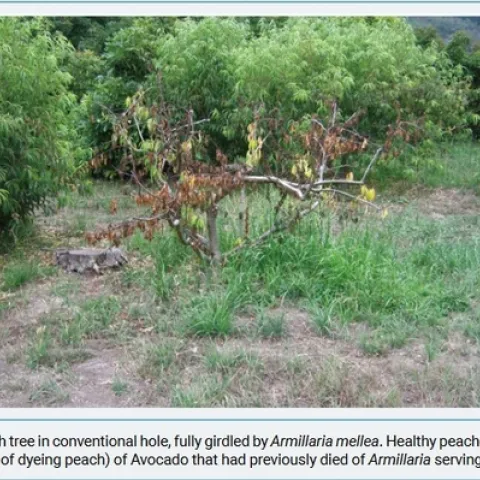
peach dead from armillaria
Topics in Subtropics: Article

Controlling Oak Root Fungus

January 10, 2024
By Ben A Faber
Armillaria mellea is the pathogen that causes root rot of many forest and ornamental and agronomic trees. The pathogen occurs in landscapes and urban soils as well as a natural pathogen in forests and on lands converted to farming.
View Article
Primary Image
Coastside Cover Jan 2024
UC Master Gardeners of San Mateo & San Francisco Counties: Article

A New Year in The Garden: Inspirations for 2024

January 9, 2024
It's January and, although it may be cold and damp, the days are getting longer by a few seconds each dayjust enough additional daylight to stir a gardener's blood.
View Article
UC Master Gardeners of Solano County: Article

Winter 2024

January 9, 2024
The Simplest Terrestrial Vascular Plant on Earth: Whisk Fern Gardening for Climate Change More Mess, Less Stress...
View Article
Primary Image
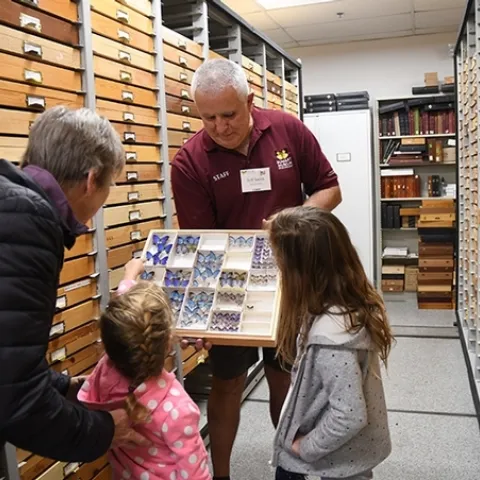
Entomologist Jeff Smith, who curates the Lepidoptera collection at the Bohart Museum of Entomology, shows butterfly specimens to guests. (Photo by Kathy Keatley Garvey)
Bug Squad: Article

Gearing Up for 13th Annual UC Davis Biodiversity Museum Day

January 9, 2024
By Kathy Keatley Garvey
Meet the scientists! Ask questions! Plans are underway for the 13th annual UC Davis Biodiversity Museum Day, a free "Super Science Day" for the public to see science in action and learn about 10 UC Davis museums and collections. The event is set for Saturday, Feb.
View Article