A Natural Solution for California's Herds: African Catfish Peptides

California's cattle producers and agricultural communities are all too familiar with the rising challenge of antibiotic resistance, making common bacterial infections harder to treat in livestock. But imagine a future where we could tackle these infections with a natural, powerful alternative. Our research points to just that: antimicrobial peptides (AMPs) found in African catfish.

We're really excited about these peptides because African catfish thrive in pathogen-rich freshwater, naturally producing these robust immune compounds in their skin mucus as a defense. This natural origin makes them highly appealing alternatives to synthetic drugs.

Predicted Safety and Potent Action

One of the most compelling aspects of these AMPs is their predicted safety for mammals. Our initial computer analyses suggest that various catfish AMPs are generally recognized as safe (GRAS). We predict they'll be absorbed in the human intestine without causing liver, brain, or heart toxicity. Furthermore, lab tests on a promising peptide, NACAP-II, confirmed it was non-hemolytic, meaning it didn't damage rabbit red blood cells—a strong indicator of its potential safety for mammalian cells.

Beyond safety, these peptides demonstrate effectiveness against problematic bacteria. One study revealed NACAP-II's strong activity against Extended-Spectrum Beta-Lactamase (ESBL)-producing Escherichia coli—a critical concern for both animal and human health due to its resistance to many common antibiotics. Another peptide, ACAP-IV, also showed antibacterial activity against E. coli and Staphylococcus aureus. We believe these AMPs work by directly disrupting bacterial cell membranes, a mechanism that makes it harder for bacteria to develop resistance compared to how they resist traditional antibiotics.

Primary Image
photos by Nanelle Jones-Sullivan
Under the Solano Sun: Article

Let Us Plant Lettuce

December 4, 2023
It's Fall in Sunset Zone 9. Nights are in the low fifties, our highest day this week is 81, and day length is about is about 11 hours 28 minutes. What can we grow? Let us grow lettuce! Sure, other things end up in salad, but right now I am talking about Lactuca sativa.
View Article
Primary Image
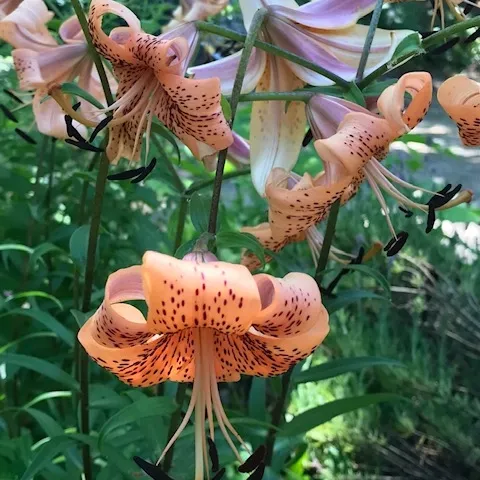
Cindy Watter Tiger Lily in author's back yard
Napa Master Gardener Column: Article

Bulbs!!!

December 2, 2023
I always love the bulb catalogs that drop through my mail slot at the end of every summer. I once overbought and then procrastinated on planting them. This was when I lived in Humboldt County.
View Article
UC Master Gardener Program of Riverside County: Article

Garden Views, 2023.11 - Nov/Dec 2023

December 1, 2023
In this issue: Christal Ferlisi and Linda Cummings describe Master Gardeners convening at Lake Tahoe; Debbie OBrien shares the trainees propagation class at Morten Gardens; Kim Coons-Leonard relates activities at STEPCon by the Youth-School Gardens team; Jolene Hancock salutes Janis Binam; Ann Platz...
View Article
Primary Image
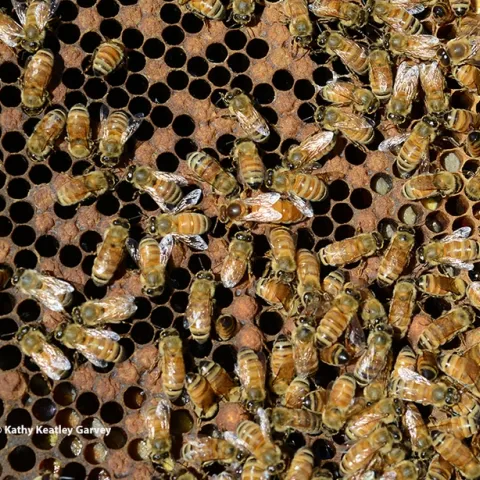
A look inside a bee hive. (Photo by Kathy Keatley Garvey)
Bug Squad: Article

Honey Bee Is a True Communication Specialist

December 1, 2023
By Kathy Keatley Garvey
Picture yourself as a waggle-dancing honey bee. You're dancing in the dark, on a small, crowded dance floor with lots of obstacles, and you're trying to communicate to other foragers where that great resource is.
View Article
Primary Image
Erin Musil and Kaitlin Zuwala
ANR Employee News: Article

Names in the News

December 1, 2023
By Michael Hsu, Pamela S Kan-Rice
Musil, Zuwala join ANR Business Operations Center Erin Musil joined the ANR Business Operations Center on Nov. 27 as an analyst.
View Article